


Erectile dysfunction (ED) is one of those topics that’s way more common than people admit—and way more fixable than many assume. Still, it can feel personal, frustrating, and (let’s be honest) like a confidence leak you didn’t ask for.
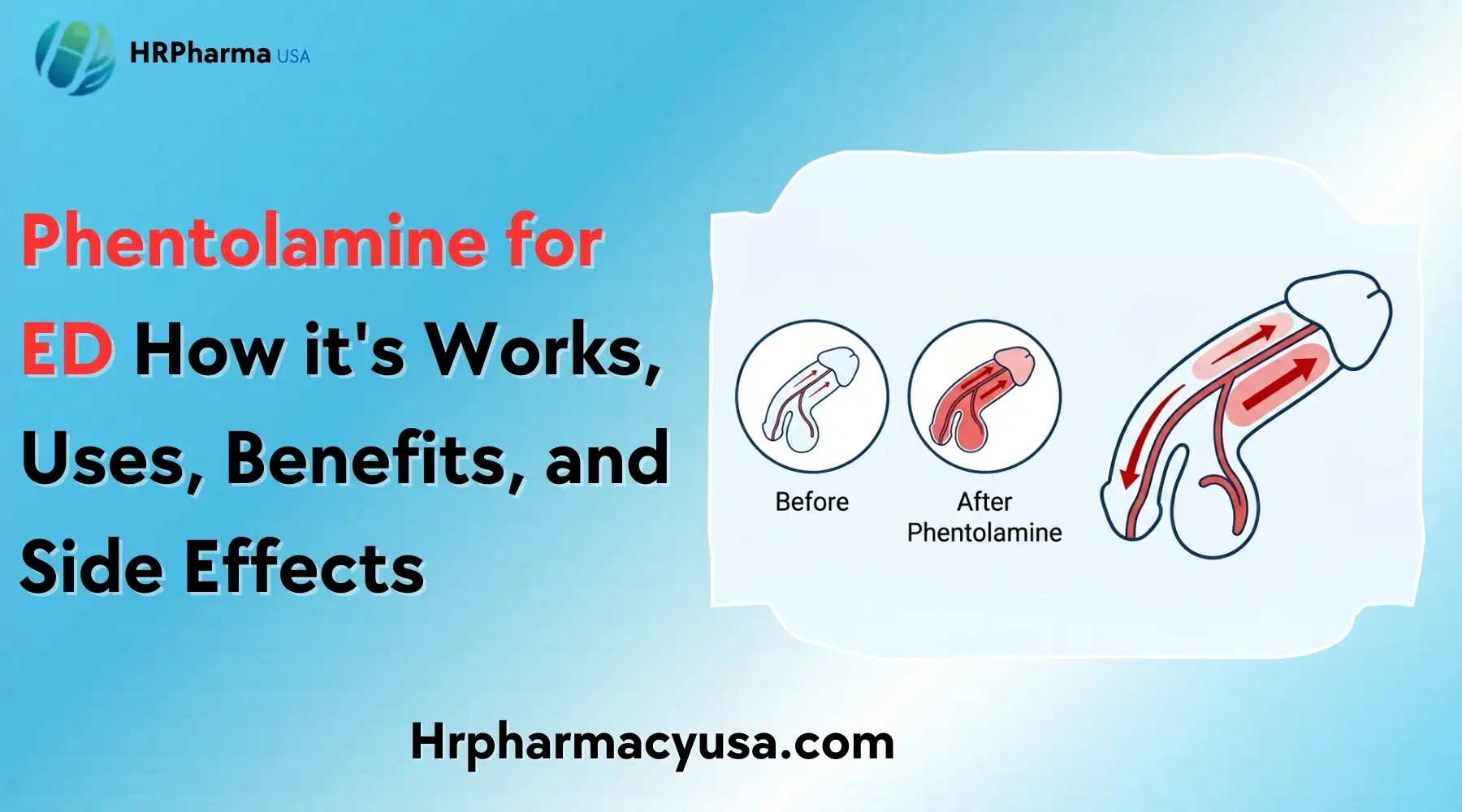
A lot of ED comes down to a simple concept: blood flow and signalling. If the body can’t send enough blood into the penis—or can’t keep it there long enough—an erection becomes unreliable.
The “blood flow problem” behind many erections
Think of an erection like filling up a water balloon using a hose. You need:
- Enough “water pressure” (blood inflow)
- A balloon that can expand (relaxed smooth muscle tissue)
- A way to keep the water from immediately draining (venous trapping)
ED can happen when the “hose” is narrow (vascular disease), the signal to open the hose is weak (nerve issues), or the body is hitting the brakes too hard (sympathetic tone and stress hormones).
Where phentolamine fits when the usual options disappoint
Most people start with oral meds like sildenafil (Viagra) or tadalafil (Cialis). They work great for many—but not everyone. When pills don’t help enough, aren’t safe to take, or just don’t fit your life, second-line options come into play.
That’s where phentolamine for ED often enters the conversation, especially as part of penile injection therapy (commonly in compounded mixes like Bimix or Trimix).
What Is Phentolamine?
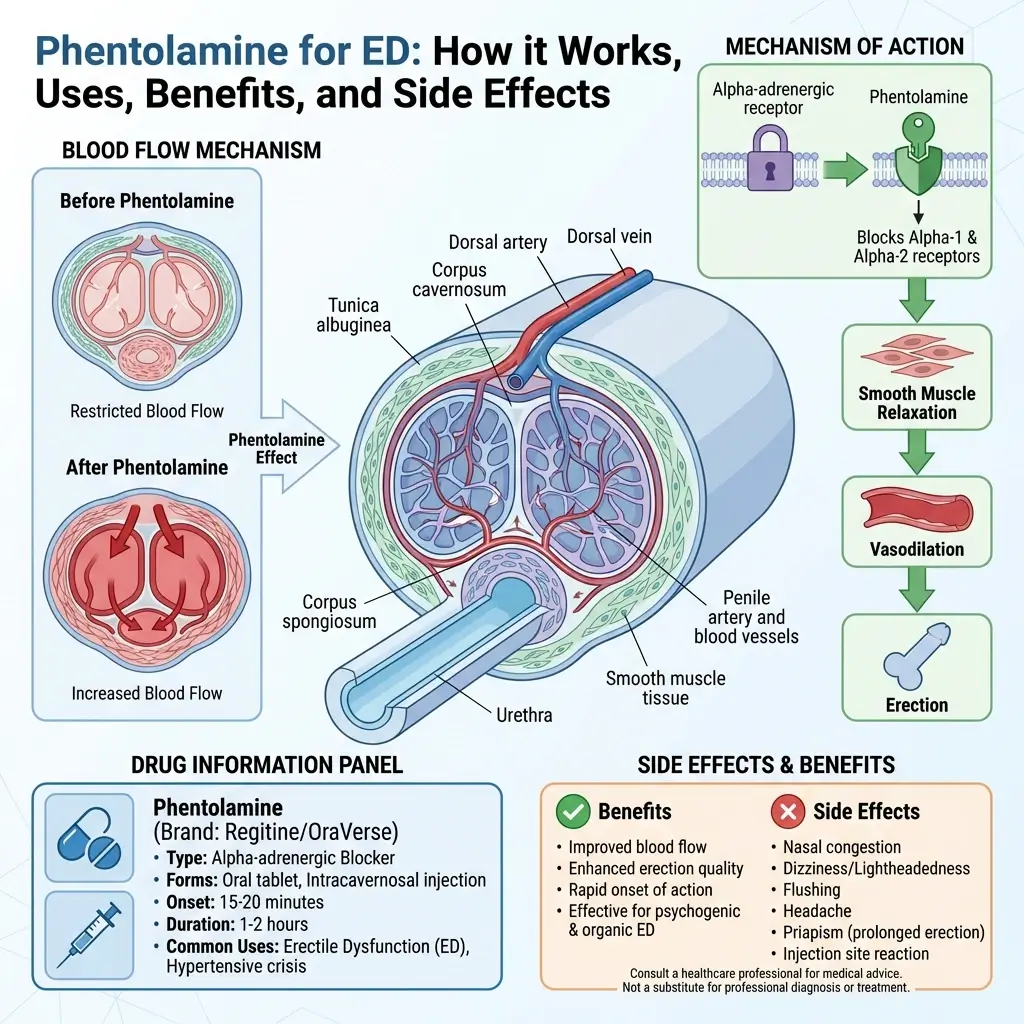
Phentolamine is a medication that blocks alpha-adrenergic receptors (often shortened to “alpha receptors”). Those receptors are involved in tightening blood vessels and increasing smooth muscle tone—basically, they help the body “clamp down".
By blocking them, phentolamine promotes relaxation and blood vessel widening, which can support erection physiology.
A short history: from blood vessels to bedroom medicine
Phentolamine has been used in medicine for decades, mainly for effects on blood vessels and blood pressure. Its ED role developed from a straightforward idea: if alpha receptors help keep penile tissue tight and less blood-filled, blocking them might help the penis relax and fill.
Over time, phentolamine became a familiar ingredient in intracavernosal injection (ICI) therapy—especially in combination formulas.
Common names and formulations
Phentolamine mesylate (the medication itself)
You’ll often see the drug name written as phentolamine mesylate, which is simply the salt form used for medical preparations.
Bimix/Trimix and compounded blends
In real-world ED treatment, phentolamine is frequently used as part of compounded injection blends:
- Bimix (commonly: papaverine + phentolamine)
- Trimix (commonly: papaverine + phentolamine + alprostadil)
The “mix” approach is popular because different ingredients can hit different pathways involved in erection quality.
How Phentolamine Works for ED
Erections 101: the “hydraulic system” analogy
An erection is basically a hydraulic event. When you’re aroused, signals tell penile smooth muscle to relax, arteries open up, and the spongy tissue (corpora cavernosa) fills with blood. As it fills, veins get compressed so blood doesn’t drain out quickly.
No good relaxation = no good filling.
The role of alpha receptors (the body’s “brakes”)
Alpha receptors are part of the sympathetic nervous system—the same “fight or flight” wiring that kicks in when you’re stressed, anxious, cold, or on high alert.
In the penis, alpha receptor activity can contribute to:
- Increased smooth muscle tone (tighter tissue)
- More vasoconstriction (narrower blood vessels)
- A tendency to lose firmness faster
If you’ve ever noticed that stress can “kill the moment", this is part of why.
What blocking alpha receptors changes inside the penis?
Phentolamine blocks alpha receptors, which can reduce those “braking” effects.
Relaxing smooth muscle
When smooth muscle relaxes, penile tissue becomes more receptive to filling, like loosening a tightly clenched fist.
Letting the arteries open and the sinusoids fill
With less constriction, arteries can deliver more blood, and the spongy spaces can expand more easily, supporting firmness.
Importantly, phentolamine is often used with other agents because ED is rarely just one pathway. It’s usually a “several small problems at once” situation.
How Phentolamine Is Used for Erectile Dysfunction
Intracavernosal injection (ICI): the most common real-world use
This is the big one. When people talk about phentolamine for ED, they’re often talking about ICI therapy, where medication is injected into the side of the penis (into the corpora cavernosa).
If that sounds intense, you’re not alone. But with proper training, many people describe it as far less dramatic than they expected—more like a quick, controlled routine.
Phentolamine alone vs. mixed formulas
Phentolamine can be used alone, but it’s more commonly used in combination with the following:
- Papaverine (smooth muscle relaxant/vasodilator)
- Alprostadil (prostaglandin E1; directly promotes vasodilation and erection)
The combo can improve reliability and allow lower doses of each ingredient, depending on the person.
What using it typically looks like (high-level overview)
Because injection technique and dosing are medical decisions, the safest way to describe this is at a high level:
- A clinician prescribes a formula and starting plan
- You’re taught injection technique (site rotation, sterile handling, etc.).
- You track response and side effects
- The clinician adjusts the dose or mixture until it’s consistent and safe.
This isn’t a “wing it” medication. It’s more like learning to drive: once you’re trained, it can feel straightforward, but you want an instructor at the beginning.
Onset and duration: what people often notice
Many users report that injection therapy can work relatively quickly compared with pills. Duration varies widely depending on the formulation, dose, and individual physiology. The goal is an erection that lasts long enough for sex—but not so long that it becomes unsafe.
Topical/intraurethral options (less common, more variable)
Phentolamine has been explored in topical or intraurethral approaches, but these tend to be less consistent than injection therapy, and availability can be limited. In practice, when phentolamine is used for ED, injection-based compounded therapy is usually what clinicians mean.
Clinic/diagnostic use (testing blood flow response)
Sometimes a clinician uses an injection in-office to evaluate how penile tissue responds—helpful when diagnosing vascular vs. psychogenic contributors or when planning next steps.
Who might benefit most from Phentolamine for ED?
When PDE5 pills don’t work well (or at all)
Oral ED meds need intact signalling pathways and decent blood flow to work well. They can be less effective if:
- Nerve function is impaired.
- Vascular disease is advanced.
- Diabetes has affected small vessels and nerves.
- Post-surgical changes reduce responsiveness.
Injection therapy can bypass some of those bottlenecks.
ED after prostate surgery
After prostatectomy, nerve-related ED is common. Recovery can be gradual, and response to pills may be limited early on. Clinicians sometimes use injection therapy as part of a rehabilitation or “reliability” strategy while nerves recover (when appropriate for the patient).
Diabetes-related ED
Diabetes can impact both blood vessels and nerves—the classic double hit. Because injection therapy acts locally, it can work even when oral meds underperform.
Neurologic causes (spinal cord injury, MS, etc.)
Neurogenic ED can respond well to locally acting medications, depending on the specific condition and sensation/reflex pathways.
Performance anxiety vs. physical ED (and how injections change the equation)
This one surprises people: even if anxiety is a big contributor, a reliable physical response can sometimes reduce the “pressure loop".
It’s like having a backup generator during a storm. Even if the weather is unpredictable, you’re not sitting in the dark wondering if the lights will stay on.
Benefits of Phentolamine for ED
Fast, reliable response for many users
For the right candidate, injection therapy can be one of the most dependable ED treatments available. You’re not waiting on digestion, not negotiating with timing as much, and not relying solely on mental arousal to kick things off.
Doesn’t depend much on timing meals or alcohol
PDE5 inhibitors can be affected by heavy meals (especially higher-fat meals) and sometimes alcohol. Injection therapy is local, so those factors tend to matter less—though overall health and blood pressure still matter.
Customisable dosing through compounding
This is a huge practical advantage: the formula can be tailored.
Why clinicians may tweak mix ratios
If someone gets too much ache from alprostadil, a clinician might adjust the blend. If rigidity is good but duration is too long, the plan may change. If the response is weak, the mix may be strengthened carefully.
"Dialling in” response over time
Many people don’t land on the perfect dose on day one. It’s more like adjusting a recipe: small tweaks, careful notes, and a focus on consistency and safety.
Side Effects and Risks
No sugarcoating it: phenotolamine-based injection therapy can be extremely effective, but it comes with real risks—especially if used incorrectly or without medical supervision.
Local side effects (in the penis)
Pain or burning
Pain varies by person and by formula. Alprostadil is often the ingredient most associated with discomfort, but any injection can cause local irritation.
Bruising/bleeding
Because it’s an injection, bruising can happen—especially if the technique is off or if someone is on blood thinners. Proper training and site rotation help reduce this risk.
Scar tissue and curvature risk (with repeated injections)
Repeated injections can increase the risk of fibrosis (scar tissue), which in some cases may contribute to lumps or curvature. Rotating injection sites and following medical guidance matters a lot here.
Whole-body (systemic) side effects
Even though the medication is used locally, systemic absorption can occur.
Low blood pressure, dizziness
Phentolamine can dilate blood vessels and potentially lower blood pressure, leading to lightheadedness—especially in people prone to hypotension or those on blood pressure medications.
Fast heart rate, flushing, headache
Some people experience palpitations, flushing, nasal congestion, or headache—effects consistent with vasodilation and cardiovascular response.
Priapism: the big one you should know about
What priapism is
Priapism is an erection that lasts too long, typically defined clinically as 4 hours or more, and it can happen with injection therapy (more commonly with stronger dosing or combinations).
Why it’s urgent
A prolonged erection isn’t a "bonus". It can reduce oxygen delivery to penile tissue and cause permanent damage if not treated promptly.
What clinicians typically advise (safety-first, not DIY)
Your prescriber should give you clear instructions for what to do if an erection lasts longer than intended. Follow that plan. If you’re anywhere near the danger zone, urgent medical evaluation is the safe move.
Safety, Contraindications, and Interactions
Heart and blood pressure considerations
Because phentolamine can affect blood pressure and heart rate, it’s especially important to discuss the following:
- Heart disease history
- Arrhythmias
- Blood pressure issues (high or low)
- All cardiovascular medications
If your cardiovascular system is already walking a tightrope, you want your clinician to help you choose the safest tool.
Blood thinners and bleeding risk
Anticoagulants and antiplatelet medications can raise the likelihood of bruising or bleeding at the injection site. This doesn’t automatically rule it out, but it does raise the importance of technique and individualised guidance.
Mixing with other ED meds
PDE5 inhibitors (Viagra/Cialis class)
Some patients use PDE5 inhibitors and injection therapy in a coordinated plan, but combining treatments can increase side effects (like low blood pressure) and raises the risk of overly prolonged erections. This is a “doctor-guided only” area.
Other injection ingredients (papaverine, alprostadil)
Many phentolamine ED regimens involve combinations. That can improve outcomes, but it also means side effects can stack—especially priapism risk.
Higher-risk medical conditions
Sickle cell disease/trait and blood disorders
People with conditions that increase priapism risk (including sickle cell disease/trait and certain blood disorders) need extra caution and a very clear safety plan.
Anatomical penile conditions
If someone has significant curvature, plaques, or anatomical issues, injection site decisions and risks may change.
Phentolamine vs. Other ED Treatments
PDE5 inhibitors (sildenafil, tadalafil, etc.)
Pros: convenient, non-invasive, widely available.
Cons: may not work well with severe vascular/nerve damage; timing and side effects can be limiting.
Injection therapy is often considered when pills aren’t reliable enough.
Alprostadil alone (injection or urethral suppository)
Alprostadil can be effective solo, but some people experience more penile aching with it. Combination therapy (including phentolamine) may allow lower alprostadil amounts while keeping results strong – depending on the person.
Vacuum erection devices
A vacuum device is mechanical and drug-free. It can work regardless of nerve signalling, but some people dislike the feel, the interruption, or the constriction band.
Penile implants
When implants become the “set it and forget it” option
Implants are surgical, but satisfaction rates are often high in well-selected patients—especially when other therapies fail or are too burdensome. It’s not a first step for most people, but it’s a real, effective endpoint option.
Practical Considerations
Prescription access and compounding pharmacies
Phentolamine for ED is frequently accessed through compounding pharmacies, especially in mixes like Trimix. That means:
- Quality and consistency matter.
- Storage requirements may be stricter.
- Prescriber experience makes a difference.
Storage, stability, and travel
Many compounded ED injections require refrigeration and have defined beyond-use dates. If you travel, you’ll want a practical plan (cool pack, discretion, timing). This is one of those “small logistics, big payoff” details.
Cost and insurance reality
Costs vary widely based on:
- Your region
- Pharmacy and formulation
- Strength and volume
- Insurance coverage (often limited for compounded meds)
Some people find the per-dose cost reasonable compared with brand-name oral meds; others find the upfront costs and supplies add up.
Questions to ask your clinician
Training, dosing strategy, and follow-up
Good questions include:
- “What side effects should I expect vs. worry about?”
- “How do we adjust the dose safely if it’s too weak or too strong?”
- “How often is it safe to use?”
- “How do I reduce bruising and scarring risk?”
- “What’s the plan if the erection lasts too long?”
When to seek urgent care
You want a clear threshold, written down, not something you’re guessing at in the moment.
Common Myths and the Truth
“Injections are only for severe ED."
Not necessarily. They’re often used when pills aren’t reliable, but “not reliable” can happen at many severity levels—especially after surgery, with diabetes, or with certain meds.
“If it works once, I can just copy that forever."
Bodies change. Stress changes. Sleep changes. Health changes. A dose that was perfect last year might be too strong (or too weak) later. Staying connected to follow-up is part of using this safely.
“More medication = better erection."
This is one of the riskiest assumptions in ED treatment. With injection therapy, “more” can mean more side effects, more priapism risk, and more regret. The best dose is the smallest dose that reliably works.
Conclusion
Phentolamine for ED is best understood as a powerful helper that takes the “brakes” off penile blood flow by blocking alpha receptors.
Most commonly used in intracavernosal injection therapy—often as part of Bimix or Trimix—it can offer fast, dependable erections for people who don’t get consistent results from pills. The tradeoff is that it demands respect: proper prescribing, training, careful dose adjustments, and a clear safety plan for side effects (especially priapism).
If you’re looking for reliability and you’re willing to treat it like a real medical therapy—not a casual hack—phentolamine-containing ED injections can be a serious option to discuss with a qualified clinician.
FAQs
Does phentolamine work if Viagra or Cialis doesn’t?
It can. Oral PDE5 inhibitors rely on certain nerve and vascular pathways. Injection therapy acts more directly on penile tissue, so it may work even when pills don’t—especially in diabetes, post-prostatectomy ED, or neurogenic ED.
Is phentolamine used by itself or usually combined with other medications?
Both exist, but in everyday ED care it’s often combined (Bimix/Trimix). Combining agents can improve reliability and allow lower amounts of each ingredient, depending on your response and side effects.
Can phentolamine injections cause long-term damage?
They can if misused or overused. Potential long-term issues include scar tissue (fibrosis) and, less commonly, curvature. Proper technique, rotating injection sites, and sticking to a clinician-guided schedule significantly reduce risk.
Is phentolamine FDA-approved specifically for erectile dysfunction?
Phentolamine itself has medical uses, but its role in ED is commonly through off-label use and compounded injection mixes (like Trimix). Whether it’s appropriate depends on your medical history and what’s available through your prescriber and pharmacy.
What’s the most serious side effect to watch for with phentolamine-based injections?
Priapism (a prolonged erection) is the most urgent risk. Your clinician should give you a clear action plan for erections that last longer than intended—follow it exactly and seek urgent care when instructed.