


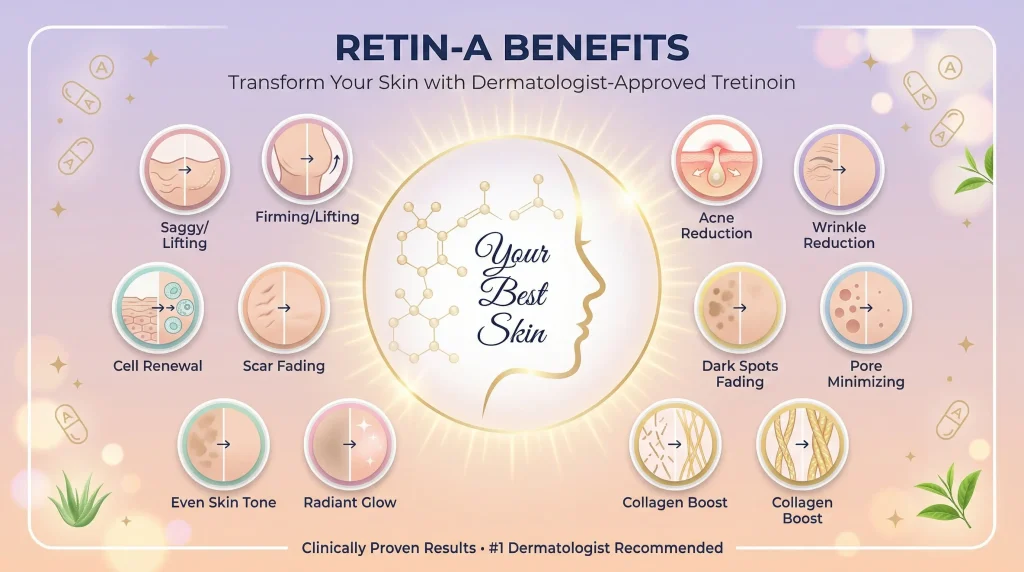
If you are tired of battling stubborn acne, wrinkles, fine lines, and uneven skin texture without seeing real results, you are not alone. Retin-A (tretinoin) is not just another hyped skincare product — it is one of the most scientifically proven and dermatologist-trusted treatments for both acne and anti-aging.
Backed by over five decades of research, it works by accelerating cell turnover, unclogging pores, and boosting collagen production. The real before-and-after transformations speak for themselves — patients consistently see clearer, smoother, and younger-looking skin within just 8 to 12 weeks of consistent use.
However, not everyone's Retin-A journey looks the same. Results depend on the strength you choose (from a gentle 0.025% to a potent 0.1%), the formulation type (cream for dry skin, gel for oily and acne-prone skin), and how correctly you use it.
Starting low and slow is always the smartest approach for beginners. In this article, I will share real before-and-after examples, key study findings, and expert tips to help you get the best results with minimal irritation — so keep reading, because this could truly transform your skin.
So What Exactly Is Retin-A?
Retin-A is a brand name for tretinoin, a prescription-strength form of Vitamin A. You can't grab it off a CVS shelf. You need a doctor to write you a script for it, and there's a reason for that – this stuff is powerful.
Dermatologists have been prescribing tretinoin since the late 1960s. Originally, it was only meant for acne. But then something funny happened. Patients kept coming back, saying their wrinkles were fading too. Their dark spots were lighter.
Their skin just looked... younger. Researchers caught on, studies confirmed it, and suddenly tretinoin became the holy grail of anti-ageing skincare, too.
It comes in different strengths – 0.025%, 0.05%, and 0.1%. Most dermatologists will put you on the lowest dose first and bump you up later once your skin stops freaking out. Smart move, honestly.
You can check this out A Ret HC Creams (Hydroquinone/Tretinoin/Hydrocortisone)
How Does It Actually Work on Your Skin?
Think of your skin like a factory. Old cells sit on the surface, looking dull and tired, while new ones slowly rise from deeper layers. Normally, that cycle takes about a month. Retin A kicks that factory into overdrive and speeds everything up.
Old cells shed faster. Fresh ones replace them quicker. Meanwhile, deep below the surface, tretinoin tells your fibroblasts (the cells that produce collagen) to start working harder. More collagen means plumper, firmer skin. Less collagen breakdown means fewer new wrinkles forming.
It also helps regulate melanin, which is why dark spots and uneven tone improve over time. Retin A is doing about five jobs at once, and it does them all well.
The Honest Retin A Before and After Timeline
This is what everyone really wants to know. When will my skin actually start looking better? Here's the real deal, no sugarcoating.
Month One – Brace Yourself
Month one is rough. I'm not going to pretend otherwise. Your skin will probably peel. It might turn red. You could break out worse than you have in months. This is the part where most people panic and quit, which is a shame because they're quitting right before things start turning around.
What's happening underneath is actually positive. All that gunk hiding in your pores is getting pushed to the surface.
Those breakouts were coming eventually Retin-A just sped up the timeline. By the end of the first month, you might notice your skin feeling slightly smoother beneath the flaking. Hold onto that.
Month Three – The Turning Point
Three months in, something shifts. The breakouts slow down. The peeling calms down. You start catching yourself in the mirror and thinking, "Huh, my skin actually looks pretty decent today."
This is when cell turnover has settled into a groove and collagen production is ramping up. Dark spots from old breakouts are starting to fade. Skin texture evens out. People around you might start asking what you changed in your routine.
Six Months to One Year – The Payoff
This is where those jaw-dropping before-and-after photos come from. By six months, acne patients often see dramatic clearing. Wrinkle fighters notice their fine lines looking softer and their skin feeling noticeably firmer. Pigmentation issues fade significantly.
At the one-year mark, the transformation can be genuinely stunning. But here's the thing nobody posts about online – getting here requires patience. Not excitement. Not perfection. Just boring, unglamorous consistency night after night.
Retin A Before and After for Acne
Acne is actually what tretinoin was designed for, so it shouldn't surprise anyone that the before-and-after results for breakouts are often the most dramatic.
Cystic Acne and Those Deep Painful Bumps
Cystic acne is brutal. Those deep, painful lumps that sit under your skin for weeks? Over-the-counter spot treatments barely touch them. Retin A works differently because it prevents the formation of microcomedones – the microscopic clogs that eventually turn into those deep cysts.
For hormonal acne along the jaw and chin, dermatologists usually combine tretinoin with something oral like spironolactone.
Retin-A addresses what's happening on the surface, while the medication addresses the hormonal chaos beneath. Results take longer with cystic acne, usually four to six months, but when it clears up, it really clears up.
Dealing With the Scars and Dark Marks Left Behind
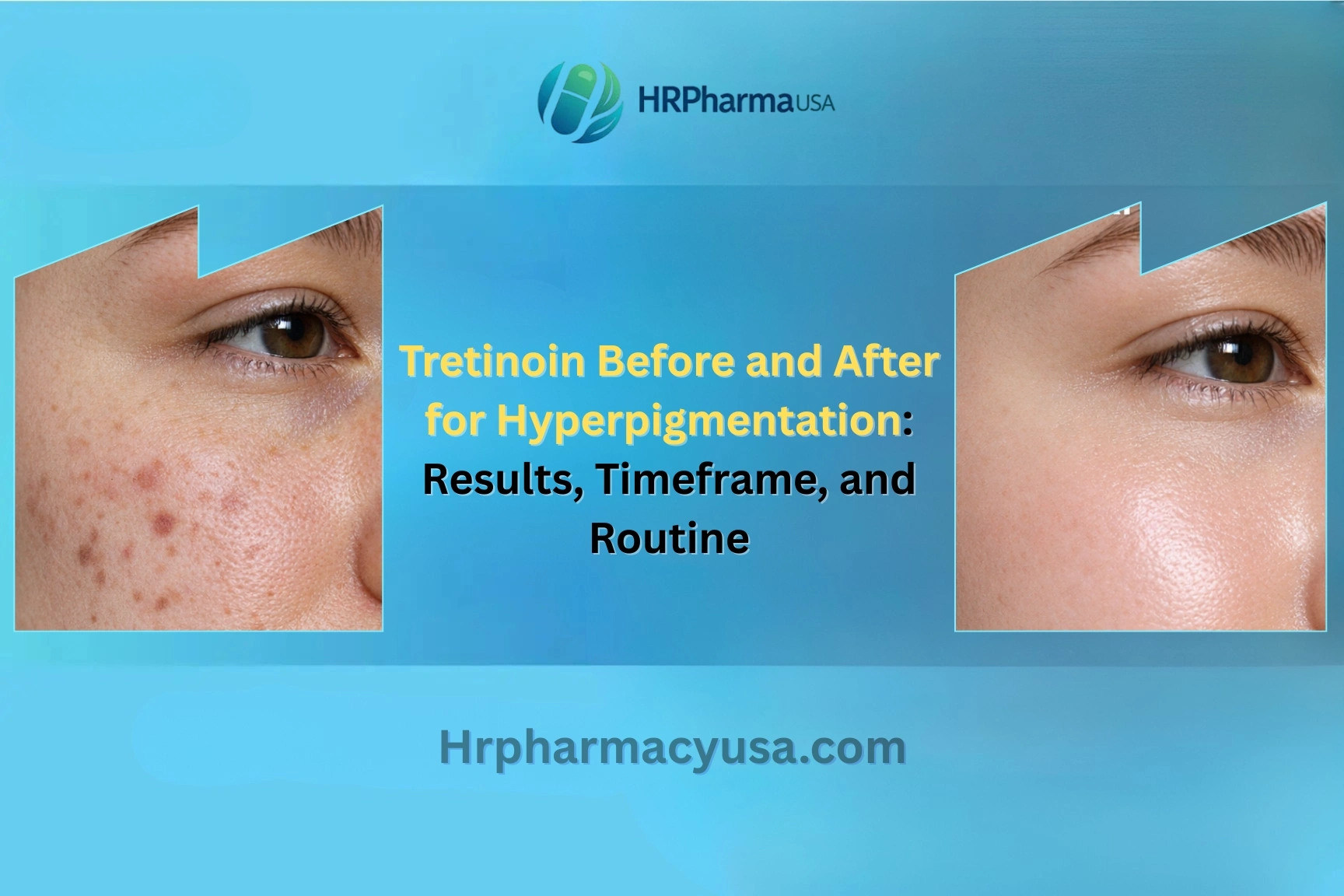
Even after acne stops, the scars stick around like unwanted reminders. Retin A helps here, too. Those dark or reddish marks (post-inflammatory hyperpigmentation) respond well to tretinoin because the faster cell turnover replaces stained skin cells with fresh, evenly toned ones.
For deeply pitted scars, tretinoin alone won't fully resolve them. You'd need microneedling or laser treatments for those. But Retin-A makes an excellent sidekick alongside those procedures.
Retin A Before and After for Wrinkles
Fine lines around your eyes, forehead creases, those little lip lines – tretinoin tackles all of them. Not overnight or magically, but measurably and consistently over months of use.
The wrinkle-fighting results are subtler than the acne-clearing results. You won't wake up one morning looking ten years younger. Instead, it's a gradual smoothing and plumping that becomes obvious when you compare photos taken months apart. Your skin starts looking healthier, dewier, and more resilient.
After age 20, you lose roughly 1% of your collagen every year. Retin A is one of the few topical products scientifically proven to slow that loss and actually stimulate new collagen production. That's not marketing fluff – it's backed by decades of peer-reviewed research.
The Purging Phase Nobody Warns You About
Your skin getting worse before it gets better isn't a myth. It happens to a lot of people, and it's terrifying when you're in the thick of it.
Purging looks like a bunch of new pimples popping up, usually in spots where you normally break out. The breakouts cycle through faster than regular ones – they show up quickly and heal quickly. That's because Retin A is dragging existing clogs to the surface earlier than expected.
If you're breaking out in areas where you never get pimples, that's a different story. That could be a genuine adverse reaction, so call your dermatologist.
Most purges last between 2 and 8 weeks. Some unlucky folks deal with it for up to three months. Starting at a lower concentration definitely helps keep it manageable.
Also check this out Melanorm-HC Cream (Hydroquinone/Tretinoin/Hydrocortisone) for stubborn acne, wrinkles, and fine lines.
Dermatologist Tips That Actually Make a Difference
Every dermatologist I've spoken to emphasises the same handful of rules. Follow these, and your Retin-A journey will go much smoother.
Use the Sandwich Method
Put moisturiser on clean, dry skin first. Wait a few minutes. Apply a pea-sized amount of Retin-A. Wait again. Then add another layer of moisturiser on top.
This buffering technique reduces irritation without weakening tretinoin's long-term efficacy—multiple studies support this.
Pair It With the Right Ingredients
Hyaluronic acid for hydration. Niacinamide for barrier support and redness. Ceramide-rich moisturisers for repair. And SPF 30 or higher every single morning without exception.
Retin A makes your skin significantly more sun-sensitive, so skipping sunscreen basically undoes a lot of your progress.
Avoid These Combinations
Don't layer benzoyl peroxide at the same time – it deactivates tretinoin. Skip glycolic acid and salicylic acid on the same nights you use Retin-A. And for the love of your face, put away the harsh scrubs. Your skin is already exfoliating faster than usual. Piling on more exfoliation is asking for a damaged barrier.
Start Slow. Seriously.
Every third night for the first couple of weeks. Then every other night. Then nightly, when your skin stops protesting. Jumping straight into daily use is one of the biggest mistakes people make, and it almost always leads to unnecessary suffering.
Retin A vs Retinol – Quick Comparison
| Feature | Retin-A (Tretinoin) | Retinol |
|---|---|---|
| What it is | Prescription-strength retinoic acid | Over‑the‑counter vitamin A derivative |
| Strength | Stronger / more potent | Milder |
| Needs conversion in skin? | No (already active form) | Yes (must convert to retinoic acid) |
| Results speed | Faster (often noticeable in weeks) | Slower (often months) |
| Best for | Acne, stubborn hyperpigmentation, stronger anti‑aging goals | Beginners, sensitive skin, maintenance, mild texture/fine lines |
| Irritation risk | Higher (dryness, peeling, redness common early) | Lower (but still possible) |
| Typical availability | Prescription only (in many countries) | OTC skincare products |
| Common concentrations | 0.01%–0.1% | ~0.1%–1% (varies by brand) |
| Use frequency | Start 2–3 nights/week → build up | Often nightly as tolerated (start gradually) |
| Pregnancy | Generally not recommended | Generally not recommended (ask clinician) |
| Sun sensitivity | Increases photosensitivity → sunscreen essential | Also increases sensitivity → sunscreen essential |
| Cost | Often higher (depends on insurance/region) | Wide range (budget to premium) |
Retinol is the over-the-counter cousin. Your skin has to convert it into retinoic acid before it works, and that conversion is pretty inefficient. Studies suggest retinol is roughly 10 to 20 times weaker than tretinoin.
Retinol is gentler and more accessible. Tretinoin is stronger and faster. If you want the results you see in those viral before-and-after posts, prescription tretinoin is what gets you there. Retinol will give you some improvement, but it moves much more slowly.
Magnalyte Cream (Flucinolone Acetonide/Hydroquinone/Tretinoin) for Melasma and Acne
Who Should Skip Retin-A
Pregnant women, hard pass. Tretinoin is Category X, meaning it poses serious risks during pregnancy. The same goes for breastfeeding mothers. If you have an active eczema or rosacea flare, stabilise that first before adding tretinoin into the mix. And if your skin barrier is already compromised from over-exfoliating, heal it before starting.
Everyone else? Talk to a dermatologist. They can determine the right strength and formulation and build a routine for your specific skin.
Final Thoughts
Retin-A works. That's not up for debate. Decades of research and millions of real people confirm it. But the people who get the best before-and-after results are those who approach it with patience and realistic expectations.
Your skin will probably look worse before it looks better. The peeling is temporary. The purging ends. And six months from now, when you compare a fresh photo to the one you took on day one, you'll understand what all the fuss was about.
Start slow. Moisturise generously. Wear your sunscreen. Trust the process.
FAQs about Retin A Before and After
Can I put Retin-A around my eyes?
You can, but carefully. Use the lowest strength, apply a tiny amount only near the orbital bone, and always buffer with a thick eye cream. Never put it on your actual eyelids.
Is Retin-A safe to use long-term?
Absolutely. Many dermatologists consider tretinoin a lifelong skincare staple. Studies show continued benefits even after years of use with no concerning long-term side effects for most people.
Can I use Retin-A in the morning instead of at night?
Technically, you can, but most dermatologists recommend nighttime use because tretinoin breaks down in sunlight and loses effectiveness. Using it at night also reduces the risk of sun-related irritation during the day.
How soon will I notice changes with Retin-A?
Small texture improvements can show up within a few weeks, but meaningful visible results usually take 8 to 12 weeks. Full transformation for acne or wrinkles typically takes 4 to 6 months.
Does everyone go through the purging phase?
Nope. Some people barely purge at all, especially if their skin isn't very congested. Others go through several weeks of increased breakouts. Starting at a low dose and using a buffer can reduce severity.