


Hyperpigmentation sounds like one problem, but it's more like a few different problems wearing the same outfit: extra pigment that shows up as brown, tan, grey, or even purple-toned marks. And if you don't know which "version" you have, it's easy to expect the wrong timeline (and quit right before things start working).
PIH, melasma, and sun spots—quick differences
Here's the quick-and-clean breakdown:
- PIH (post-inflammatory hyperpigmentation): Flat marks left after inflammation—think acne, shaving bumps, bug bites, and eczema flares. This is what most people mean when they search "tretinoin pih before and after" or "tretinoin acne scars hyperpigmentation before and after" (even though PIH isn't a true scar).
- Melasma: Patchy pigment often on cheeks, forehead, and upper lip. Hormones, UV, and heat can all trigger it. It's why people hunt for tretinoin melasma before-and-after pics—melasma can improve, but it can also come back if you're not careful.
- Sunspots: More defined spots from cumulative sun exposure, often appearing later over time.
Why your pigment type changes the timeline
Think of pigment like a stain in fabric:
- New PIH is like fresh coffee—you can lift it faster.
- Old PIH, or sunspots, are like a set-in stain—still treatable, just slower.
- Melasma is like dye that reactivates with heat/light—results can be real, but maintenance matters a lot.
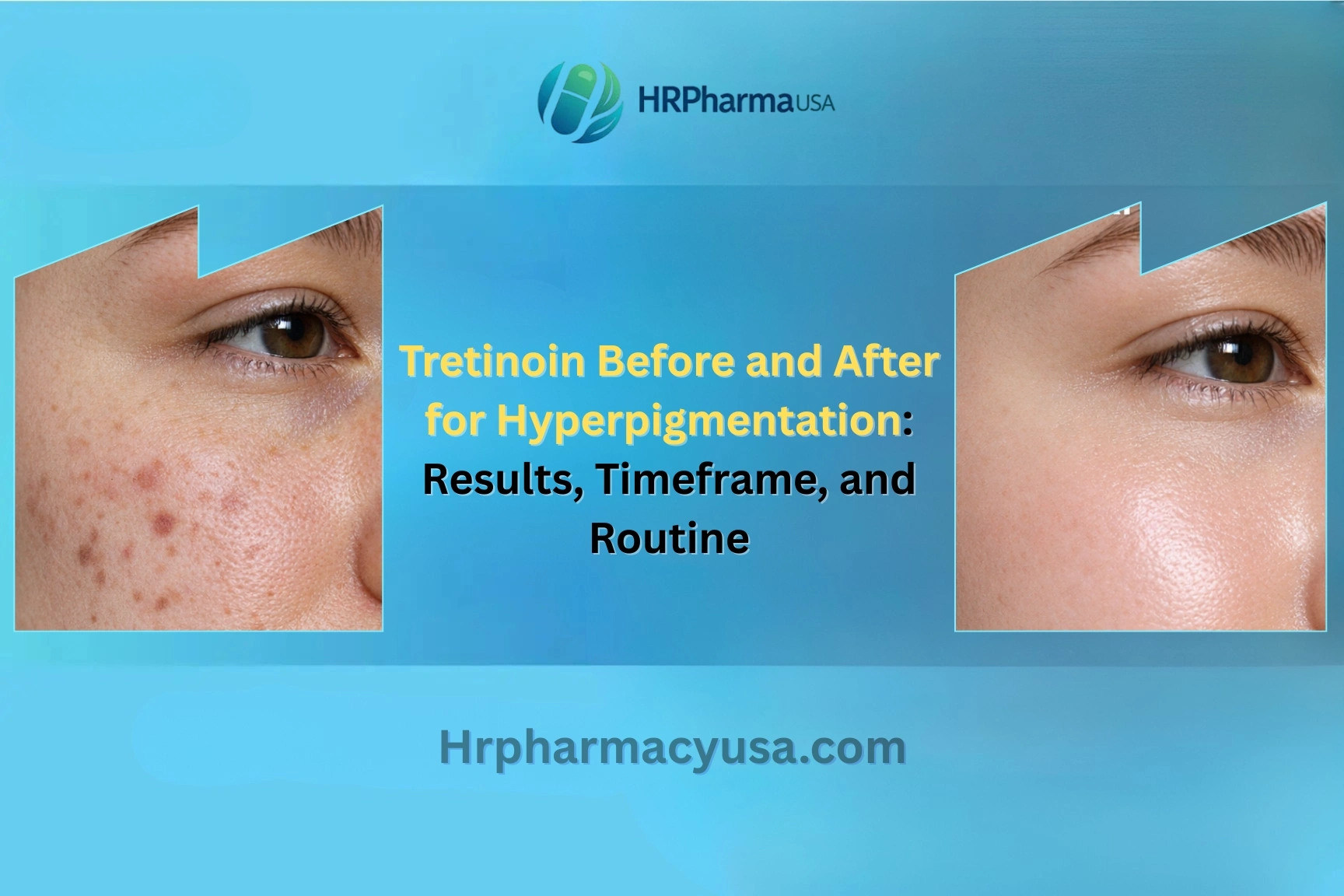
Tretinoin Before and After Hyperpigmentation: What "Better" Usually Looks Like
When people picture tretinoin before and after hyperpigmentation, they often expect a dramatic "spot deleted" effect. In reality, tretinoin is more like sanding and refinishing a tabletop: gradual, layer by layer, but the result can be seriously impressive.
Early improvements that show up first
Before dark spots noticeably fade, many people see:
- smoother texture
- more even "shine" (healthy glow, not oil)
- makeup sitting better
- fewer clogged pores
This is why some tretinoin hyperpigmentation transformation stories start with "My skin looks nicer, but the spots are still there."
Later improvements that take patience
Dark spots usually improve in a specific pattern:
- edges soften first (less sharp border)
- The overall tone looks more blended
- Then the centre lights.
That's the classic tretinoin dark spots before and after arc—more fade than vanish, especially in the first few months.
Tretinoin Results Hyperpigmentation Photos: How to Track Progress Accurately
If you're relying solely on the mirror, you'll go a little crazy. Some days your skin looks amazing; other days, one overhead light makes every mark look louder. That's why tretinoin results hyperpigmentation photos can be helpful—if you do them the right way.
Lighting and angle rules that make photos honest
Use these rules so you're comparing skin, not lighting:
- exact location (same bathroom/window)
- At the exact time of day
- same camera distance
- hair pulled back
- neutral face (no stretching skin upward)
If your goal is honest tretinoin hyperpigmentation progress photos, consistency beats "perfect" lighting.
A simple monthly tracking method
Take photos:
- day 1 (baseline)
- week 4
- week 8
- week 12
- month 6
Monthly is enough. Daily checking is like digging up a seed to see if it's growing.
What to write down besides photos
Jot down:
- How often do you use tretinoin each week
- irritation level (0–10)
- sunscreen consistency
- whether you picked any pimples (no judgment—just data)
Those notes explain your results better than any filter-free selfie ever could.
Results Timeline: When You'll Actually Notice Change
This Results Timeline is the part everyone wants because it answers the fundamental question: "Is this doing anything… or am I just peeling for fun?"
Days 1–14: adaptation mode
Most people don't see pigment fading yet. Instead, you might notice:
- dryness around the mouth/nose
- mild flaking
- sensitivity if you over-cleanse
This is not a failure. This is your skin learning the new normal.
Weeks 3–6: the "don't panic" zone
This is where searches like "tretinoin results after 1 month hyperpigmentation spike" come from—because things can look weird here.
What may happen:
- redness that makes dark marks look more contrasted
- peeling that makes spots look patchy
- occasional breakouts (purging for some)
Suppose you're thinking, "When does tretinoin fade hyperpigmentation?"—for many people, not fully yet. But you're setting the stage.
Weeks 7–12: visible fading starts
This is the sweet spot for noticeable change, especially with PIH:
- Marks start shifting lighter
- Skin tone looks more even in natural daylight.
- texture continues improving
This is where tretinoin hyperpigmentation results at 3 months often look legit in real-life comparisons.
Months 4–6+: consolidation and maintenance
By months 4–6, a lot of people see:
- fewer lingering marks from new breakouts
- more even overall tone
- Older spots are slowly catching up
This is also when routines feel easier—less peeling, more consistency.
How long does tretinoin hyperpigmentation take for dark spot type
If you're googling how long tretinoin hyperpigmentation results take or tretinoin hyperpigmentation results time, here's a practical guide:
- New acne PIH: often 8–16 weeks for clear improvement
- Older PIH: commonly 3–6 months
- Sunspots: often 3–6+ months (sometimes needs in-office help)
- Melasma: may improve in 8–12 weeks, but needs strict maintenance
And yes, how fast tretinoin works on dark spots depends heavily on sunscreen and irritation control. Tretinoin + no SPF is like mopping while the faucet is still running.
Tretinoin Routine for Hyperpigmentation (Simple AM/PM Plan)
A good tretinoin routine for hyperpigmentation is boring in the best way. The goal is to fade pigment without triggering new inflammation.
Morning: tretinoin, sunscreen, hyperpigmentation routine
AM steps:
- Gentle cleanser (or rinse if you're dry)
- Moisturiser (lightweight is fine)
- Broad-spectrum sunscreen SPF 30–50 (the real treatment partner)
If you only do one thing perfectly, do sunscreen. Hyperpigmentation loves UV like a campfire loves dry wood.
Night: tretinoin night routine dark spots
PM steps (standard):
- Gentle cleanser
- Let skin dry thoroughly (water can increase irritation).
- Tretinoin (pea-sized for the whole face)
- Moisturizer
This simple tretinoin night routine for dark spots beats a complicated routine you can't stick to.
Tretinoin moisturiser routine for hyperpigmentation (the "sandwich")
If you're peeling or stinging, use the sandwich method:
- moisturiser (thin layer)
- tretinoin
- moisturizer again
This tretinoin moisturiser routine tweak for hyperpigmentation often lets you keep going without turning your face into a flaky crime scene.
Beginner tretinoin routine for hyperpigmentation (frequency guide)
A realistic beginner tretinoin routine for hyperpigmentation schedule:
- Weeks 1–2: 2 nights/week
- Weeks 3–4: 3 nights/week
- Weeks 5–8: every other night (only if calm)
- After: consider nightly only if you're not irritated
Consistency beats intensity—every time.
How to Use Tretinoin for Dark Spots Without Wrecking Your Barrier
If you want the brightening benefits, you have to protect your barrier. Otherwise, irritation can trigger more pigment—especially in deeper skin tones.
Application tips that reduce irritation
Use these habits:
- Apply to dehydrated skin.
- Avoid the corners of the nose, mouth, and eyelids.
- Don't stack with harsh exfoliants early on.
- Don't "spot-load" dark marks with extra tretinoin (more isn't more).
This is the most overlooked part of how to use tretinoin for dark spots: you're treating the whole skin ecosystem, not just the dot.
Pairing activities the smart way
Safer add-ons (usually):
- hydrating serums (simple, fragrance-free)
- gentle barrier creams
- azelaic acid on alternate mornings (if tolerated)
Be cautious with:
- strong AHAs/BHAs
- harsh scrubs
- multiple activities on the same night
Pair tretinoin with niacinamide for hyperpigmentation (how to layer)
To pair tretinoin with niacinamide hyperpigmentation support, try:
- niacinamide in the morning under moisturiser/SPF, or
- niacinamide at night on non-tretinoin nights
Niacinamide can help calm redness and support the barrier—two things that indirectly help pigment fade more smoothly.
Tretinoin Purging Hyperpigmentation: Preventing New Marks While Skin Adjusts s
Purging is one reason people never reach their glow-up. Not because purging is guaranteed—but because new breakouts can create new marks if you don't manage them carefully.
Purge vs. breakout—how to tell
Purging is more likely if:
- Bumps show up where you usually break out.
- They come and go faster than usual.
- It happens within the first 2–8 weeks.
A "bad reaction" is more likely if:
- You're breaking out in unusual zones.
- You have persistent burning/itching
- Your skin barrier looks wrecked.
Keeping pimples from turning into PIH
If you're worried about tretinoin purging hyperpigmentation, focus on:
- hydrocolloid patches (pimple stickers)
- gentle cleansing (no stripping)
- consistent moisturizing
- sunscreen every morning (yes, even if you're indoors a lot)
This is how you get those satisfying tretinoin PIH before and after outcomes—by avoiding new PIH while the old marks fade.
Why does picking guarantee more discolouration?
Picking is basically telling your skin, "Please create a darker souvenir." If your goal is even tone, hands-off is a real treatment step.
Tretinoin Irritation Hyperpigmentation Fix (Plus Sensitive Skin Strategy)
If your skin is irritated, your pigment cells can get more active. So managing irritation isn't just comfort—it's part of the results.
Signs you're doing too much
Watch for:
- stinging with plain moisturiser
- redness that doesn't settle
- shiny, tight skin (over-stripped)
- peeling that feels raw, not mild
A 7-day reset plan
If things feel out of control:
- Pause tretinoin for 5–7 days.
- Use a gentle cleanser (or rinse in the AM).
- Moisturise twice daily,
- sunscreen every morning,
- restart at a lower frequency.
This "step back" often moves you forward faster.
Tretinoin hyperpigmentation sensitive skin modifications
For tretinoin hyperpigmentation sensitive skin, try:
- using the sandwich method every time
- applying every 3rd night for a month before increasing
- choosing a lower strength or a slower-release formula
- avoiding fragranced products completely
Strength, Formula, and Alternatives
Choosing the right strength and texture can make or break consistency—and consistency is what creates visible change.
Tretinoin strength for dark spots: 0.025 vs 0.05 vs 0.1
A practical take on tretinoin strength for dark spots:
- 0.025%: great for beginners and sensitive skin; slower but steady
- 0.05%: common sweet spot for many people
- 0.1%: powerful but easier to irritate—often not worth it unless you're already well-adapted
Stronger isn't automatically faster if it makes you peel nonstop and skip nights.
Best tretinoin cream for hyperpigmentation: cream vs gel vs microsphere
"Best tretinoin cream for hyperpigmentation" depends on your skin type:
- Cream: often better for normal-to-dry or easily irritated skin
- Gel: can feel lighter for oily skin, but may be more drying
- Microsphere: designed to release more gradually (often easier to tolerate)
Tretinoin vs. hydroquinone hyperpigmentation: when each makes sense
In the tretinoin vs. hydroquinone hyperpigmentation debate:
- Hydroquinone can work faster for specific pigment patterns; it is often used in cycles and ideally supervised. If you’re considering a hydroquinone option, you can read more about Melanorm Cream here.
- Tretinoin is a long-game tool that improves tone and texture and helps prevent new acne-related marks.
- Sometimes they're used together under professional guidance, but don't DIY a "kitchen sink" routine and hope for the best.
If you want, I can also provide 3–5 alternative anchor text options (more commercial vs. more informational) so it fits your internal linking strategy.
When to Get Help
What "real tretinoin hyperpigmentation results" usually require
Most real tretinoin hyperpigmentation results come down to a few boring truths:
- consistent use (months, not days)
- low irritation
- daily sunscreen
- not picking
- realistic expectations (especially for melasma)
And yes—people love scrolling tretinoin results hyperpigmentation photos, but your best comparison is you vs. you, month by month.
When a dermatologist is worth it
Consider a derm if:
- pigment is rapidly spreading
- You suspect melasma, and it's persistent
- You can't tolerate tretinoin even at low frequency.
- You want faster options (peels, lasers, prescription combos) safely.
Conclusion
Tretinoin can absolutely fade hyperpigmentation, but the real "before and after" is usually quiet and gradual: softer edges, lighter marks, and a more even tone that sneaks up on you around the 8–12 week mark.
If you nail the basics gentle routine, smart frequency, intense moisturising, and serious sunscreen—you give tretinoin the best environment to do its job. Treat it like a marathon, not a microwave, and your dark spots will eventually get the hint.
FAQs About Tretinoin Before and After for Hyperpigmentation
What if my spots look darker after starting tretinoin?
Often, it's redness, dryness, or peeling that creates contrast. Dial back frequency, moisturise more, and stay strict with sunscreen before deciding it "doesn't work."
Can I use niacinamide and tretinoin together?
Usually yes. Many people use niacinamide in the morning (or on off-nights) to support the barrier and reduce irritation.
Do tretinoin before and after photos look better?
It can improve melasma for some people, but results vary, and maintenance is crucial. Daily sunscreen and heat/UV control often determine whether improvement sticks.
Is tretinoin good for dark spots from acne?
Yes—acne-related PIH often responds well because tretinoin speeds turnover and helps prevent new breakouts that create fresh marks.
When should I expect tretinoin hyperpigmentation 3-month results?
Around 12 weeks, many people see noticeable fading of newer PIH and a more even overall tone. Older marks may need 4–6 months or longer.