

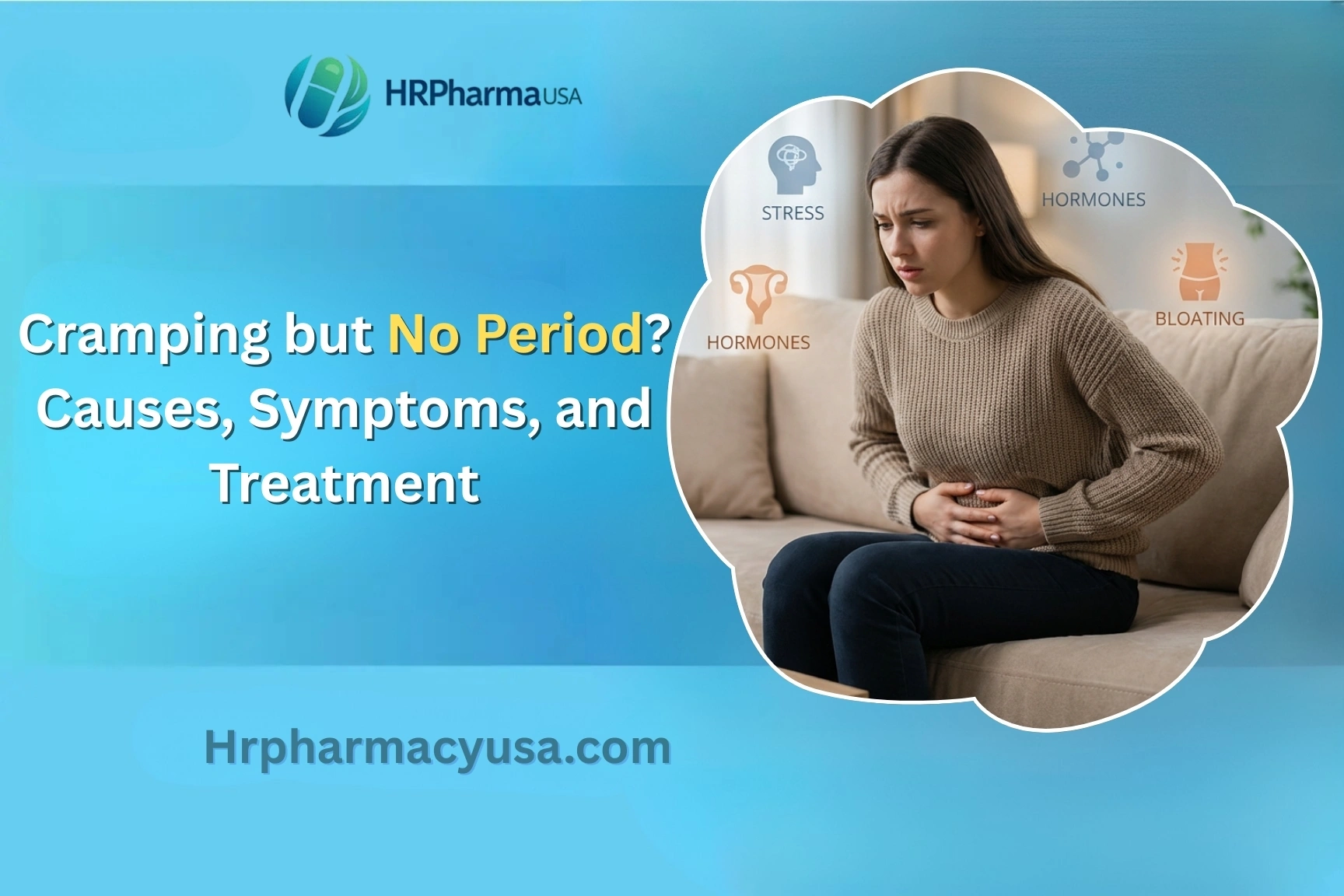
Cramping but no period? It’s one of those body mysteries that can instantly hijack your day—because your brain goes straight to the big questions: Is this pregnancy? Did something “break”? Why do I feel like my period is about to start, but nothing happens?
The tricky part is that cramps aren’t exclusive to menstruation. Your uterus, ovaries, bladder, and even intestines all live in the same neighbourhood and can send similar “ouch” signals to your brain.
So lower belly cramps with no bleed can be anything from totally normal (hello, ovulation cramps with no period) to a sign your hormones are shifting (PMS cramps with no period, hormonal cramps with no bleeding) to stress messing with your cycle (stress cramps with no period) to something that deserves a proper check-up.
And yes—sometimes cramps, no period, or early pregnancy is the answer, even if you have zero spotting. The goal isn’t to guess based on one symptom; it’s to connect the dots: timing in your cycle, where the pain sits, how intense it is, and what other symptoms are tagging along. Think of it like trying to identify a song: one note isn’t enough, but a few bars and suddenly you know exactly what you’re hearing.
Decode the Symptom: What Cramps Without Bleeding Can Mean
Period cramps vs. non-period pelvic cramps
Period cramps usually come from the uterus contracting as it sheds its lining. But cramping without bleeding can come from:
- Ovaries (ovulation pain, no monthly bleed, cysts)
- Hormones (delayed ovulation, cycle delays)
- Bladder (UTI cramps, no monthly)
- Bowel (IBS cramps mimicking period)
Why “lower belly cramps, no bleed” can fool you
Because your body uses similar nerve pathways for different organs, the sensation can feel identical—like your pelvis is speaking one language no matter who’s talking.
Quick Self-Check Before You Spiral
Timing: where you are in your cycle
Ask yourself:
- Are you mid-cycle (around days 12–16)? That leans towards ovulation cramps, no period.
- Are you due for your period within a few days? That could be PMS cramps, no period, or a period that’s simply late.
- Are you late by a week or more? Now pregnancy, hormone imbalance, and other causes move up the list.
Pain profile: dull, sharp, one-sided, or all-over?
- Dull/achy, centred: often PMS/period-like
- One-sided: ovulation pain, ovarian cyst cramps, no bleeding
- Sharp or escalating: take more seriously, especially with other symptoms
Extra clues: discharge, fever, urinary symptoms, bowel changes
These details matter more than people think:
- Burning/urgency when peeing → think UTI cramps, no monthly
- Diarrhoea/constipation, relief after bowel movement → IBS cramps mimicking period
- Fever, foul discharge → infection needs evaluation
Pregnancy Signs: Cramps With No Period
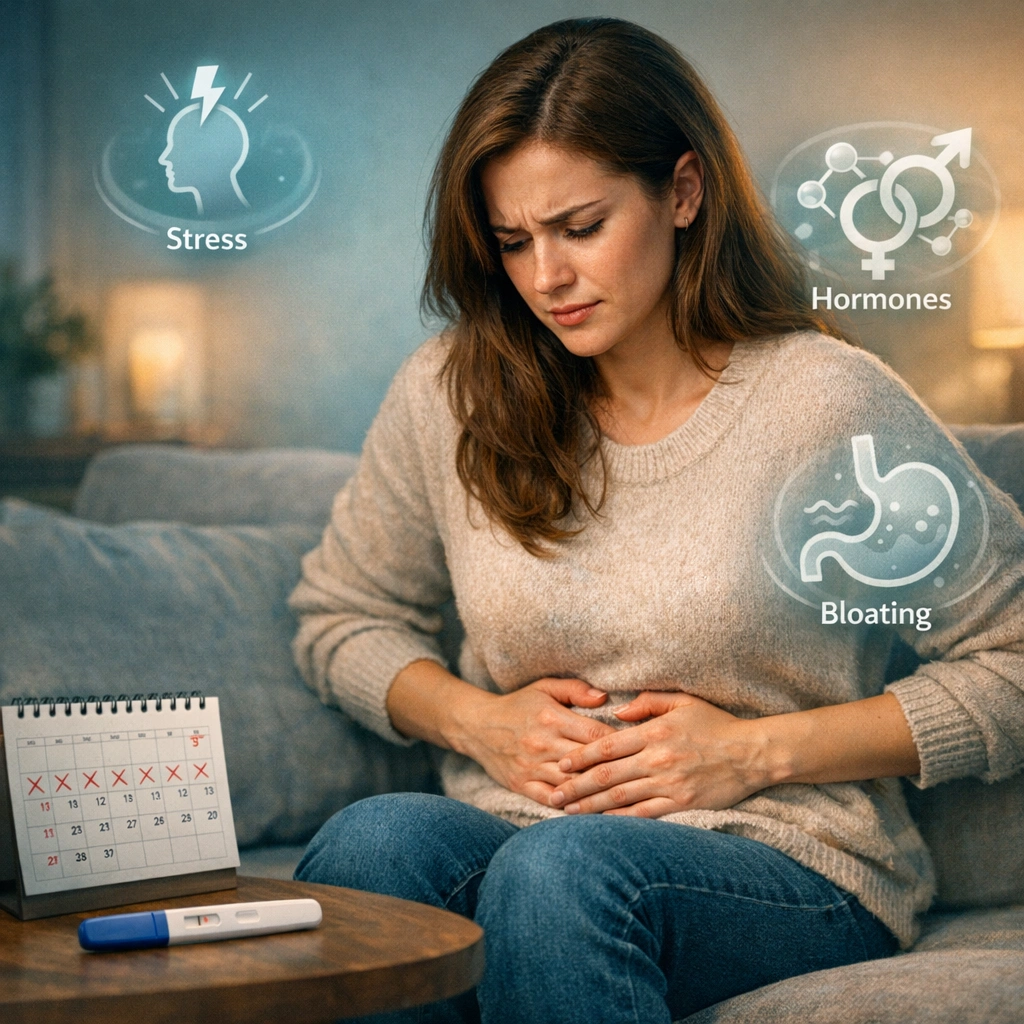
If pregnancy is possible, don’t waste days overthinking—test. A home test can save you a lot of mental noise.
Cramps, no period, early pregnancy
Cramps and no period in early pregnancy can happen because hormones increase blood flow and your uterus starts preparing to expand. People often describe it as “period cramps, but lighter.”
Common search thoughts are real-life thoughts:
- Could cramps and no period mean pregnancy?
- pregnant cramps, no period
- missed period cramps pregnant
Implantation cramps, no bleeding
Implantation cramps no bleeding can happen, but it’s not a rule. Some people cramp, some spot, and some feel nothing. So treat it as a “maybe”, not a diagnosis.
Pregnancy cramps without bleeding: what’s normal?
Mild, occasional pregnancy cramps without bleeding can be normal—especially early on. But pain should not steadily worsen or knock you flat.
When cramps and a late period are an emergency
Get urgent care if you have:
- severe one-sided pain
- dizziness/fainting
- shoulder-tip pain
- heavy bleeding
These can be signs of an ectopic pregnancy or another emergency.
Ovulation Pain That Mimics a Period
Ovulation cramps, no period (mittelschmerz, no bleeding)
Ovulation cramps with no period—also called mittelschmerz with no bleeding—often show up mid-cycle and may be:
- one-sided
- brief (minutes to hours)
- triggered by movement or exercise
Mid-cycle cramps vs. PMS
Mid-cycle cramps with no period usually happen earlier than PMS. PMS cramps with no period tend to show up in the days right before bleeding (even if bleeding is delayed).
When ovulation pain suggests a cyst
If ovulation pain with no monthly bleed becomes intense, lasts more than a day, or keeps returning on the same side, consider ovarian cyst cramps with no bleeding. Many cysts resolve on their own, but persistent pain deserves an ultrasound conversation.
Hormonal Shifts and Contraception Changes
PMS cramps no period and hormonal cramps no bleeding
Hormones aren’t always punctual. If ovulation is delayed (or doesn’t happen), you can feel classic PMS symptoms—cramps, bloating, moodiness—without bleeding on schedule. This is where people experience hormone imbalance, cramps and no flow and wonder what’s going on.
Common triggers:
- illness
- intense training
- rapid weight changes
- thyroid issues
- postpartum shifts
Birth control cramps, no period
Birth control cramps no period can happen with hormonal methods that thin the uterine lining. Less lining = less bleeding, sometimes none, but cramps can still happen.
Post-pill, IUD, implant, shot: what to expect
- Hormonal IUD: cramping is common early; periods may lighten or stop.
- Implant/shot: irregular bleeding patterns, cramps, skipped bleeds are common.
- Stopping the pill: your body may take a few cycles to reboot predictable ovulation.
Also you would like to read about Ozempic Breast: Side Effects, Causes and Remedies
Stress Factors That Delay Your Bleed
Stress cramps, no period
Stress can delay ovulation, and delayed ovulation delays your period. That’s the boring-but-true explanation behind many cases of stress cramps and no period.
Anxiety causing cramps, no bleed
Anxiety causing cramps with no bleed is also a muscle-and-gut issue. Anxiety can tighten your abdominal wall and pelvic floor and ramp up gut sensitivity—so the cramps feel “period-ish” even if your uterus isn’t the main driver.
Cramping Without a Period: Could It Be PCOS or Endometriosis?
This is where recurring patterns matter. One weird cycle happens. Repeating weird cycles is a clue.
PCOS: irregular cycles, hormone imbalance, cramps, no flow
PCOS often involves irregular ovulation, which leads to irregular or missed periods. You might notice:
- long cycles or skipped months
- acne or increased hair growth
- weight changes
- cramps but no period because your cycle timing is unpredictable
PCOS pain varies—some people feel little, others feel recurring discomfort, especially if cysts are involved.
Endometriosis cramps, no period
Endometriosis cramps with no period happen because endometriosis pain doesn’t always follow the calendar. Pain can flare with inflammation, bowel movements, sex, or hormonal changes—sometimes even when bleeding doesn’t show up.
Pain patterns that raise suspicion
Consider evaluation if you have:
- pain during sex
- bowel pain around your cycle
- cramps that start days before bleeding (or happen with minimal bleeding)
- pain that interferes with normal life
Other Pelvic Causes That Don’t Always Follow Your Cycle
Ovarian cyst cramps, no bleeding
Ovarian cyst cramps with no bleeding often feel one-sided and can cause a heavy, tugging sensation. Sudden sharp pain (especially with nausea) can happen with rupture or twisting, which is urgent.
Fibroid cramps, no period
Fibroid cramps that occur without a period can manifest as pressure, pelvic heaviness, or cramping, even on days when there is no bleeding. Some people also get frequent urination or constipation from pressure effects.
Common “Imposter” Causes: It Might Not Be Reproductive
UTI cramps, no monthly
UTI cramps with no monthly can feel like low pelvic pressure and cramping, often with:
- burning urination
- urgency/frequency
- strong-smelling urine
A quick urine test can clarify this fast.
IBS cramps mimicking a period
IBS cramps mimicking period are super common because bowel cramps can sit right where period cramps live. Clues:
- Cramps improve after a bowel movement.
- symptoms track with certain foods or stress
- gas, bloating, alternating diarrhea/constipation
Cramps but No Period After a Plan B: What to Expect
Why timing gets weird after emergency contraception
Plan B can delay ovulation. That can shift your whole cycle, leading to cramps but no period after a Plan B, spotting, or a period that shows up early or late. Basically, it’s a hormonal speed bump.
When to test and when to get checked
- If your period is more than 7 days late, take a pregnancy test.
- If you have severe pain, heavy bleeding, or dizziness, seek care sooner.
- If your cycles stay unusual for more than 2–3 cycles, check in.
Cramping but No Period During Perimenopause
Perimenopause cramps, no period and cycle changes
Perimenopause cramps with no period can happen because ovulation becomes less consistent. Your cycle might:
- shorten, then lengthen
- skip a month, then return
- come with heavier or lighter bleeding than usual
Symptom relief that actually helps
Many people get relief from:
- heat + anti-inflammatories (if safe for you)
- consistent sleep and strength training
- discussing hormone therapy options if symptoms are disruptive
If bleeding becomes very heavy or irregular, don’t “ride it out” without guidance.
When to Worry: Red Flags You Shouldn’t Ignore
Severe cramps, no period
Severe cramps with no period—especially new, worsening, or one-sided—shouldn’t be brushed off.
Sharp cramps, no menstrual + dizziness, fever, or vomiting
These combinations can signal urgent issues (infection, ectopic pregnancy, ovarian torsion, ruptured cyst). If your body is waving a big red flag, don’t negotiate with it.
Cramps and no period for weeks: what it could mean
Cramps and no period for weeks can point to ongoing hormone imbalance, cysts, fibroids, thyroid issues, or pregnancy (including early loss). Persistent symptoms deserve evaluation—especially if you’re also dealing with cramps, no period, bloating or back cramps, and no period reasons that keep intensifying.
How Clinicians Figure Out the Cause
Questions you’ll be asked
Expect:
- last period date, usual cycle length
- pregnancy risk and contraception details
- pain location, severity, pattern
- urinary/bowel symptoms and discharge
Tests: pregnancy, urine, labs, ultrasound
Common tests include:
- urine or blood pregnancy test
- urinalysis (UTI)
- hormone or thyroid labs (when indicated)
- pelvic ultrasound (cysts, fibroids, uterine lining)
Treatment Options (Based on the Cause)
At-home relief
For mild symptoms with no red flags:
- heating pad
- gentle walking/stretching
- hydration and regular meals
- OTC anti-inflammatories (if safe for you)
Medical treatments
Depending on the cause:
- antibiotics for UTIs
- hormonal management for cycle regulation
- targeted treatment plans for PCOS or endometriosis
- monitoring or treating cysts/fibroids as needed
Prevention and Tracking for Fewer Surprises
What to track
Write down:
- cycle dates
- pain days and severity
- spotting
- bowel/urinary symptoms
- Plan B use, birth control changes, major stress
A simple action timeline
- 1–3 days late: monitor; consider testing if pregnancy possible.
- ~1 week late: test; watch for one-sided/sharp pain.
- 2 weeks late or recurring pattern: book an evaluation.
Conclusion
Cramping without bleeding is frustrating because it feels like your body started a story and forgot the ending. Most of the time, it’s tied to timing shifts—ovulation, stress, birth control changes, or hormone fluctuations—and it settles once your cycle catches up. But if you’re dealing with severe cramps, no period, sharp one-sided pain, fever, dizziness, or cramps with no period for weeks, that’s your cue to stop guessing and get checked. You don’t need to suffer through the uncertainty—your symptoms can be decoded, and the right treatment depends on the real cause.
FAQs About Periods and Cramping
Abdominal cramps no period am I pregnant if my test is negative?
If it’s early, the test may be too soon. Retest in 48–72 hours or after a week. If pain is severe or one-sided, seek care regardless of the test.
Cramps and no period: when to worry the most?
Worry most with severe cramps, no period, sharp cramps with no menstruation plus dizziness/fainting, fever, vomiting, heavy bleeding, or rapidly worsening one-sided pain.
Is it normal to have ovulation cramps no period every month?
It can be normal, especially if it’s mild and mid-cycle. If it becomes severe, lasts longer, or changes suddenly, consider evaluation for ovarian cyst cramps with no bleeding.
Why do I have cramping but no period even when my cycles are usually regular?
Delayed ovulation is a common reason. Stress, illness, travel, sleep disruption, or subtle hormone shifts can delay your cycle and cause hormonal cramps with no bleeding.
What do cramps but no period mean after starting birth control?
Birth control cramps and no period can happen as your body adjusts, and some methods reduce bleeding. New severe pain or persistent symptoms should still be checked.