



Your cycle has a storyline, and luteal phase discharge is one of those “blink and you’ll miss it” plot twists. One day you’ve got slippery, fertile-type mucus… and then suddenly everything turns creamy, sticky, or even kind of dry. Naturally, your brain goes: Is this normal? Is my period coming? Could I be pregnant?
Let’s make it simple, specific, and actually useful. We’ll talk texture, color, what’s typical after ovulation, what people notice in early pregnancy, and the red flags that deserve attention.
Luteal Phase Discharge 101: What’s Happening in Your Body
The luteal phase starts after ovulation and ends when your period begins. It’s basically the “maintenance mode” part of your cycle: your body is either supporting a potential pregnancy or preparing to reset.
The hormone shift: progesterone discharge in plain English
After ovulation, progesterone rises. Think of progesterone like a “calm the system down” hormone. It tends to:
- Thicken cervical mucus
- Reduce that slippery “fertile” feeling
- Make discharge look creamy luteal phase discharge, thick white luteal discharge, or sticky luteal phase mucus
So if you’re noticing more luteal mucus discharge that looks lotiony or tacky, progesterone is usually the reason.
Luteal phase cervical mucus vs “fertile” mucus
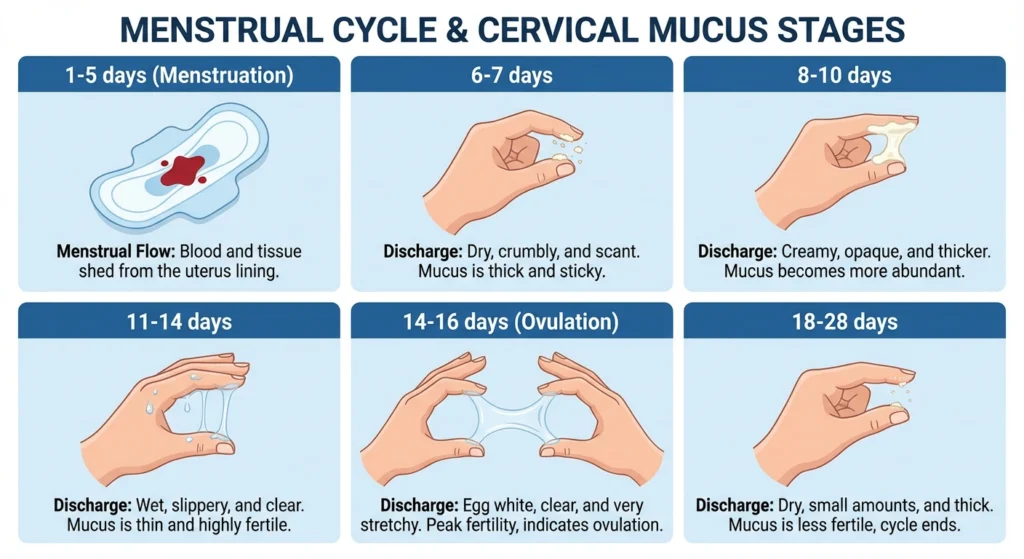
Fertile mucus (around ovulation) is often stretchy and clear—like egg whites. Luteal phase cervical mucus is usually the opposite: it becomes thicker, cloudier, and less stretchy.
That’s why a lot of people describe post-ovulation discharge as:
- “lotion-like”
- “milky”
- “paste-y”
- “not much at all”
A quick DPO timeline (so your symptoms make sense)
DPO = “days past ovulation.” A rough guide:
- 1–3 DPO: mucus starts drying up or turning sticky
- 4–7 DPO: often creamy or minimal
- 8–12 DPO: may stay creamy, or you may see a small bump in moisture before your period
- Right before period: many get luteal phase discharge before period that’s wetter/creamier again
Bodies vary, but this timeline helps you stop treating every change like a mystery novel clue.
Cervical Mucus After Ovulation
This is the big one: cervical mucus after ovulation often shifts fast, and that shift is usually normal.
From egg-white to sticky: why post-ovulation discharge changes
Once the egg is released, your body basically “closes the gates.” The cervix makes mucus that’s more like a protective seal than a welcome mat for sperm. That’s why discharge after ovulation luteal tends to be thicker and less stretchy.
Discharge Traits: creamy, thick, sticky, milky, and lotion-like
Here’s a no-drama cheat sheet of common Discharge Traits in the luteal phase:
- Creamy luteal phase discharge: looks like hand lotion; white or pale yellow; common mid-luteal
- Thick white luteal discharge: thicker, sometimes clumpy-looking but not cottage-cheese (more on that later)
- Sticky luteal phase mucus: tacky, glue-like, can feel “grabby” on toilet paper
- Milky discharge luteal phase: thin-ish but opaque; can be normal especially if you’re more hydrated
- Lotion-like discharge luteal: classic progesterone look—smooth, creamy, not stretchy
If you’re wondering why creamy discharge luteal phase happens: progesterone + slower cell turnover at the cervix = thicker, more protective mucus.
Normal luteal phase discharge color: the usual range
Luteal phase discharge color commonly falls into:
- White
- Cream
- Very light yellow (especially once it dries)
Light yellow can be normal if there’s no strong odor, itching, burning, or pain. Color alone isn’t the whole story—think of it like judging a movie by one frame.
Also you would to read about Cramping but No Period? Causes, Symptoms, and Treatment
Cervical Fluid After Ovulation
“Fluid” and “mucus” get used interchangeably, but some people notice a more watery sensation and wonder if that breaks the rules.
Why “watery” can still be normal sometimes
Cervical fluid after ovulation can occasionally seem wetter because of:
- Arousal fluid (yep, it can mix with discharge)
- Sweating/exercise
- More hydration
- Normal mini-fluctuations in hormones
- Mild irritation (even from new underwear or soap)
So a one-off “why am I suddenly damp?” day isn’t automatically a problem.
When watery luteal discharge yeast symptoms are more likely
Watery discharge can happen with yeast, but yeast usually brings friends to the party:
- Itching
- Burning
- Redness
- Swelling
- Sometimes a thick, curdy discharge (not always)
If you’re seeing watery discharge plus intense itch/burn, it’s reasonable to suspect watery luteal discharge yeast involvement and consider getting checked.
How to track cervical fluid without overthinking it
Try this simple method:
- Note texture (dry/sticky/creamy/watery)
- Note amount (none/low/medium/high)
- Note symptoms (itch/odor/pain)
Tracking for patterns is useful. Spiraling over a single day? Not so much.
Discharge After Ovulation if Pregnant
Let’s be real: everyone wants a clear sign early on. But discharge is more like a “maybe” than a “proof.”
What can look different (and what often doesn’t)
discharge after ovulation if pregnant may be:
- A bit more abundant
- Creamier and persistent
- Less likely to dry up completely
But here’s the catch: PMS can look identical. Many people get the same creamy/milky discharge before a period.
cervical mucus after conception: what people commonly notice
Cervical mucus after conception is often described as:
- creamy, white, or milky
- more consistent day-to-day
- sometimes increased due to rising hormones and more blood flow to the pelvis
In early pregnancy, discharge can also increase because the vagina is basically keeping things clean and balanced during major hormonal changes.
The biggest myth: discharge as a “sure sign”
Discharge can support a hunch, but it can’t confirm pregnancy. If discharge is your only “symptom,” treat it as interesting—not definitive.
After Ovulation Discharge if Pregnant
This sounds similar, but let’s tackle it from a different angle: how patterns can evolve as days pass.
Week-by-week expectations (without the doom-scrolling)
after ovulation discharge if pregnant may follow a loose progression:
- Early luteal (1–6 DPO): often creamy or sticky (same as non-pregnant cycles)
- Mid luteal (7–10 DPO): some notice a bump in creamy discharge; others notice nothing
- Late luteal (11–14 DPO): if pregnant, discharge may stay steady instead of “drying out” before a period
Again: not universal. But if your normal pattern is “dry before period” and you stay creamy, you might take note.
How long implantation timing can mess with patterns
Implantation typically happens around 6–10 DPO (varies). Hormonal shifts around that time can change mucus slightly, or cause light spotting that changes the color of discharge.
If you’re using progesterone supplements
Progesterone supplements (oral, vaginal, injections) can absolutely change discharge:
- thicker
- whiter
- more consistent
- sometimes more abundant
If you’re on progesterone, discharge becomes an even less reliable pregnancy clue—because progesterone itself is doing a lot of the visual work.
5 Dpo Discharge if Pregnant
At 5 DPO, it’s usually too early for pregnancy to cause dramatic, consistent discharge changes. But people still look—so let’s make it clear and realistic.
What 5 DPO commonly looks like
5 dpo discharge if pregnant often looks… like normal luteal discharge:
- sticky or creamy
- white/cream
- low to moderate amount
If you see creamy discharge at 5 DPO, it can be totally normal progesterone activity whether you conceived or not.
cramps luteal phase discharge + luteal phase bloating discharge
A lot of folks notice luteal phase symptoms discharge together, like:
- cramps luteal phase discharge (mild twinges)
- luteal phase bloating discharge (that puffy waistband feeling)
These symptoms are common in non-pregnant cycles too. Think of the luteal phase like your body “setting the stage”—cramps and bloating can be part of the set design.
Pairing discharge with temperature and timing
If you track basal body temperature (BBT), a sustained rise after ovulation supports that you did ovulate. But even BBT can’t confirm pregnancy at 5 DPO. Use it as context, not a verdict.
10 Dpo Discharge if Pregnant
At 10 DPO, you’re closer to when pregnancy tests can start turning positive (depending on sensitivity and implantation timing). That’s why people pay extra attention here.
Why 10 DPO is when people start noticing changes
10 dpo discharge if pregnant might be:
- creamy and ongoing
- slightly increased
- sometimes mixed with light spotting (which changes color)
Some people also notice a more “wet” or milky discharge luteal phase feel around now.
breast tenderness luteal discharge and fatigue luteal mucus changes
If you’re noticing discharge plus:
- breast tenderness luteal discharge days
- fatigue luteal mucus changes (feeling unusually wiped out)
…you still can’t confirm pregnancy from symptoms alone, but it can be a reasonable moment to consider testing soon.
When to test and when to wait
If you test at 10 DPO and it’s negative, it might be:
- truly negative, or
- simply too early
Retesting in 48 hours is often more informative than taking five tests in one day.
Brown Discharge After Ovulation
Brown discharge freaks people out because it looks like “old blood” (and often it is). But it’s not always bad news.
Old blood vs hormonal spotting
Brown discharge after ovulation usually means a small amount of blood took longer to exit the vagina, so it oxidized and turned brown.
Common benign reasons:
- hormonal fluctuations
- a sensitive cervix
- tiny spotting around implantation window (not guaranteed, not diagnostic)
brown luteal discharge spotting: common causes
brown luteal discharge spotting can come from:
- leftover blood from ovulation spotting (if you spot mid-cycle)
- cervical irritation (sex, pelvic exam)
- early period starting (especially if it turns red and gets heavier)
- birth control changes
When brown discharge isn’t “normal”
Get checked if brown discharge comes with:
- strong odor
- pelvic pain
- fever
- itching/burning
- bleeding that becomes heavy or prolonged
Basically, brown alone can be fine. Brown + symptoms is the warning label.
Bloody Discharge After Ovulation
Seeing pink or red after ovulation can be confusing, especially when you’re watching DPO like a hawk.
Spotting vs a real bleed: how to tell
bloody discharge after ovulation is more like spotting when:
- it’s light (doesn’t soak a pad)
- it comes and goes
- it stays pink/brown rather than flowing bright red
A real bleed acts more like a period: heavier, progressive, and lasting multiple days.
Possible causes (benign to serious)
Possible causes include:
- hormone dips in the luteal phase
- cervical irritation
- polyps or fibroids
- infection (especially if odor/pain is present)
- early pregnancy spotting (again: not proof)
What to write down for your clinician
If it keeps happening, track:
- which DPO it starts
- how long it lasts
- color (pink, red, brown)
- amount
- any triggers (sex, exercise)
- other symptoms
Patterns are gold in diagnosis.
Bleeding After Sex While Ovulating
This one can feel alarming, and it’s not strictly “luteal phase,” but it’s a common cycle-adjacent concern that people link to discharge changes.
The cervix can be sensitive—here’s why
bleeding after sex while ovulating can happen because:
- ovulation can increase cervical softness and blood flow
- friction can irritate delicate tissue
- dryness (even briefly) can cause tiny tears
- certain positions can bump the cervix
A small smear of blood once in a while can be benign.
Red flags: infection, irritation, and STI clues
Consider getting checked if bleeding after sex happens:
- repeatedly
- with pain
- with foul odor or unusual discharge
- alongside burning when peeing
- with pelvic pain
When you should get checked ASAP
Seek urgent care if there’s:
- heavy bleeding
- severe one-sided pelvic pain
- dizziness/fainting
- fever
Those symptoms deserve fast attention.
Red Flags Checklist: When Luteal Phase Discharge Signals Infection or Another Issue
Not all discharge changes are hormonal. Some are your body waving a bright flag.
yellow luteal phase discharge and smelly luteal phase discharge
yellow luteal phase discharge can be normal if pale and odor-free. But yellow that’s:
- bright, thick, or persistent
- paired with irritation
- paired with odor
…leans more concerning.
Smelly luteal phase discharge (especially “fishy” or rotten) is a bigger clue than color. Strong odor isn’t typical for normal luteal discharge.
luteal phase discharge infection vs yeast vs BV
A quick, practical breakdown:
- Yeast: itch, burn, redness; discharge may be thick/curdy (sometimes watery too)
- BV: fishy odor, thin gray/white discharge, often worse after sex
- STIs: can vary widely; may include pelvic pain, bleeding after sex, burning, unusual odor/color
If you suspect luteal phase discharge infection, testing beats guessing—because treating the wrong thing can make symptoms drag on.
Pain, fever, pelvic pressure: the “don’t wait” symptoms
Don’t wait it out if you have:
- fever/chills
- pelvic or lower abdominal pain
- worsening symptoms
- new sores or rash
- heavy bleeding
Luteal Phase Discharge Before Period: What’s Normal vs “period Starting”
The days before your period are like the “credits rolling” part of your cycle—things transition fast.
late luteal phase discharge and luteal phase premenstrual discharge patterns
In the late luteal phase discharge window, you might notice:
- a return of creamy discharge
- slightly wetter discharge right before bleeding
- thicker, tacky mucus that suddenly disappears once flow begins
This is typical luteal phase premenstrual discharge for many people.
luteal discharge vs period: the transition zone
Here’s a practical way to tell luteal discharge vs period:
- If it stays mostly mucus-like and you only see it when wiping: likely discharge/spotting
- If you need a pad/tampon and it increases over hours: period is arriving
Birth control, breastfeeding, and stress: pattern-changers
Your “normal luteal phase discharge” can shift if:
- you started/stopped hormonal birth control
- you’re postpartum or breastfeeding
- stress and sleep changes hit hard
- you’re approaching perimenopause
So if your discharge pattern changes for a couple cycles during a life shift, that can be normal—even if it’s annoying.
Conclusion
Luteal phase discharge is usually your hormones doing routine maintenance: progesterone thickens things up, textures shift from slippery to creamy or sticky, and colors often stay in the white-to-cream range.
The tricky part is that early pregnancy and PMS can look frustratingly similar—especially around 5–10 DPO.
When discharge turns foul-smelling, intensely itchy, green/yellow with symptoms, or comes with pain, fever, or heavy bleeding, that’s when it stops being “cycle noise” and deserves a medical check.
FAQs About Luteal Phase Discharge
What luteal phase discharge looks like if everything is normal
Normal can be dry, sticky, creamy, or milky—often creamy luteal phase discharge or sticky luteal phase mucus—with mild or no odor and no itching or burning.
Can cervical mucus after ovulation suddenly become watery again?
Yes, sometimes. Hydration, arousal fluid, exercise, or small hormone fluctuations can change cervical fluid after ovulation briefly. If it’s watery plus itch/burn/odor, consider infection.
Is brown discharge after ovulation a sign of implantation?
It can happen around the implantation window, but it’s not a reliable sign. Brown discharge after ovulation is often just old blood or minor hormonal spotting.
How can I tell luteal discharge vs period starting?
Discharge/spotting is usually lighter and mucus-like (often only when wiping). A period becomes progressively heavier and typically requires menstrual products consistently.
When should I worry about smelly luteal phase discharge?
If the smell is strong (especially fishy), persistent, or paired with irritation, pelvic pain, or unusual color, it may signal luteal phase discharge infection and is worth getting tested.