


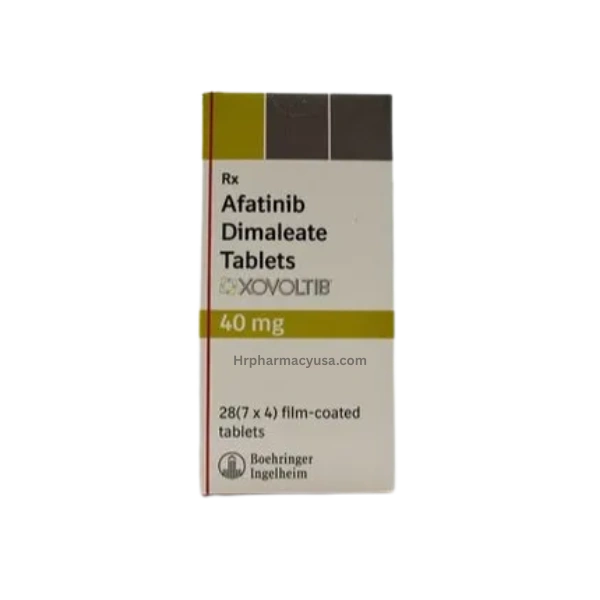
Xovoltib 40mg (Afatinib Dimaleate)
Price range: $960.00 through $2,360.00
Xovoltib 40mg contains afatinib, a targeted therapy often prescribed for adults with specific EGFR mutation-positive non-small cell lung cancer. It is usually taken once daily on an empty stomach and is part of a personalized treatment plan from your oncologist. If your doctor has recommended afatinib, this 40 mg strength is the typical starting dose, with adjustments based on how you respond—prescription required. Always follow your care team's guidance.
| Active Ingredient: | Afatinib Dimaleate |
|---|---|
| Indication: | Non-small cell lung cancer |
| Manufacturer: | Boehringer Ingelheim India Pvt.Ltd |
| Packaging: | 7 tablets in 1 strip |
| Strength: | 40mg |
| Delivery Time: | 6 To 15 days |
In Stock
What is Xovoltib 40 mg?
If your doctor has mentioned Xovoltib 40mg, you are probably looking for clear, simple info without a lot of jargon. Xovoltib is an afatinib tablet used in many countries for certain types of non-small cell lung cancer that test positive for specific EGFR mutations, such as exon 19 deletions or L858R substitutions. In the USA, afatinib is better known by the brand name Gilotrif. The active ingredient is the same, which matters most for how the medicine works. Your oncologist will decide the exact brand and source that fits your treatment plan and your prescription.What Xovoltib 40mg is used for
- Indication: Afatinib belongs to a group of medicines called EGFR inhibitors. It is often prescribed as first-line therapy for adults with metastatic or advanced non-small cell lung cancer when tumor testing shows eligible EGFR mutations. In some regions, afatinib may also be used in specific squamous NSCLC settings after chemotherapy. If you are in the USA, your oncologist will follow FDA-labeled uses and trusted clinical guidelines.
- Why EGFR testing matters: This medicine targets cancer cells that rely on EGFR signaling. If your tumor does not carry the right mutation, afatinib is unlikely to help, which is why genetic testing is done first.
How Xovoltib 40mg works
Afatinib blocks the EGFR pathway inside cancer cells. Many EGFR-positive tumors use this pathway to grow and spread. By inhibiting that signal, afatinib can slow down tumor growth and may shrink tumors in people whose cancer depends on EGFR activity. It is not chemotherapy in the traditional sense. It is a targeted therapy, which usually means a different side effect profile and a daily pill routine rather than IV infusions.Typical dosage and how to take it
- Usual starting dose: 40 mg by mouth once daily.
- When to take it: Take it on an empty stomach. That means at least 1 hour before a meal or 2 hours after a meal.
- Swallowing: Swallow the tablet whole with water. Do not crush or chew unless your healthcare provider has given you specific instructions.
- Missed dose: If you miss a dose and it is more than 12 hours until your next dose, take the missed dose when you remember. If it is less than 12 hours to the next dose, skip the missed dose and go back to your regular schedule. Do not double up.
- Dose adjustments: Your doctor may reduce the dose to 30 mg or 20 mg if you have side effects that need a lower dose. Some patients might be on a higher or lower strength depending on tolerability and response. Do not change your dose without medical advice.
Available strengths
Afatinib tablets are available in different strengths to allow careful dose adjustments:- Xovoltib 20 mg
- Xovoltib 30 mg
- Xovoltib 40 mg
- Xovoltib 50 mg
What to expect during treatment
- Monitoring: You will likely get regular checkups, lab tests, and sometimes imaging to see how your body and your cancer are responding. Tell your care team about any new symptoms right away.
- Side effect patterns: Many side effects show up in the first few weeks. Acting quickly often helps prevent them from becoming severe. Keep your care team in the loop.
- Keeping a routine: Taking your tablet at the same time each day and following the empty stomach rule can help keep levels steady.
Xovoltib 40mg Side Effects
Not everyone has the same experience, but these are frequently reported:- Diarrhea: This is the most common side effect of afatinib. Have antidiarrheal medicine like loperamide on hand and start it at the first sign of loose stools as instructed by your care team. Stay hydrated.
- Skin reactions: Rash, acne-like bumps, dry skin, or itching can happen—gentle skin care, fragrance-free moisturizers, and sunscreen help. Your team may prescribe a cream or oral medicine if needed.
- Mouth sores: Known as stomatitis. Using a soft toothbrush, avoiding spicy or acidic foods, and using a doctor-recommended mouthwash can help.
- Nail and hair changes: Sore nails or changes around the nail bed are possible. Keep nails short and avoid tight shoes if toenails are tender.
- Appetite changes, nausea, or vomiting: Small, frequent meals and anti-nausea medications can help if your doctor recommends them.
- Fatigue: Rest, hydration, and light activity as tolerated can improve energy.
Serious Side Effects
Contact your healthcare provider right away or seek urgent care if you notice:- Worsening shortness of breath, cough, or fever. This could signal a rare but serious lung problem called interstitial lung disease or pneumonitis.
- Severe or persistent diarrhea, especially if you feel weak or dizzy. Dehydration can happen fast.
- Eye pain, redness, vision changes, or light sensitivity. Afatinib can sometimes irritate the cornea.
- Severe skin blistering or peeling.
- Signs of liver problems include yellowing of the skin or eyes, dark urine, or upper right belly pain.
- Any bleeding that is heavy or unusual.
Important precautions
- Pregnancy and birth control: Afatinib can harm an unborn baby. Use effective birth control during treatment and for at least 2 weeks after the last dose. If you are pregnant, planning pregnancy, or think you might be pregnant, tell your doctor immediately.
- Breastfeeding: Do not breastfeed during treatment and for at least 2 weeks after the last dose.
- Kidney or liver issues: Your provider may adjust your dose based on lab results or overall health.
- Elderly patients: Dose adjustments can be more common, depending on tolerability.
- Surgery and procedures: Tell your surgeon or dentist that you are on afatinib before any procedure.
Drug and supplement interactions
Afatinib is affected by medicines that change P-glycoprotein activity in the gut.- Tell your doctor if you use potent P-gp inhibitors such as ritonavir, ketoconazole, or clarithromycin. These can raise afatinib levels and side effect risk.
- Strong P-gp inducers like rifampin, carbamazepine, or St. John's wort can lower afatinib levels and may reduce effectiveness.
- Alcohol is not a direct interaction, but it can worsen dehydration or stomach irritation, especially if you are dealing with diarrhea.
- Always run new prescriptions, over-the-counter meds, and herbal supplements by your care team.
Tips for Day to Day Use
- Set a daily reminder to take it at the same time, on an empty stomach.
- Keep loperamide or another antidiarrheal handy, as advised by your team. At the first loose stool, start it as directed.
- Use sunscreen and gentle skin care. A broad-spectrum SPF 30 or higher is a good starting point.
- Drink fluids regularly. If diarrhea starts, increase fluids and electrolytes as recommended.
- Keep a symptom journal. Jot down bowel changes, rash, mouth sores, or anything that affects your day. It helps your care team make timely dose adjustments.
- Do not make dose changes on your own. Call your oncology clinic if side effects are making life challenging. Dose adjustments are standard and can make a big difference in comfort.
Storage and handling
- Store at room temperature, about 68 to 77°F.
- Keep tablets in the original container with the desiccant to protect from moisture.
- Keep out of reach of children and pets.
- Do not use if the seal is missing or damaged. Check the expiration date.
Who should consider Xovoltib 40mg
- Adults diagnosed with metastatic or advanced non-small cell lung cancer that tests positive for specific EGFR mutations, as confirmed by an approved test.
- Patients for whom an oncologist has recommended afatinib based on medical history, prior treatments, and current guidelines are eligible.
Who should not take it
- Anyone with a known severe allergy to afatinib or any of the tablet ingredients.
- People who are pregnant should not undergo treatment; they should undergo the procedure only if the potential benefit outweighs the risk and the oncologist has advised it with complete counseling on risks.
- People without a confirmed eligible EGFR mutation should not proceed unless a specialist has a specific reason and has explained the plan in detail.
FAQs About Xovoltib 40mg
Is Xovoltib 40mg the same as afatinib? Yes. Xovoltib is a brand name for afatinib used in several countries. In the USA, afatinib is sold under the brand Gilotrif. The active ingredient, afatinib, is the same. That said, brands can differ in packaging and non-medicinal ingredients. Stick with the exact product and strength your oncologist prescribes and your pharmacist verifies. How long does it take for Xovoltib 40mg to start working? People often have scans every 6 to 12 weeks to check response, but some notice symptom changes earlier. Every case is different. Some feel better quite soon, while others need more time to see results on imaging. Your care team will guide the schedule and what changes are meaningful. What should I do if I have severe diarrhea on afatinib? Start your antidiarrheal medicine as directed by your care team at the first loose stool. Increase fluids with electrolytes. If diarrhea is severe, persistent, or you feel weak, dizzy, or unable to keep up with fluids, call your oncology clinic right away. Dose adjustments or a short treatment break are standard and can help. Can I take Xovoltib 40mg with food? It is best to take it on an empty stomach. Take your tablet at least 1 hour before a meal or 2 hours after a meal. This helps your body absorb the medication consistently. If you accidentally took it with food, let your clinic know and follow their advice for the next dose. Are there other strengths if 40 mg is too strong? Yes. Afatinib comes in 20 mg, 30 mg, 40 mg, and 50 mg tablets. Many people start at 40 mg and move to 30 mg or 20 mg if side effects require a lower dose. Your doctor will decide changes based on how you are feeling, lab results, and your overall treatment plan.| size | 28 Tablet/s, 56 Tablet/s, 84 Tablet/s |
|---|




Reviews
There are no reviews yet.