


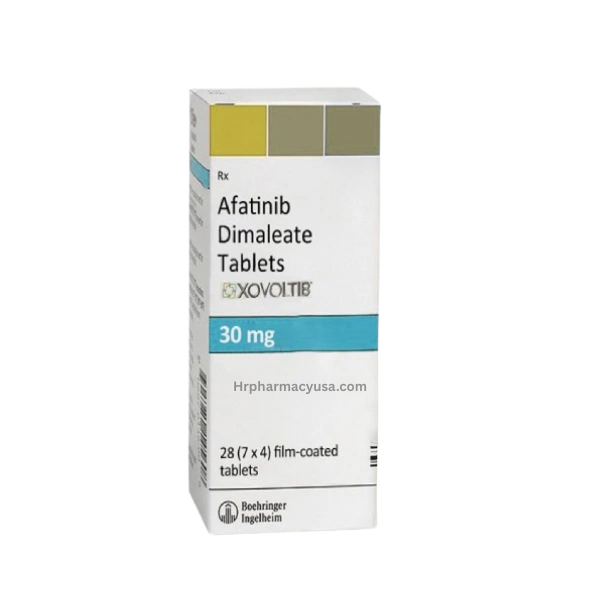
Xovoltib 30mg (Afatinib Dimaleate)
Price range: $930.00 through $2,330.00
Xovoltib 30mg is an oral cancer medicine that contains afatinib, a targeted EGFR inhibitor used in adults with certain types of non-small cell lung cancer. If your oncologist prescribed it, you likely want clear, simple information. This page explains what Xovoltib 30mg is for, how it works, possible side effects, interactions, and other available strengths so that you can feel more confident about your treatment conversation with your care team.
| Active Ingredient: | Afatinib Dimaleate |
|---|---|
| Indication: | Non-small cell lung cancer |
| Manufacturer: | Boehringer Ingelheim India Pvt.Ltd |
| Packaging: | 7 tablets in 1 strip |
| Strength: | 30mg |
| Delivery Time: | 6 To 15 days |
In Stock
What is Xovoltib 30 mg?
Xovoltib 30mg is a targeted therapy that contains afatinib. It is part of a class of medicines called EGFR inhibitors used for specific types of non small cell lung cancer in adults. afatinib is approved by the FDA and is marketed under the brand name Gilotrif. Xovoltib is a brand name used in other regions. The active ingredient is afatinib either way. If you are unsure which brand you have, check your prescription label or ask your pharmacist.Who Xovoltib 30mg may be for
Your doctor may consider afatinib for:- First-line treatment of metastatic non-small cell lung cancer that has specific EGFR mutations, most commonly exon 19 deletions or the exon 21 L858R substitution.
- Metastatic squamous NSCLC that has progressed after platinum-based chemotherapy.
How Xovoltib 30mg works
Many lung cancers grow because of abnormal signaling from the EGFR pathway. Afatinib blocks that signaling by binding to the EGFR family of receptors and turning down the growth signal. When that signal is reduced, cancer cells may grow more slowly or shrink. It is a targeted approach, meaning it targets a specific weakness in the cancer rather than affecting all fast-growing cells like some chemotherapy does.What to expect
- It is taken by mouth, usually once daily. Your oncology team will set the dose and schedule that is right for you.
- You may start at one strength and adjust based on how you respond and how you tolerate side effects.
- Some people notice skin changes or diarrhea early in treatment. Your team will help manage these effects if they happen.
Common reasons doctors use afatinib
- You have an EGFR mutation that is sensitive to EGFR blockers.
- You prefer an oral option that you can take at home with regular check-ins.
- You tolerated or did not respond to other treatments, and your doctor believes afatinib is a good next step based on your cancer's genetics and treatment history.
How to take it
- Follow your oncologist's exact instructions. This content is general information, not medical advice.
- Afatinib is usually taken on an empty stomach. That means at least 1 hour before or 2 hours after a meal.
- Swallow tablets whole with water. Do not crush or chew.
- Try to take it at the same time each day.
- If you miss a dose and it is close to your next one, skip it. If you remember well ahead of your next dose, you can take it and then return to your regular schedule. When in doubt, call your care team.
Xovoltib 30mg Side Effects
Not everyone has side effects, but knowing the common ones can help you prepare. Reach out to your care team early if anything is bothering you.Common Side Effects:
- Diarrhea
- Skin Rash or Acne Like Bumps
- Mouth Sores
- Dry or Itchy Skin
- Nail or Cuticle Tenderness
- Decreased Appetite
- Nausea or Vomiting
- Fatigue
What You Can Do:
- Stay hydrated. Diarrhea can be managed, but dehydration can sneak up quickly.
- Use gentle skin care and sun protection. Fragrance-free moisturizers can help.
- Tell your team if you develop mouth sores. Some rinses and treatments often help.
- Keep a simple symptom diary so you can describe what is happening and when.
More serious but less common effects that need urgent attention:
- New or worsening shortness of breath, cough, or fever. This could be a sign of lung inflammation.
- Severe or persistent diarrhea, dizziness, reduced urination, or signs of dehydration.
- Vision changes or eye pain. This could signal irritation or inflammation of the cornea.
- Symptoms include yellowing of the skin or eyes, dark urine, or severe fatigue. These can be signs of liver problems.
- Chest pain, swelling in the legs, or sudden weight gain. This may indicate fluid retention or heart strain.
Drug and food interactions
Tell your doctor and pharmacist about everything you take, including prescriptions, over-the-counter items, vitamins, and herbs. Some substances can change how afatinib is absorbed.- Potent P-gp inhibitors can raise afatinib levels. Examples include specific antivirals and antifungals. Your doctor may adjust timing or monitor more closely.
- Strong P-gp inducers can lower levels. These include some seizure medications and rifampin.
- Grapefruit and grapefruit juice may affect absorption. It is safest to avoid them during treatment unless your doctor says otherwise.
Precautions and who should be extra careful
- Pregnancy and breastfeeding. Afatinib can harm an unborn baby. Use effective birth control and talk to your doctor about how long to continue it after treatment ends. Do not breastfeed during treatment and for a period after the last dose as advised by your doctor.
- Skin and nails. Sun protection, gentle cleansers, and moisturizers can go a long way. Report any painful or infected skin changes quickly.
- Eyes. Report eye pain, redness, or vision changes. Avoid contact lenses if your eyes are irritated unless your eye doctor says it is safe.
- Kidneys and liver. Your doctor may run labs to check organ function and adjust your plan if needed.
- Heart. If you have a cardiac history, let your team know. Monitoring can be part of your care.
Monitoring and follow up
You will likely have regular visits, blood tests, and imaging as part of your care plan. Many teams schedule a first check-in early in treatment to catch and manage side effects before they escalate. Do not wait for the next visit if something feels off. Call sooner.Tips that patients often find helpful
- Keep anti-diarrhea medicine at home if your team recommends it, and use it as directed at the first sign of loose stools.
- Hydration matters. water, oral rehydration solutions, broths, and electrolyte drinks without too much sugar.
- Use mild shampoos and skin products. Avoid harsh exfoliants and retinoids unless your doctor says they are okay.
- Comfortable clothing that does not rub on irritated skin can make a difference.
- If tablets are in a blister pack, push the tablet through carefully. Do not store tablets outside the original packaging unless your pharmacist instructs you to.
Available strengths in the market
Afatinib is available in multiple tablet strengths so your care team can tailor your dose:- Xovoltib 20 mg
- Xovoltib 30 mg
- Xovoltib 40 mg
- Xovoltib 50 mg
How xovoltib 30mg compares to other egfr inhibitors
Several EGFR inhibitors exist, such as erlotinib, gefitinib, and osimertinib. Which one is best depends on your cancer's mutation profile, side effect considerations, and prior treatments. For example, if a specific resistance mutation shows up after an earlier EGFR therapy, your team may pick a different option. This is a nuanced call and is best made by your oncologist after reviewing your test results.Storage and handling
- Store at room temperature in a dry place away from direct heat.
- Keep tablets in the original container or blister to protect from moisture.
- Keep out of reach of children and pets.
- Caregivers who handle broken tablets should use gloves and wash their hands afterward.
Who should not take it
- People with a known severe allergy to afatinib or any tablet component.
- People who are pregnant should not start this medicine.
- If significant lung problems unrelated to cancer are present, your doctor will weigh risks and benefits carefully.
Important reminder
- Do not start, stop, or change your dose without your oncology team's guidance.
- Always share a complete list of your medicines and supplements with your doctor and pharmacist.
- If something feels off, even if it seems minor, reach out sooner rather than later. Your team would rather hear from you early.
FAQs About Xovoltib 30mg
What is Xovoltib 30mg used for? Xovoltib 30mg contains afatinib, used in adults for certain types of non-small cell lung cancer. In the U.S., afatinib is FDA-approved for first-line treatment of metastatic NSCLC with specific EGFR mutations, and for metastatic squamous NSCLC that has progressed after platinum-based chemotherapy. Your oncologist will confirm if your tumor's genetics make this a good fit. Is Xovoltib the same as Gilotrif? Xovoltib and Gilotrif both contain the same active ingredient, afatinib. Gilotrif is the brand name used in the United States, while Xovoltib is used in other markets. The specific brand you receive can vary by country and supplier. If you are unsure what you have, check the label or ask your pharmacist. How should I take Xovoltib 30mg? Take it exactly as prescribed by your doctor. Afatinib is usually taken once daily on an empty stomach, at least 1 hour before or 2 hours after a meal. Swallow the tablet whole with water. If you miss a dose and it is almost time for your next dose, skip the missed one. If you are not sure what to do, call your care team. What are the most common side effects? The most common side effects include diarrhea, rash or acne-like skin changes, mouth sores, dry skin, nail tenderness, decreased appetite, and nausea. Many of these can be managed with early steps, like hydration and skin care, and with help from your oncology team. Call your doctor right away for shortness of breath, severe or persistent diarrhea, eye pain or vision changes, or signs of liver problems. Do I need a prescription to buy Xovoltib 30mg in the USA? Yes. Afatinib is a prescription-only medicine. Your doctor will confirm your diagnosis, review mutation testing, and decide if Xovoltib 30mg or a different strength is appropriate. They will also set up monitoring to keep you safe during treatment.| size | 28 Tablet/s, 56 Tablet/s, 84 Tablet/s |
|---|


Reviews
There are no reviews yet.