


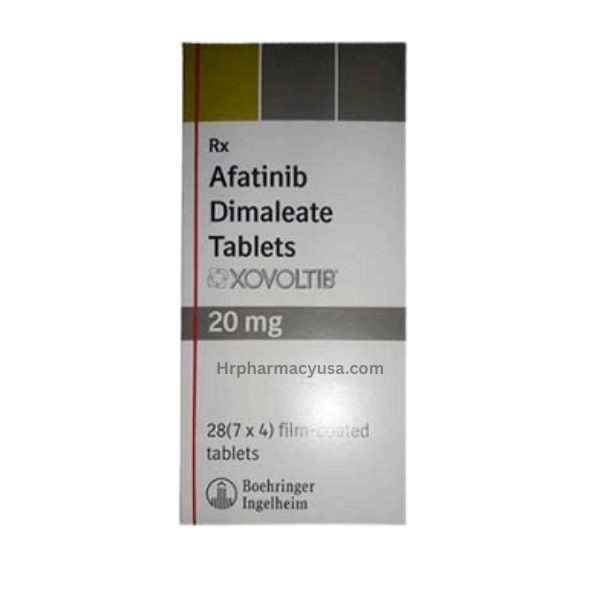
Xovoltib 20mg (Afatinib Dimaleate)
Price range: $900.00 through $2,300.00
Xovoltib 20mg is an oral targeted therapy that contains afatinib, used for certain types of non-small cell lung cancer that test positive for specific EGFR mutations. It is a prescription medicine taken once daily, usually on an empty stomach, and is often used when a lower dose is needed for tolerability. If your oncologist has recommended afatinib, Xovoltib 20mg may be part of that plan. Always follow your cancer team's instructions and do not change your dose on your own.
| Active Ingredient: | Afatinib Dimaleate |
|---|---|
| Indication: | Non-small cell lung cancer |
| Manufacturer: | Boehringer Ingelheim India Pvt.Ltd |
| Packaging: | 7 tablets in 1 strip |
| Strength: | 20mg |
| Delivery Time: | 6 To 15 days |
In Stock
What is Xovoltib 20mg
Xovoltib 20mg is a targeted treatment that contains afatinib. Doctors prescribe it for adults with certain types of non-small cell lung cancer that test positive for specific EGFR mutations, like exon 19 deletion or L858R substitution. If your care team has confirmed an EGFR mutation and chosen afatinib for you, the 20 mg strength is typically used when the dose needs to be lowered from the standard starting dose, or for people who need a gentler dose because of side effects or other health factors. This page is written in plain language, so it is easier to skim before you talk with your oncology team. It is not medical advice, and cancer treatment is personal. Your own plan may be different based on your test results, other medications, and how you feel on treatment.What Xovoltib 20mg is used for
- Active ingredient: Afatinib (afatinib dimaleate)
- Drug class: EGFR inhibitor, a type of tyrosine kinase inhibitor
- Primary use: Certain EGFR mutation-positive metastatic non-small cell lung cancer in adults
- Who decides: Your oncologist uses your tumor's genetic test results to decide if afatinib is a fit
How it works
Cancer cells with EGFR mutations often depend on that pathway to grow and spread. Afatinib blocks signals in the ErbB family of receptors, including EGFR. By blocking those signals, the medicine can slow down the growth of cancer cells that rely on EGFR. It is targeted therapy, not traditional chemotherapy, which is why the side effect profile looks a little different.How to take Xovoltib 20mg
- Take it once daily at the same time.
- Take it on an empty stomach, at least 1 hour before a meal or 2 hours after a meal.
- Swallow the tablet whole with water. Do not crush, split, or chew unless your care team gives you specific instructions.
- If you miss a dose and it is more than 12 hours until the next dose, take the missed dose when you remember. If it is less than 12 hours to the next dose, skip the missed dose. Do not double up.
Xovoltib 20mg Side Effects
Not everyone gets these, and you might experience them differently. Call your care team for personalized advice.- Diarrhea, sometimes starting in the first week
- Skin rash, acne-like bumps, dry or itchy skin, nail changes
- Mouth sores or irritation
- Decreased appetite, weight loss
- Fatigue
- Eye irritation or dry eyes
- Cough or shortness of breath, which can be due to cancer or treatment
Side effects that need attention
Call your oncology team right away, or seek emergency care if needed, if you notice:- Severe or persistent diarrhea, signs of dehydration like dizziness or less frequent urination
- Sudden or worsening shortness of breath, chest pain, and fever
- Severe skin reaction, widespread blistering, or painful rash
- Eye pain, vision changes, or severe redness
- Significant liver issues, such as yellowing of skin or eyes, dark urine
- Severe mouth sores that make it hard to drink or eat
Safety tips and precautions
- Prescription only. Do not share this medicine.
- Pregnancy and breastfeeding: Afatinib can harm an unborn baby. Use reliable birth control during treatment and for a period after your last dose as advised by your doctor. Do not breastfeed while taking it and for some time after stopping.
- Kidney and liver concerns: Dose changes may be needed. Your doctor will check labs.
- Heart and lung history: Tell your doctor if you have had interstitial lung disease, significant heart issues, or eye problems.
- Sun sensitivity: Use sunscreen, wear protective clothing, and try to limit direct sun, since rash and skin irritation can worsen with sun exposure.
- Eye care: Report new or painful eye symptoms. Contact lens wearers should be extra careful.
Drug and food interactions
This is not a complete list. Always tell your care team about every medicine, vitamin, or supplement you use.- P-gp inhibitors or inducers can change afatinib levels in the body. Examples include ritonavir, ketoconazole, clarithromycin, and St. John's wort. Your doctor may adjust timing or dose, or choose alternatives.
- Grapefruit and grapefruit juice may affect drug levels in some patients. Many oncologists recommend avoiding grapefruit products during therapy.
- Over-the-counter antidiarrheals can be helpful, but use them as directed by your care team.
- Ask before starting any new medicine, even if it seems minor.
Available strengths
Xovoltib (afatinib) tablets are available in several strengths. In the market, the commonly available strengths are:- Xovoltib 20 mg
- Xovoltib 30 mg
- Xovoltib 40 mg
- Xovoltib 50 mg
Who should avoid it
- People with a known severe allergy to afatinib or any component of the tablet.
- Patients are advised by their oncologist to use a different therapy based on tumor profile or prior treatments.
Storage and handling
- Store at room temperature, about 68 to 77°F, away from moisture and heat.
- Keep tablets in the original container or blister until use.
- Keep out of reach of children and pets.
- Dispose of unused tablets safely. Your local pharmacist can advise on take-back options.
What to ask your oncologist or pharmacist
- Is afatinib the right EGFR inhibitor for my specific mutation?
- What is my starting dose, and when might we adjust it?
- What is my plan for diarrhea and skin care, including which products to have at home?
- Which other medicines should I stop or switch to avoid interactions?
- How often will I have scans and lab work while on this medicine?
FAQs About Xovoltib 20mg
Is Xovoltib the same as afatinib or Gilotrif? Xovoltib is a brand name for afatinib that you may see outside the U.S. In the United States, afatinib is often known by the brand name Gilotrif. The active ingredient is afatinib in each case, but packaging and approvals vary by region. Always follow the exact product, brand, and strength on your prescription. How should I take Xovoltib 20mg each day? Take your dose once daily at the same time, on an empty stomach, meaning at least 1 hour before or 2 hours after a meal. Swallow the tablet whole with water. If you miss a dose and it is close to your next one, skip it. Do not take two doses at once. What are the most common side effects, and what can I do about them? Diarrhea and skin changes are the most common. Your oncology team often recommends keeping antidiarrheal medicine at home and calling early if stools become loose. Use gentle moisturizers and sunscreen for skin care. If diarrhea is severe, or if you notice eye pain, trouble breathing, fever, or a painful, widespread rash, call your doctor right away. Can I take Xovoltib with antacids, heartburn medicines, or supplements? Some medicines can change afatinib levels in your body, especially drugs that affect P-glycoprotein. Potent inhibitors like ritonavir or certain antifungals may raise levels. St. John's wort can lower levels. Grapefruit products may also interfere. Share a complete list of your medicines and supplements with your doctor or pharmacist so they can check for interactions that apply to you. What strengths are available, and why would my dose change? Afatinib tablets are commonly available in 20 mg, 30 mg, and 40 mg strengths. Many adults start at 40 mg once daily. If side effects are harsh, your doctor may lower the dose to 30 mg or 20 mg. Dose changes are regular and can help you stay on treatment. Never adjust your dose without medical guidance.| size | 28 Tablet/s, 56 Tablet/s, 84 Tablet/s |
|---|



Reviews
There are no reviews yet.