


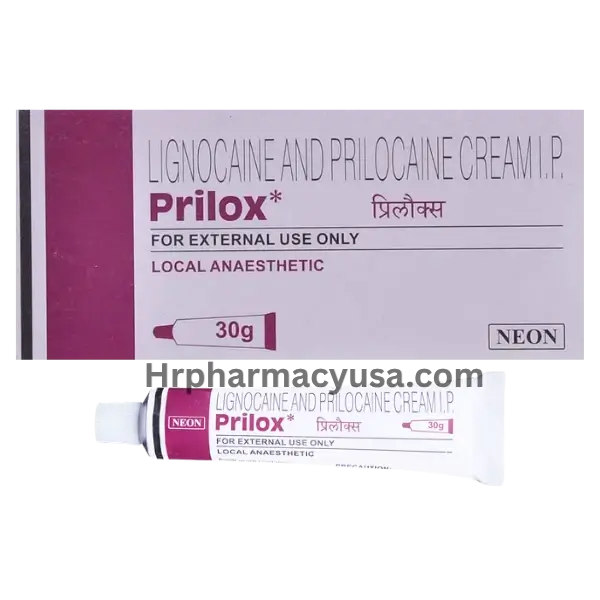
Prilox Cream 30g (Prilocaine/Lidocaine)
Price range: $24.98 through $119.88
Prilox Cream 30g (Prilocaine/Lidocaine) is a topical anesthetic cream made with two well-known numbing medicines, prilocaine and lidocaine. People usually look for this type of product when they want temporary skin numbness to make a planned, short procedure more comfortable. It is typically used on intact skin and is meant for external use only unless a clinician specifically directs otherwise.
| Active Ingredient: | Prilocaine/Lidocaine |
|---|---|
| Indication: | local anesthesia |
| Manufacturer: | Neon Laboratories |
| Packaging: | 30g in 1 tube |
| Strength: | 30g |
| Delivery Time: | 6 To 15 days |
In Stock
Shop Prilox Cream 30g (Prilocaine/Lidocaine)
Prilox Cream is commonly used to numb a small area of skin before minor medical or cosmetic procedures. Your clinician may recommend it before needle-related procedures, minor skin treatments, or other situations where reducing surface sensation is helpful. The key is that it is meant to support a specific plan; correct placement, amount, and timing matter. Because prilocaine and lidocaine are both local anesthetics, the cream works by temporarily blocking the transmission of pain signals from nerves in the area. It does not “treat” the underlying condition; it simply provides comfort for a short window of time.How to apply it safely
Follow the label and directions. Usually, apply a thin layer to clean, dry skin, sometimes covering it. Remove after the recommended time and clean the area before the procedure. Important safety points:- Treat only the area you were told to. Do not use on large areas.
- Do not apply to broken, irritated, or inflamed skin unless a clinician tells you to.
- Keep it away from the eyes, inside the nose, mouth, and ears unless specifically instructed to do so.
- Wash your hands after applying. If you treat your hands, skip this step.
- Do not wrap or heat the area unless your clinician tells you. Both increase absorption.
Who should be extra cautious?
Topical anesthetics are common but not risk-free. Consult a clinician if you have allergies to local anesthetics (especially amide types), skin issues in the area, or take medicines that increase the risk of methemoglobinemia. Ask if unsure.Side effects of
Most side effects are local and short-lived, such as temporary redness, paleness, mild swelling, itching, or a burning sensation at the site of application. Stop using it and seek medical advice if you notice severe irritation, rash, hives, dizziness, or anything that feels like an allergic reaction. Rare but serious side effects can happen, especially with overuse, large-area use, prolonged use, or use on skin that is not intact. Get urgent medical help if you notice symptoms such as gray or bluish lips or skin, unusual tiredness, shortness of breath, a rapid heartbeat, or confusion.Storage and handling
Store at room temperature and keep the tube closed and away from children or pets. Do not use expired cream or share it with others.Strengths and Pack Sizes
Prilox cream usually contains lidocaine 2.5% and prilocaine 2.5%, but confirm the label on your tube, as this may vary. Other commonly seen options in the same medication category include:- Lidocaine/prilocaine cream in smaller or larger tubes, such as 5 g and 60 g packs (availability depends on supplier and manufacturer)
- Similar formulations are listed as Lidocaine 2.5% + Prilocaine 2.5% topical cream
Substitutes and Alternatives
If Prilox Cream 30g is not available, your clinician will suggest other topical anesthetics based on the procedure and area. Common options include:- EMLA Cream (lidocaine 2.5% / prilocaine 2.5%)
- Generic Lidocaine/Prilocaine Cream USP 2.5%/2.5%
- Lidocaine-only numbing creams or ointments (strengths vary, often 4% or 5%): Xylocaine Ointment (Lidocaine), Intacaine 2% Gel 30g (Lidocaine)
- Lidocaine topical patches (5%) for specific pain indications (not the same use case as pre-procedure numbing)
- Benzocaine topical products (different anesthetic type, different allergy considerations)
FAQs
1. How long does Prilox Cream take to work?
Timing depends on the area, skin thickness, whether it is covered, and the amount used. Your clinician or the product labeling will usually give a specific window. If you are unsure, do not guess; ask for the exact timing for your procedure.2. Can I use Prilox Cream before waxing, laser hair removal, or a tattoo?
Some people do, but that is not always the intended use and may not be appropriate for every situation. It is safest to ask the provider performing the service, especially because using too much or covering large areas can increase the risk of side effects, such as skin irritation or allergic reactions, which may vary depending on the individual's skin type and sensitivity.3. Is Prilox Cream safe for children?
It can be used for kids with a clinician's direction. Do not use unless a clinician tells you to.4. Can I use Prilox Cream if I’m pregnant or breastfeeding?
Decide with your clinician. Small-area, short-term use may be OK in some cases, but your history and procedure matter.5. Can I combine Prilox with other numbing products or pain medicines?
Don’t combine numbing creams, sprays, or high-dose lidocaine unless a clinician instructs you to do so. Combining local anesthetics increases the risk of side effects.| size | 12 Cream/s, 3 Cream/s, 6 Cream/s |
|---|


Reviews
There are no reviews yet.