


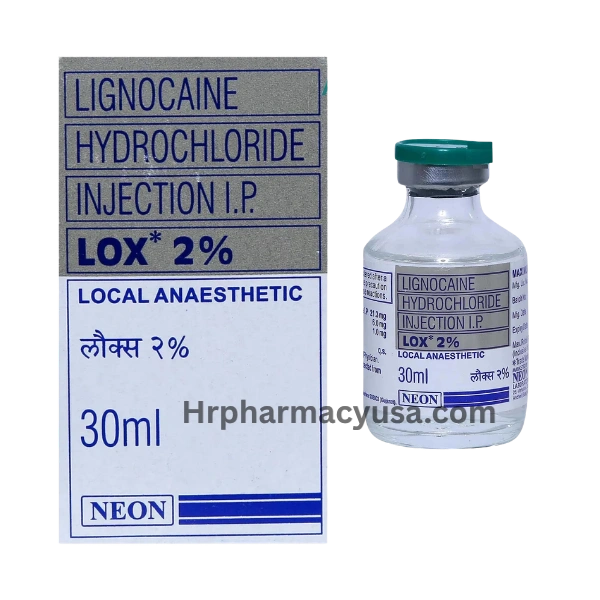
LOX 2% Inj (Lidocaine or lignocaine)
Price range: $36.23 through $100.64
| Active Ingredient: | Lidocaine or lignocaine |
|---|---|
| Indication: | Local Anaesthesia |
| Manufacturer: | Neon Laboratories |
| Packaging: | 30ml in Vial |
| Strength: | 2% |
| Delivery Time: | 6 To 15 days |
In Stock
About LOX 2% Inj (Lidocaine or lignocaine)
LOX 2% Inj (Lidocaine or lignocaine) is an injection that numbs a small area before simple procedures, dental work, or certain types of pain relief. It works by temporarily stopping nerves from carrying pain signals. Only a trained professional should give this product, choosing the right amount based on your needs.What LOX 2% Inj is used for
Healthcare professionals may use lidocaine 2% injection for:
- Local infiltration anesthesia (numbing a small area before stitches, skin procedures, or minor surgical work)
- Dental and oral procedures (when an injectable local anesthetic is needed)
- Certain peripheral nerve blocks (numbing a larger region supplied by a specific nerve)
- Other clinician-directed anesthesia techniques where lidocaine is appropriate for the situation
The exact use depends on the procedure, the site being treated, and the clinician’s judgment.
How it works
Pain messages travel along nerves using tiny electrical signals. Lidocaine stops these signals by blocking the way they travel in the nerve. When the pain messages are stopped, you won't feel pain in that area for a short while.
How is it given
A trained healthcare worker will give you LOX 2% Inj using clean, safe methods. How they give it depends on what you need, such as numbing a small spot or a larger area. The amount used depends on the spot, if other medicines are added, your weight, age, and health. Lidocaine can cause serious problems if used incorrectly, such as effects on the brain or heart. Never self-inject or use this product without medical supervision and monitoring by a trained professional.What to tell your clinician before receiving lidocaine
It is important to share your full medical history and medication list. In particular, your clinician may need extra caution if you have:
- A history of allergy to local anesthetics (especially amide-type anesthetics)
- Liver disease (lidocaine is mainly processed by the liver)
- Heart rhythm conditions or conduction problems
- A history of seizures
- Very low blood pressure or significant heart disease
- Let your clinician know about any medicines that may affect heart rhythm or lidocaine metabolism. Your clinician will review these medicines with you.
Clearly mention to your clinician if you have had reactions to any numbing medicine before, such as a fast heartbeat, fainting, a rash, severe dizziness, a metallic taste, or ringing in the ears. These reactions can be signs of serious problems that require extra caution.
Possible side effects
Side effects depend on dose, injection site, and how fast the drug enters the bloodstream. Some effects are local and mild. Others can be serious if lidocaine levels become too high. More common or procedure-related effects can include:- Temporary numbness, tingling, or heaviness in the treated area
- Mild swelling, redness, or bruising at the injection site
- Short-lasting dizziness or nausea (sometimes related to the procedure itself)
Potential serious reactions that need urgent medical attention may include:
- Trouble breathing, hives, facial swelling, or severe rash (possible allergy)
- Severe dizziness, confusion, tremors, or seizures
- Chest pain, very slow or very fast heartbeat, fainting, or collapse
If symptoms occur after you leave the clinic, seek medical care right away.
Handling and storage basics
Injectable anesthetics are typically stored and handled in accordance with facility protocols to protect sterility and potency. Do not use any vial or ampule if the solution appears discoloured, cloudy, or contains particles, or if the packaging appears compromised.
Available Strengths (Other Dosages)
Lidocaine injection comes in several concentrations. Availability depends on the manufacturer and supply: 0.5% (5 mg/mL) injection, 1% (10 mg/mL) injection, 2% (20 mg/mL) injection, such as LOX 2% Inj. You may also see lidocaine with epinephrine in some strengths. It is often used to reduce bleeding and to prolong numbness. However, epinephrine is not suitable for every area or patient.Substitutes (Available in the Market)
Your clinician may choose the same medication from another maker or a different local anesthetic. The choice depends on the procedure and the patient's needs. Common alternatives include:
- Xylocaine (lidocaine HCl injection)
- Generic Lidocaine HCl Injection USP
- Lidocaine with epinephrine injection
- Bupivacaine (Marcaine) is a longer-acting local anesthetic (not the same as lidocaine)
- Mepivacaine or ropivacaine (procedure-dependent alternatives)
Do not attempt to substitute one local anesthetic for another on your own. Only a qualified clinician should make decisions on selection and dosing to avoid serious health risks.
FAQs
1. Is LOX 2% Inj safe during pregnancy or breastfeeding?
This depends on timing, dose, and the type of procedure. Lidocaine is often used in medical care. Only a clinician can weigh the benefits and risks for your situation.2. Will lidocaine injection affect a drug test?
Standard workplace drug panels do not usually test for lidocaine. If you have a specialised test, tell the testing site about any recent medical procedures.3. Can I drink alcohol the same day I receive a lidocaine injection?
Alcohol can increase lightheadedness and may not mix well with recovery. Ask your clinician for guidance based on your procedure and the medications you are using.4. How long does numbness usually last after a lidocaine injection?
The duration of numbness varies by dose, location, and use of other agents. Many people feel numbness wear off within a couple of hours. Your clinician can best estimate the cost of your procedure.5. What’s the difference between lidocaine and benzocaine?
Lidocaine is usually an injectable or topical anesthetic and is an amide type. Benzocaine is usually topical and is an ester type. They differ in potency, uses, and allergy patterns.| size | 3 Injection/s, 6 Injection/s, 9 Injection/s |
|---|

Reviews
There are no reviews yet.