


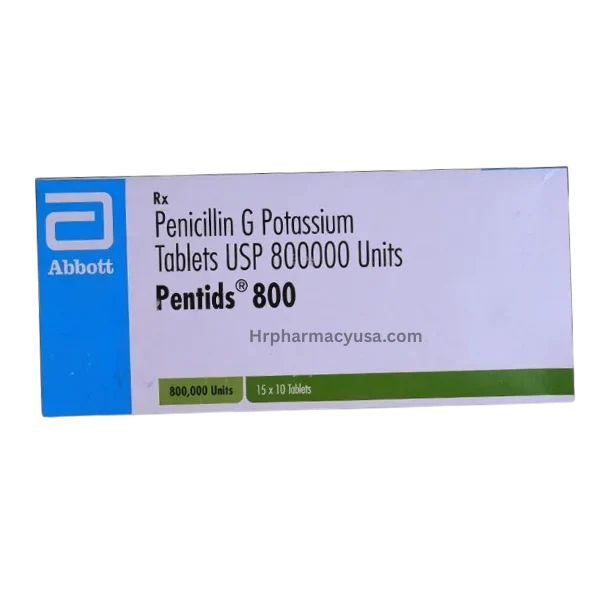
Pentids 800 Tablets (Penicillin G)
Price range: $23.75 through $38.75
Pentids 800 (Penicillin G) is a prescription antibiotic used to treat certain bacterial infections as directed by your healthcare provider. It belongs to the penicillin family and is commonly chosen for conditions like strep throat and some skin or dental infections when your prescriber decides it is appropriate. Always follow the directions on your prescription label. Antibiotics do not treat colds or flu. If you have a history of penicillin allergy, talk to your doctor before using this medication.
| Active Ingredient: | Penicillin G |
|---|---|
| Indication: | Bacterial infections, Syphilis, Prevention of rheumatic fever |
| Manufacturer: | Abbott India Pvt Ltd |
| Packaging: | 6 tablets in 1 strip & 4 tablets in 1 strip |
| Strength: | 800iu |
| Delivery Time: | 6 To 15 days |
In Stock
Pentids 800 (Penicillin G) is an antibiotic used for certain bacterial infections when your prescriber determines it is suitable—a quick note for clarity. In many countries, products sold under the Pentids name typically contain penicillin V potassium (also called phenoxymethylpenicillin), which is the oral form often used for strep throat and similar infections.
Penicillin G (benzylpenicillin) is usually given by injection and is not commonly available as an oral tablet in the U.S. If your product label says Pentids 800 and lists penicillin G, it is essential to double-check the exact ingredient and dosage form on the packaging and follow your prescriber's instructions. If you are unsure, ask a pharmacist or your healthcare provider before taking it.
What Pentids 800 is used for
- Treats certain bacterial infections based on a doctor's assessment
- Often considered for conditions like strep throat, tonsillitis, and some skin or dental infections when an oral penicillin is appropriate.
- Not beneficial for viral illnesses like colds, flu, or COVID-19
How it works
Penicillin 800 belongs to the penicillin class of antibiotics. Penicillins work by interfering with bacterial cell wall synthesis. That basically makes it hard for bacteria to build and maintain a strong protective wall, which helps the body clear the infection. This class is time-tested and widely used when bacteria are known or likely to be sensitive.Penicillin G vs. Penicillin V naming
Because the product name you provided mentions Penicillin G, here is a careful distinction:-
- Penicillin G is typically administered by injection in clinical settings. Long-acting forms like benzathine penicillin G are injected into a muscle, often in a clinic.
- Penicillin V potassium is the oral penicillin commonly used in tablet form for outpatient infections like strep throat. Many products labeled Pentids in international markets contain penicillin V.
Why this matters
- If your prescription is for an oral tablet and the label says Pentids 800, there is a good chance the active ingredient is penicillin V potassium 800 mg in your market. That said, always confirm the label and the active ingredient printed on your product.
- Follow the dosing directions on your prescription exactly, and do not substitute one penicillin form for another without medical advice.
Who should use this medication
- Adults and children, as prescribed by a healthcare provider
- Patients with strep throat or other susceptible infections, where the clinician has determined penicillin is appropriate
Who should not use it
- Anyone with a known allergy to penicillin or a severe reaction to cephalosporins or other beta-lactam antibiotics
- People who their doctor has told to avoid penicillin due to a prior severe reaction, such as anaphylaxis, severe rash, or organ involvement
Important safety notes
- Allergic reactions. Seek emergency help for hives, swelling of the face or throat, trouble breathing, or severe rash.
- Antibiotic-associated diarrhea. Diarrhea can happen with antibiotics. If it is severe, watery, or contains blood, contact your provider promptly.
- C. difficile risk. Like most antibiotics, penicillins can disrupt normal gut bacteria. If you develop significant abdominal pain or persistent diarrhea after or during treatment, get medical advice.
- Complete the course. Take the full prescribed course even if you feel better early. Stopping too soon can let the infection return and may promote resistance.
- Do not share antibiotics. Medications should not be shared or saved for later.
How to take it
- Follow your prescription label exactly if your product is an oral tablet. Many penicillin V formulations work best if taken on an empty stomach, 1 hour before or 2 hours after meals, unless your provider says otherwise. If stomach upset occurs, ask your provider or pharmacist whether taking it with a small snack is acceptable.
- Swallow with a full glass of water. Try to take doses at evenly spaced times.
- If you miss a dose, take it when you remember, unless it is almost time for the next dose. Do not double up to make up for a missed dose.
- If your product is an injectable penicillin G, it must be administered by a healthcare professional. Do not attempt to self-inject unless specifically trained and instructed to do so.
Typical Dosing Guide
This is general information, not a substitute for medical advice. Doses vary by infection, severity, age, kidney function, and the specific penicillin product used.- Adults with strep throat often receive penicillin V potassium 500 mg two or three times daily for 10 days in the U.S. Your prescriber may use slightly different regimens based on local guidelines and product strength. If your tablet strength is 800 mg, your doctor will tell you how to use that specific strength.
- Children are typically dosed by weight. Your pediatrician will give you the exact dose and schedule.
- Kidney issues. If you have kidney disease or are on dialysis, your dose may need adjustment. Tell your prescriber before starting.
Common side effects
- Nausea, mild stomach upset, or diarrhea
- Headache
- Mild rash
- Changes in taste
Less common but serious side effects
- Severe allergic reaction with hives, wheezing, or swelling of the face or throat
- Severe skin reactions or widespread rash
- Severe or persistent diarrhea
- Easy bruising, unusual bleeding, or signs of liver problems such as dark urine or yellowing of the skin or eyes
Available strengths
To help you match what your prescriber wrote with what you see for sale, here is a simple rundown. Availability can vary by supplier and region.- Pentids tablets
- Pentids 800 mg
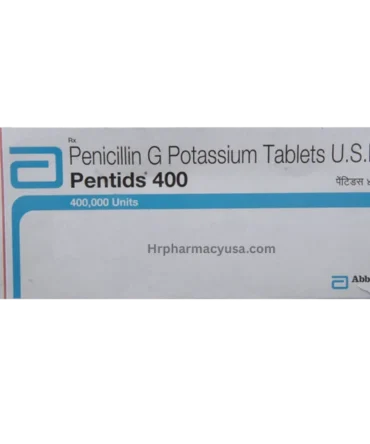
- Pentids 400 mg
- Pentids 200 mg These are commonly associated with oral penicillin V potassium in some markets. If your label explicitly says Penicillin G, verify details with the pharmacist.
- Common oral penicillin
- Penicillin V potassium 250 mg tablets
- Penicillin V potassium 500 mg tablets
- Powder for oral solution may also be available for children
Drug interactions to mention to your provider
- Probenecid can increase penicillin levels and is sometimes used intentionally to boost levels. Do not add or stop probenecid without medical guidance.
- Methotrexate levels can be affected by penicillins. Tell your prescriber if you take methotrexate.
- Warfarin and other blood thinners may interact, so that extra monitoring could be needed.
- Oral contraceptives. The evidence for penicillin reducing birth control effectiveness is mixed. Many healthcare providers still recommend a backup method while on antibiotics as a reasonable precaution. If this is a concern for you, talk with your provider.
- Any recent live vaccines, supplements, or herbal products. Always share your complete medication list with your clinician.
Special Preacautions
- Pregnancy. Penicillins have been used for decades in pregnancy and are generally considered safe when prescribed. Always inform your obstetric provider before starting any medication.
- Breastfeeding. Small amounts pass into breast milk. Most experts consider penicillins compatible with breastfeeding, though infants may experience mild GI upset or thrush. Ask your pediatrician if you notice symptoms in your baby.
- Older adults. Dose adjustments may be needed if there is reduced kidney function.
Storage and handling
- Store tablets at room temperature in a dry place away from moisture and heat.
- Keep in the original container with the label intact.
- Keep out of reach of children and pets.
- Do not use past the expiration date. If you have unused tablets after completing your course, ask your pharmacist about proper disposal. Many communities have take-back programs.
What to expect when you start
- Symptom relief often begins within 24 to 48 hours if the bacteria are susceptible and the infection is appropriately treated. It is normal if you do not feel 100 percent better right away.
- Finish the entire course even if you feel better early. This helps prevent relapse and resistance.
When to contact your doctor
- If symptoms are not improving after 48 to 72 hours
- If you develop a fever that is getting worse, shortness of breath, chest pain, or severe throat swelling
- If you have severe diarrhea, a significant rash, or any symptom that worries you
- If you accidentally take more than prescribed
Why people choose penicillin class antibiotics
- Time-tested efficacy for susceptible bacteria
- Narrower spectrum than some antibiotics, which is often preferred for stewardship
- Generally well tolerated when used as directed
Practical tips for taking antibiotics wisely
- Take it exactly as directed at evenly spaced times. Setting smartphone reminders can help.
- Pair with a light snack if your stomach feels queasy, but only if your pharmacist or label says food is allowed with your specific product.
- Keep hydrated and rest well while your body recovers.
- Do not save leftover antibiotics. If you have extras, ask about proper disposal
FAQs About Pentids 800
| size | 120 Tablet/s, 60 Tablet/s, 90 Tablet/s |
|---|



Reviews
There are no reviews yet.