


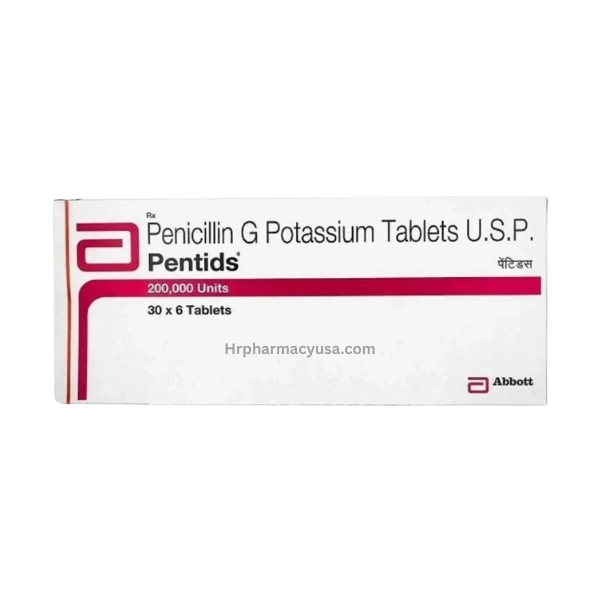
Pentids 200 Tablets (Penicillin G)
Price range: $18.25 through $33.25
Pentids 200 Tablets (Penicillin G) is a prescription antibiotic used to treat certain bacterial infections when a penicillin-sensitive organism is confirmed or strongly suspected. In the United States, penicillin G is typically given by a healthcare professional as an injection, either into a muscle or into a vein, depending on the condition. It is not the same as oral penicillin V tablets. Always follow your prescriber's directions and do not use antibiotics unless you have a current prescription for your condition.
| Active Ingredient: | Penicillin G |
|---|---|
| Indication: | Bacterial infections, Syphilis, Prevention of rheumatic fever |
| Manufacturer: | Abbott India Pvt Ltd |
| Packaging: | 6 tablets in 1 strip & 4 tablets in 1 strip |
| Strength: | 200iu |
| Delivery Time: | 6 To 15 days |
In Stock
What is Pentids 200?
Pentids 200000iu (Penicillin G) is a classic, time-tested antibiotic that doctors still rely on for specific bacterial infections. If your clinician ordered penicillin G, there is usually an apparent reason. Many common bacteria have become resistant to older antibiotics, but penicillin G remains very effective for certain infections when the bacteria are susceptible. In the U.S., penicillin G is prescription-only. It is typically used by trained professionals in clinics, hospitals, or at home for patients who have been taught how to administer injections safely. Penicillin G is also called benzylpenicillin. It is usually supplied as a powder for injection, which is mixed with a sterile liquid before use. Oral forms you might have heard of, like penicillin V, are different. Penicillin V can be taken by mouth for mild to moderate infections. Penicillin G is not reliably absorbed by mouth, which is why it is injected.What conditions penicillin G may be used for
Your healthcare provider decides if penicillin G is appropriate based on your diagnosis, lab tests, and local resistance patterns. Common reasons it is prescribed include:- Syphilis. Benzathine penicillin G is the standard therapy for many stages of syphilis. Aqueous penicillin G is used for neurosyphilis.
- Group A streptococcal infections. This includes severe infections or when a one-time intramuscular dose is preferred for strep throat in some instances.
- Prevention of rheumatic fever recurrences. Long-acting benzathine penicillin G is often used for ongoing prevention in patients with a history of rheumatic fever.
- Certain pneumococcal or streptococcal infections of the lung, blood, or heart valves, when the bacteria are penicillin-susceptible.
- Specific infections like actinomycosis, diphtheria adjunct therapy, leptospirosis, or clostridial infections should be treated when guided by culture results and guidelines.
What penicillin G does not generally treat
- Most staphylococcal infections in the community are due to widespread resistance.
- Atypical bacteria like Mycoplasma or Chlamydia.
- Viral infections such as colds and the flu.
- Fungal or parasitic infections.
How penicillin G is given
Pentids 200000iu suggests a vial with 200,000 international units of penicillin G. That is a relatively small amount compared with some U.S. hospital vials, which can be much larger. Exact packaging varies by manufacturer. Your care team will prepare the dose that matches your prescription, often by reconstituting the powder with a sterile solution.- Intramuscular injection. Often used for benzathine or procaine penicillin G when a longer duration in the body is desired. An IM injection can be a single dose or a series of doses.
- Intravenous infusion. IV may give aqueous penicillin G for serious infections that require higher and more frequent dosing.
How it works
Penicillin G kills susceptible bacteria by blocking the formation of their cell walls. Without a strong cell wall, bacteria cannot hold their shape, leading to their death. This mechanism is bactericidal, which means it actively kills bacteria rather than simply slowing their growth. It is most effective against certain gram-positive organisms and a limited set of gram-negative organisms that remain sensitive to penicillin.How fast you may feel better
It depends on the infection and how sick you are at the start. Many people notice improvement in fever and symptoms within 24 to 72 hours after the correct antibiotic is started. For conditions like syphilis, your provider may schedule a lab follow-up to confirm the infection is responding, since symptom changes can be subtle. Always complete the treatment plan as directed, even if you start to feel better earlier.Safety, allergies, and who should avoid it
- Allergy to penicillins or cephalosporins. If you have had a severe reaction to a penicillin in the past, tell your provider before any dose is given. Symptoms of a severe allergy include hives, swelling of the face or throat, wheezing, and trouble breathing. This is a medical emergency.
- Kidney problems. Dosing often needs adjustment when the kidneys do not work well. Your team may monitor lab tests during longer courses.
- Sodium or potassium load. Some forms of penicillin G contain sodium or potassium. In large IV doses, this can matter for people with heart failure, high blood pressure, or kidney disease. Your clinician will account for this.
- Pregnancy and breastfeeding. Penicillin antibiotics are generally considered safe in pregnancy and during breastfeeding. They have been used for decades, including for syphilis in pregnancy. If you are pregnant, confirm the plan with your obstetric provider.
- Jarisch-Herxheimer reaction. When treating syphilis, it is common to experience fever, chills, headache, and achiness within 24 hours of the first dose. This reaction is due to the rapid killing of bacteria. It is uncomfortable, but not an allergy. Contact your clinician for guidance if it feels severe or if you are pregnant.
Common side effects of Pentids 200 Tablets
- Pain, redness, or a lump at the injection site
- Nausea, mild diarrhea, or stomach discomfort
- Headache or mild dizziness
- Skin rash or itching
Less common but important
- Severe allergic reactions, including anaphylaxis. Seek emergency help if you have trouble breathing, swelling of the lips or tongue, or severe hives.
- C. difficile-associated diarrhea. Watery diarrhea, stomach cramps, and fever can happen during or after antibiotics. Call your clinician if you have severe or persistent diarrhea.
- Seizures with very high doses or in people with certain risk factors are usually linked to IV therapy and kidney problems.
- Electrolyte changes if large sodium or potassium loads are given.
Drug interactions to mention to your clinician
Bring a current list of everything you take, including over-the-counter items and supplements. A few interactions that often come up:- Probenecid. Can increase penicillin G levels in the blood. Sometimes this is done on purpose, but it should be deliberate.
- Methotrexate. Penicillins can reduce methotrexate clearance and increase the risk of toxicity. Monitoring may be needed.
- Warfarin and other blood thinners. Antibiotics can affect gut flora and vitamin K metabolism. Your INR may need monitoring.
- Tetracycline antibiotics. These can interfere with penicillin's bactericidal activity when given together for certain infections. Your clinician will choose the right combination.
- Do not mix penicillin G and aminoglycosides in the same IV line or solution. They can inactivate each other on contact. If both are prescribed, they are usually given through separate lines.
Practical tips
- Take every dose on schedule. Consistent levels help the medicine work best.
- Do not save or share antibiotics. Using leftover doses later can be unsafe and ineffective.
- Suppose you miss a scheduled injection. Call your provider or infusion service for instructions. Timing matters for many infections, and knowing the right timing can help you get back on track.
- Watch for signs of allergy. If you develop hives, swelling, or breathing trouble, get urgent help.
- Hydrate and rest as your body heals. For mild diarrhea, simple fluids and a bland diet can help. If symptoms are severe, contact your clinician.
- Keep all follow-up appointments. Some infections need repeat blood tests or follow-up exams to confirm the infection has cleared.
Storage and handling
Follow the exact storage instructions on your packaging. In general, dry powder vials are stored at controlled room temperature, protected from excess heat and light. Once mixed, solutions may have a short window of stability and may need refrigeration. Home infusions are usually supplied with clear written instructions. If a solution looks discolored, cloudy, or contains particles, do not use it. When in doubt, ask your pharmacist or provider.Available strengths
Pentids 200000iu is one presentation of penicillin G. In the U.S. and globally, you may see several forms and unit sizes. Availability depends on the manufacturer and the setting.- Pentids 200 Tablets
- Pentids 400 Tablets
- Pentids 800 Tablets
What to expect during treatment
- First day or two. Some symptom relief may start within 24 to 48 hours if the bacteria are susceptible. In syphilis, you might experience a temporary feverish reaction after the first dose.
- Ongoing doses. Stay consistent with timing. Report any new rash, hives, or breathing symptoms right away.
- Follow-up. Many infections need lab follow-up, such as non-treponemal titers for syphilis or blood cultures for bloodstream infections. Your provider will lay out the plan.
When to call your doctor
- No improvement or worsening symptoms after starting treatment
- New or spreading rash, hives, swelling, or any breathing issues
- Severe or persistent diarrhea, blood in stool, or stomach pain
- Dizziness, confusion, or seizure activity
- Any concerns about missed doses or problems with IV or IM administration
Buying and prescription
Penicillin G is prescription-only in the United States. Because it is usually an injectable medicine that needs careful dosing and preparation, it is not sold as an over-the-counter product. If you think you need penicillin or have symptoms of an infection, get evaluated by a healthcare professional first. Many common diseases are viral and do not need antibiotics.FAQs About Pentids 200 (Penicillin G) Tablets
What is the difference between penicillin G and penicillin V? Penicillin G is usually given as an injection because it is not stable in stomach acid. It is used for specific infections where injections are preferred or required, like certain stages of syphilis or serious streptococcal infections. Penicillin V is an oral form used for milder infections. Your provider chooses based on the infection, severity, and what the bacteria are likely to respond to. Is Pentids 200000iu the right strength for adults? The right strength and form are specific to your prescription. The 200,000 IU vial is one unit size among many. In U.S. practice, treatment often uses larger unit vials or long-acting forms, such as 1.2 or 2.4 million units, for intramuscular dosing, depending on the condition. Do not try to convert or swap strengths on your own. Always follow the exact product and dose on your prescription. Can I drink alcohol while receiving penicillin G? There is no direct interaction between penicillin G and moderate alcohol use, but drinking can make side effects like dizziness or stomach upset feel worse. If you are being treated for a severe infection, it is reasonable to avoid alcohol until you feel better and you have discussed it with your clinician. If you were told to avoid alcohol due to another medicine you are taking, follow that advice. What if I am allergic to penicillin? If you have a history of a severe penicillin allergy, such as anaphylaxis or serious rash, tell your provider before any dose is given. Alternative antibiotics may be used. In some cases, when penicillin is clearly the best option, an allergy specialist may offer testing or desensitization in a controlled setting. Never attempt a dose if you have had a severe reaction in the past without medical supervision. How soon will penicillin G start working, and what should I do if I miss a dose? For many infections, improvement starts within 1 to 3 days, though the exact timeline varies. If you miss an injection or an infusion appointment, contact your provider or infusion service as soon as possible. Do not double up without guidance. Keeping doses on schedule helps prevent setbacks and resistance.| size | 120 Tablet/s, 60 Tablet/s, 90 Tablet/s |
|---|


Reviews
There are no reviews yet.