


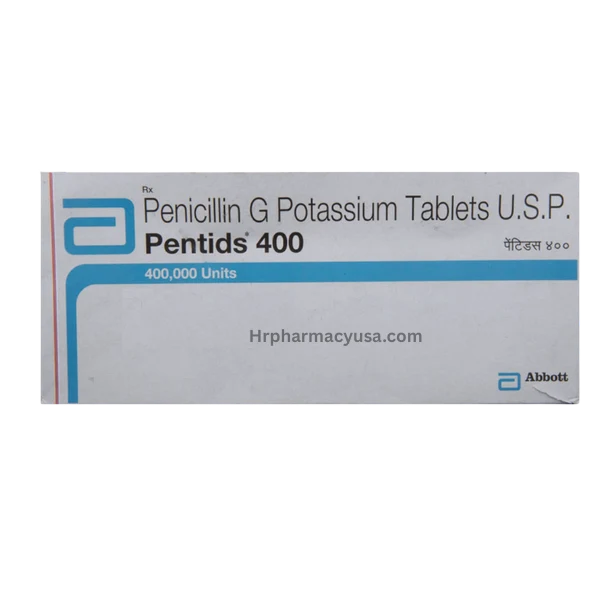
Pentids 400 Tablets (Penicillin G)
Price range: $18.25 through $33.25
Pentids 400 (Penicillin G) is a prescription antibiotic used for certain bacterial infections like strep throat, skin infections, and some dental infections. In many countries, the Pentids 400 brand usually refers to penicillin V tablets, not penicillin G. Please check your product label to confirm the exact active ingredient. Take only as directed by your healthcare provider, finish the whole course, and do not use it for colds or the flu.
| Active Ingredient: | Penicillin G |
|---|---|
| Indication: | Bacterial infections, Syphilis, Prevention of rheumatic fever |
| Manufacturer: | Abbott India Pvt Ltd |
| Packaging: | 6 tablets in 1 strip & 4 tablets in 1 strip |
| Strength: | 400iu |
| Delivery Time: | 6 To 15 days |
In Stock
Overview of pentids 400
Pentids 400 (penicillin g) is an antibiotic used to treat infections caused by susceptible bacteria. It belongs to the penicillin family, a long-trusted group of antibiotics that targets bacterial cell walls so the bacteria cannot survive. If you are looking at this product for a sore throat, mild skin infection, or a dental infection your dentist identified, you are in the right area. That said, there is one important detail to double check before you buy or use it. In many markets, the brand name pentids 400 refers to penicillin v (also called phenoxymethylpenicillin) tablets. Penicillin g (benzylpenicillin) is more commonly used as an injection rather than as a tablet. Because your listing says pentids 400 (penicillin g), please verify the exact active ingredient on your package. If your label shows penicillin v, that is the oral tablet form that matches common pentids strengths like 200 mg, 400 mg, and 800 mg. if it truly contains penicillin g, ask your pharmacist or prescriber how it is intended to be taken, since penicillin g products in the united states are typically injectable.Pentids 400 uses
Doctors may prescribe penicillin antibiotics like pentids 400 for:- Strep throat caused by streptococcus
- Mild to moderate skin and soft tissue infections caused by susceptible bacteria
- Dental infections when a dentist recommends a penicillin antibiotic
- Prevention of rheumatic fever recurrences in certain patients, when a penicillin is appropriate
How it works
Penicillin antibiotics interfere with the bacteria's ability to build a protective wall. Without a proper wall, bacteria cannot survive. This is why symptoms often start to improve within a few days. Even if you feel better, keep taking it exactly as prescribed until your course is finished. Stopping early can let bacteria come back stronger.Who should not use it
Avoid pentids 400 if you:
- Are allergic to penicillin, amoxicillin, or other beta-lactam antibiotics
- Have had a severe reaction to cephalosporins, unless your doctor specifically says it is safe
- Have been told by your doctor not to take penicillins
Talk to your healthcare provider before using if you:
- Have kidney problems
- Have a history of severe diarrhea after antibiotics or have had a C. difficile infection
- Are you taking blood thinners, methotrexate, or other medicines that can interact
- Are you pregnant or breastfeeding, and want to confirm it is appropriate for you
How to take it
- Follow your prescriber's directions exactly. Strength, dosing frequency, and duration depend on your infection, your age, kidney function, and the exact formulation.
- Try to take doses at evenly spaced times each day.
- You can take it with or without food. If it upsets your stomach, a small snack may help.
- Swallow tablets with water. If you have trouble swallowing pills, ask your pharmacist about options. Do not crush or split unless your pharmacist confirms it is fine for your specific tablet.
If you miss a dose
- Please take it as soon as you remember.
- If it is almost time for your next dose, skip the missed dose. Do not double up.
- Set reminders or use a pill organizer if you often forget.
- Call your doctor, poison control, or seek medical care right away if you think you took more than directed.
Pentids 400 Common side effects
Most side effects are mild and go away after treatment ends. Common ones can include:- Nausea, stomach upset, or diarrhea
- Mild rash or itching
- Headache
- Persistent or severe diarrhea, especially watery or bloody stools
- A widespread rash, hives, or peeling skin
- Yellowing of the skin or eyes, dark urine, or unusual tiredness
Emergency allergy warning
Get emergency help if you have signs of a severe allergic reaction:- Trouble breathing or wheezing
- Swelling of the face, lips, tongue, or throat
- Severe dizziness or fainting
Drug and food interactions
Tell your doctor or pharmacist about everything you take, including vitamins and herbal products. Interactions to ask about include:- Methotrexate. Penicillins can increase methotrexate levels.
- Warfarin and other blood thinners. Antibiotics can alter gut bacteria and may change how your body handles vitamin K. Your provider may want to monitor your INR more closely.
- Probenecid. It can raise blood levels of penicillins.
- Allopurinol. The combination may increase the chance of a rash in some people.
- Oral contraceptives. While evidence is mixed, some clinicians advise a backup method if you have vomiting or severe diarrhea, since that can reduce absorption of your pills.
Alcohol and driving
- Alcohol is not known to interact with penicillin directly, but it can make side effects like stomach upset feel worse. Moderate use is usually acceptable unless your doctor says otherwise.
- Pentids 400 should not affect your ability to drive. If you feel dizzy or unwell, wait until you feel normal before driving.
Pregnancy and breastfeeding
- Penicillins have been used in pregnancy for many decades. They are generally considered a preferred class when an antibiotic is needed. Always confirm with your provider.
- Small amounts may pass into breast milk, but they are generally considered compatible with breastfeeding. If your baby develops diarrhea or a rash, check in with your pediatrician.
Antibiotic stewardship matters
It is tempting to keep leftover antibiotics for later. Please do not. Use only what your doctor prescribed for your current infection, and finish the course. If you have extra tablets at the end, that usually means the plan changed along the way. Ask your pharmacist how to dispose of unused medicine safely.Storage
- Store tablets at room temperature in a dry place, away from heat and moisture.
- Keep the bottle tightly closed and away from children and pets.
- If you have a liquid suspension, many penicillin liquids are stored in the refrigerator after mixing and used within a short window. Follow the label or ask your pharmacist.
What to expect when you start
- Many people feel better within 48 to 72 hours. Throat pain eases, fevers settle, and energy improves.
- If you are not feeling any better after a few days, or if you feel worse, contact your prescriber. The bacteria might be resistant, or you might have a different type of infection that needs a different approach.
When to seek help urgently
- Difficulty breathing, swelling of the face or throat, severe rash
- Severe diarrhea or abdominal pain that persists
- Fever that does not improve or returns after a short break
- Signs of dehydration, especially in kids or older adults
Realistic tips for success
- Start your first dose as soon as you pick it up, unless your prescriber gave a specific schedule.
- Space is evenly distributed. A phone alarm helps a lot.
- A simple meal can ease stomach upset.
- Keep a glass of water nearby. Staying hydrated helps with recovery.
- Write down any side effects you notice. If you need to call your doctor, providing details helps them decide what to do next.
Available strengths
Because there is some naming confusion around Penicids and penicillin types, here is a quick guide. If your product is truly penicillin G, that is usually an injectable form. Those strengths are measured in units, not milligrams, and include options like:- Pentids 200 mg tablets
- Pentids 400 mg tablets
- Pentids 800 mg tablets
- Dosing and use are very different for injection products, so always follow the prescriber's instructions.
Who this product is a good fit for
- Adults and children who have a confirmed bacterial infection that responds to penicillin
- People with strep throat where a penicillin is the recommended first-line treatment
- Those who do not have a penicillin allergy and need a narrow-spectrum antibiotic
Who might need a different option
- Anyone with a history of severe penicillin or cephalosporin allergy
- People with infections caused by bacteria known to be resistant to penicillin
- Patients with complicated infections where a broader spectrum antibiotic is needed, as decided by a clinician
Simple comparison: penicillin v vs penicillin g
- Penicillin V is usually an oral tablet or liquid used for throat and skin infections.
- Penicillin G is typically administered as an injection in hospitals or clinics for certain serious infections.
- They are both penicillins, but are not interchangeable without medical guidance.
- Regulatory note for the usa
FAQs About Pentids 400
What infections does Pentids 400 treat?
Penicillin 400 is a penicillin antibiotic used for certain bacterial infections, such as strep throat, mild skin infections, and some dental infections, when a clinician recommends a penicillin. It does not treat viral illnesses like colds or the flu. Your prescriber will decide if it is the right choice for your specific infection.
Is Pentids 400 the same as penicillin V or penicillin G?
Pentids 400 is commonly listed as penicillin V tablets in many markets. Your product title mentions penicillin G, which is typically administered as an injection. Please check the label to confirm the exact active ingredient. If you are unsure, ask your pharmacist to verify before you start.
How long does it take to feel better?
Many people begin to feel better within 2 to 3 days, but you should keep taking it for the full course, even if you feel fine sooner. If you do not improve or if you get worse, contact your doctor. You may need a different antibiotic or more testing.
Can I drink alcohol while taking it?
Alcohol does not directly inactivate penicillin, but it can make side effects like stomach upset or dizziness feel worse. Light to moderate use is usually fine for most people. If your doctor advised you to avoid alcohol, follow that advice. Staying hydrated and rested tends to help recovery.
What if I am allergic to penicillin?
Do not take Pentids 400 if you have a known penicillin allergy. Call your doctor right away if you notice a rash, hives, swelling, or trouble breathing. People with severe reactions to cephalosporins should also discuss risks with their clinician before using any penicillin.
| size | 120 Tablet/s, 60 Tablet/s, 90 Tablet/s |
|---|


Reviews
There are no reviews yet.