


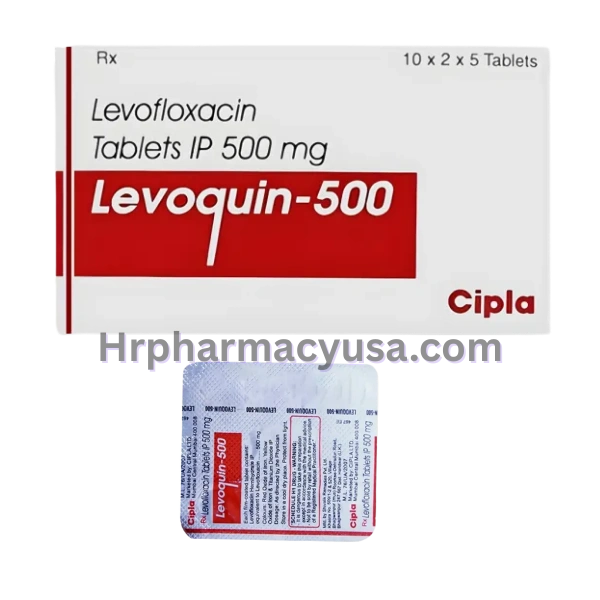
Levoquin 500 mg (Levofloxacin)
Price range: $10.00 through $26.00
Levoquin 500 mg (Levofloxacin) is a prescription antibiotic tablet used to treat certain bacterial infections, such as pneumonia, sinus, skin, and urinary tract infections. It works by stopping bacteria from growing. Take it exactly as prescribed and finish the full course. Not for colds or flu. Tell your clinician about tendon problems, nerve pain, or heart rhythm issues.
| Active Ingredient | Levofloxacin |
| Indication | Bacterial Infections |
| Manufacturer | Cipla Limited |
| Packaging | 5 tablets in 1 strip |
| Strength | 500 mg |
| Delivery Time | 6 To 15 days |
In Stock
What is Levoquin 500 mg (Levofloxacin)?
Levoquin 500 mg (Levofloxacin) is an oral antibiotic in the fluoroquinolone family. People are usually prescribed it when a clinician believes the infection is caused by bacteria that this medicine can reliably treat.
It is not meant for viruses, so it will not help with things like the common cold or the flu.
What Levoquin 500 mg is commonly used for
Levofloxacin is prescribed for a range of bacterial infections, but the specific use depends on your symptoms, exam findings, local resistance patterns, and sometimes lab results (such as a culture). Clinicians may use it for certain:- Respiratory infections (for example, some cases of community-acquired pneumonia)
- Sinus infections that are bacterial and persistent
- Skin and soft tissue infections in select situations
- Urinary tract infections, including complicated infections, when appropriate
Not every infection needs a fluoroquinolone. Because this class has important safety warnings, many clinicians reserve it for cases where other antibiotics are not a good fit or are unlikely to work.
How it works
Levofloxacin blocks enzymes that bacteria need to copy their DNA. Without that, the bacteria cannot multiply, and the infection can clear. This is one reason it can be effective, but it is also why taking it only when necessary matters. Overuse can drive antibiotic resistance, making future infections harder to treat.How to take it correctly
Most people take levofloxacin once daily, but the dose and duration vary depending on the type of infection and kidney function. Follow your prescription label closely. A few practical tips many patients find helpful:- Try to take it at the same time each day so doses are consistent.
- Finish the full course, even if you feel better early. Stopping too soon can let bacteria rebound.
- If your clinician ordered lab tests or a follow-up visit, keep that plan. It helps confirm the infection is truly improving.
Important safety warnings to know before you start
Fluoroquinolones (including levofloxacin) carry FDA boxed warnings. These are not “rare trivia” side notes. There are reasons to pause and make sure this medication is a good match for you. Contact a clinician promptly if you develop:- Tendon pain, swelling, or sudden injury (risk of tendonitis or tendon rupture)
- Numbness, tingling, burning pain, or weakness (possible peripheral nerve problems)
- Significant mood changes, confusion, agitation, hallucinations, or seizures (central nervous system effects)
- Heart rhythm changes (QT prolongation), especially if you take other QT-prolonging meds
- Blood sugar changes are more relevant for people with diabetes.
- Risk of C. difficile–associated diarrhea with many antibiotics, including this one
- Aortic aneurysm or dissection risk in certain higher-risk patients (your clinician can help weigh this)
Because of these risks, make sure your prescriber knows your medical history, including tendon disorders, nerve problems, myasthenia gravis, seizure history, heart rhythm issues, and any prior reaction to quinolone antibiotics.
Side Effects of Levoquin 500 Mg
Side effects vary, and many people tolerate treatment without major issues. Commonly reported symptoms include nausea, diarrhea, headache, trouble sleeping, dizziness, and increased sensitivity to sunlight. If side effects are severe or you develop a rash, hives, swelling, or trouble breathing, seek urgent medical care for a possible allergy.Interactions and spacing with supplements
Levofloxacin can bind to minerals, leading to poor absorption. This is a common reason people do not improve as expected. Avoid taking it at the same time as products containing aluminium, magnesium, iron, or zinc (including many antacids and multivitamins). Your prescriber or pharmacist can tell you the best spacing schedule for your exact products.Available strengths and dosage forms
Levofloxacin tablets are commonly available in these strengths:
- Livox 500 Mg Tablet
- Levoquin 250mg (Levofloxacin)
- Levoquin 500 mg (Levofloxacin)
- Levoflox (Levofloxacin)
- LQuin 250 Mg (Levofloxacin), LQuin 500 Mg
- Levoflox 250mg
- Levoflox 500mg (Levofloxacin)
- Levofloxacin 250 mg, 500 mg, 750 mg tablet
Other dosage forms are available on the market (availability varies by supplier), including oral solutions and intravenous (IV) formulations used in clinical settings.
Alternatives already available on the market
Which alternative makes sense depends on the infection site, allergy history, kidney function, local resistance, and culture results. Common alternatives clinicians may consider include:
- Other fluoroquinolones: ciprofloxacin (Cipro), moxifloxacin (Avelox)
- Penicillin or cephalosporin options: amoxicillin-clavulanate (Augmentin), cefdinir, cephalexin (Keflex)
- Other classes often used for specific infections: doxycycline, Azithromycin (Zithromax), trimethoprim-sulfamethoxazole (Bactrim), nitrofurantoin (Macrobid)
Do not switch antibiotics on your own. If you are not improving after starting treatment, it is worth checking in with your doctor. Sometimes the issue is resistance, dose adjustment (especially in kidney disease), or a condition not caused by bacteria.
FAQs About Levoquin 500 mg (Levofloxacin)
How should I store Levoquin 500 mg (Levofloxacin)?
Store at room temperature in a dry place, away from excess heat and moisture. Keep it in the original container and out of reach of children.What should I do if I miss a dose?
Take it when you remember, unless it is close to your next dose. Do not double up. If you are unsure, ask a pharmacist or your prescriber.Can I drink alcohol while taking levofloxacin?
Alcohol does not directly “cancel” the antibiotic, but it can worsen dizziness, stomach upset, and dehydration. If you drink, keep it to a minimum and use good judgment.Does levofloxacin affect hormonal birth control?
Most antibiotics do not meaningfully reduce the effectiveness of birth control, but individual situations vary. If you want to be extra cautious, ask your clinician about backup contraception during treatment.Can I take levofloxacin during pregnancy or while breastfeeding?
This is a risk-benefit decision your clinician should make with you. Tell your prescriber if you are pregnant, trying to conceive, or breastfeeding before starting.| size | 30 Tablet/s, 60 Tablet/s, 90 Tablet/s |
|---|





Reviews
There are no reviews yet.