


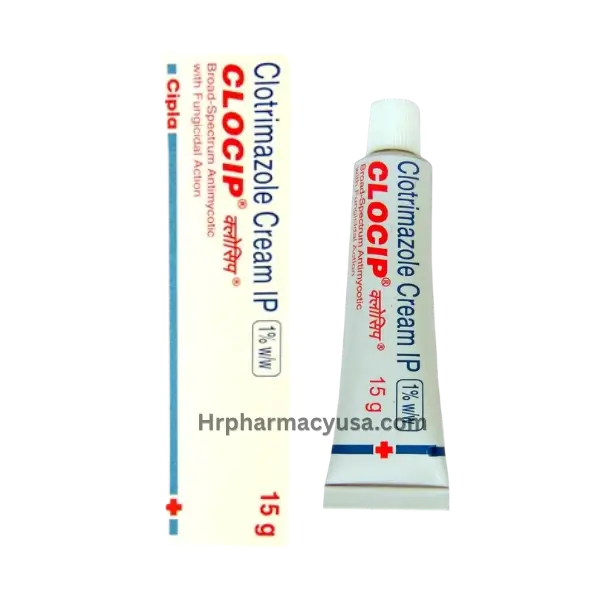
Clocip Cream 15 gm (Clotrimazole)
Price range: $9.99 through $34.97
Clocip Cream 15 gm (Clotrimazole) is a topical antifungal cream used for common fungal skin infections like ringworm, athlete’s foot, and jock itch. It helps relieve itching, redness, scaling, and discomfort by stopping fungal growth on the skin. Apply a thin layer to clean, dry skin as directed. Keep using it for the full course, even if symptoms improve early.
| Active Ingredient: | Clotrimazole |
|---|---|
| Indication: | Skin Infections |
| Manufacturer: | Cipla Limited |
| Packaging: | 15g Tube |
| Strength: | 15gm |
| Delivery Time: | 6 To 15 days |
In Stock
Buy Clocip Cream 15 gm (Clotrimazole)
Clocip Cream 15 gm (Clotrimazole) is a practical, everyday antifungal option people often reach for when a skin rash turns out to be fungal instead of “just irritation.” Fungal skin infections are common, and they can be stubborn. They usually show up as itching, redness, peeling, scaling, or a ring-shaped rash. In areas where skin stays warm and damp, such as between the toes, the groin, under skin folds, or around the waistline, fungus can keep recurring if it is not properly treated. Clotrimazole is a medicine used to treat fungal infections. It works by breaking the fungus's outer layer, preventing it from growing. This is why it helps with ringworm, athlete’s foot, and jock itch. Clotrimazole can also help with some yeast skin problems, depending on what’s causing them and where they happen.What using it is usually like
Most people apply a thin layer to the affected skin and a small margin around it (because fungus can spread slightly beyond what you see). It helps to wash the area first and dry it well. Damp skin can keep the problem going, even with a good antifungal. A common reason treatments fail is stopping too soon. Symptoms like itching may improve early, but the fungus can still be present. If you stop as soon as it “looks better,” it is more likely to return.Tips that matter in real life
- Keep the area dry. Change socks daily, let shoes air out, and use breathable fabrics when possible.
- Avoid sharing towels or clothing while you are treating an active fungal infection.
- Do not cover tightly unless told to do so: Tight coverings can trap moisture and heat.
- Use this cream only on the skin surface, unless directed otherwise by a clinician. Do not apply inside the mouth, vagina, or on open wounds. Avoid contact with eyes and mucous membranes. Use caution if applying to large areas or broken skin, and stop if severe irritation occurs.
When to check in with a clinician
It is worth getting medical advice if the rash is widespread, very painful, oozing, looks infected, keeps recurring, or if you are not sure it is fungal. Some conditions, like eczema, psoriasis, contact dermatitis, or bacterial infections, can look similar and may require very different treatments. Also, fungal nail infections and scalp infections usually need different therapies than a standard skin cream.Possible side effects (what people notice most)
Many people tolerate clotrimazole well. Mild burning, stinging, redness, irritation, or peeling can happen, especially on sensitive skin.
If you notice worsening swelling, blistering, severe irritation, or signs of an allergic reaction, stop using it and seek medical help.
Other available strengths and dosage forms (varies by manufacturer)
Clotrimazole skin creams are most commonly 1% (10 mg/g). Tube sizes can vary by brand and may come in packs such as 10 g, 15 g, 20 g, 30 g, or larger. Clotrimazole also comes in other forms, such as topical solutions (often used for certain external areas) and vaginal formulations for yeast infections, but those are not the same as a standard skin cream. Always confirm the exact strength and intended use on the package label.Substitute options already on the market
If you are comparing options, substitutes fall into two categories:
Same active ingredient (clotrimazole 1%)
- Lotrimin AF (clotrimazole 1% cream)
- Clocip B Cream 10 gm (Clotrimazole/Beclometasone)
- Candid Ear Drop (Clotrimazole/Lignocaine)
- Clocip Dusting Powder (Clotrimazole)
Different antifungal medicines (not identical, may work differently)
- Terbinafine 1% cream (often used for athlete’s foot and ringworm)
- Miconazole 2% cream (another common topical antifungal): Betnovate GM Cream
- Ketoconazole cream (often used for certain fungal or yeast-related skin issues): KZ Cream, Nizral 15gm Cream (Ketoconazole)
Choosing between these depends on the location, how long it has been present, and what type of fungus is involved. If you are unsure, a clinician or pharmacist can help you pick the right option.
FAQs
1. Can I use Clocip Cream 15 gm (Clotrimazole) during pregnancy or while breastfeeding?
Topical clotrimazole is generally considered low risk because little is absorbed through the skin, but you should still check with a clinician, especially if applying to large areas or for long periods.2. Can I use this cream on my face?
Facial skin can be more sensitive, and some facial rashes are not fungal. It is better to get medical guidance before using it on the face, near the eyes, or near the lips.3. Is clotrimazole a steroid?
No. Clotrimazole is an antifungal, not a steroid. It does not work the way steroid creams do.4. Does clotrimazole interact with other medicines?
Significant interactions are unlikely with normal skin use. If you use multiple medicated creams in the same area, ask a pharmacist how to space them out.5. Can I use it for fungal nail infections?
Skin creams usually do not penetrate nails well. Nail fungus often needs a different treatment plan, sometimes prescription options.| size | 12 Cream/s, 3 Cream/s, 6 Cream/s |
|---|


Reviews
There are no reviews yet.