


ED (Erectile Dysfunction) doesn’t just affect him—it can reshape your desire, confidence, and relationship.
If you’re over 40 and trying to make smart, private, budget‑friendly health choices, understanding how sildenafil's mechanism of action works for ED (erectile dysfunction) helps you cut through hype and ask the right questions.
When erections falter, anxiety and avoidance often follow, making intimacy feel like a performance test.
In this post, I’ll explain the nitric oxide/cGMP pathway, how sildenafil blocks PDE5 to improve blood flow only with arousal, what onset and duration to expect, and key safety/interaction red flags—plus tips for discussing it with a clinician discreetly.
ED can seem mysterious, but its causes usually are not. An erection needs well-timed blood flow, nerve control, and chemistry.
Think of it like filling up an inflatable raft:
- You need the signal to start pumping (arousal and nerve input),
- You need the pump and hoses to work (blood vessels),
- And you need the valves to hold pressure once it’s filled (venous trapping).
Sildenafil helps the blood vessels and smooth muscle work better.
The “Hydraulics” of an Erection
Nerves: The On Switch
Sexual stimulation—mental, physical, or both—activates nerves that go to the penis. These nerves help trigger the release of key chemical messengers.
Blood Vessels: The Pipes
Arteries bring blood into the penis. Veins carry blood out. For a firm erection, inflow must increase, and outflow must be restricted (temporarily).
Smooth Muscle: The Valve System
Inside the penis are erectile tissues (notably the corpora cavernosa) made of spongy spaces surrounded by smooth muscle. When smooth muscle relaxes, those spaces expand and fill with blood.
Why Erectile Dysfunction (ED) Happens So Often
Blood-Flow Issues (Most Common)
Most ED happens when blood vessels don’t deliver or hold enough blood. Causes include high blood pressure, cholesterol, smoking, diabetes, and aging.
Nerve, Hormone, and Mind-Body Factors
Nerve injuries, low testosterone, or anxiety and stress can also cause ED.
Sildenafil helps mainly when the problem involves blood flow or smooth muscle tone, but not when desire is low or nerve function is significantly impaired.
What Sildenafil Is (And What It Isn’t)
Sildenafil is known as the active ingredient in Viagra. It is part of a group of medications called PDE5 inhibitors.
Sildenafil = A PDE5 Inhibitor
PDE5 inhibitors help the body maintain the chemical signal that keeps penile blood vessels relaxed during sexual arousal.
Where PDE5 Lives in the Body
PDE5 is found in several tissues, but it’s especially relevant in:
- the smooth muscle of blood vessels,
- the corpora cavernosa (erectile tissue) of the penis,
- and other areas (which explains some side effects).
What Sildenafil Does Not Do
It Doesn’t Create Desire
Sildenafil doesn’t increase libido by itself. If you’re not mentally or physically aroused, it won’t “generate” desire.
It Doesn’t “Force” an Erection Without Arousal
This is one of the most important points for understanding the mechanism: sildenafil doesn’t start the erection process. It supports the natural pathway after it has already been triggered.
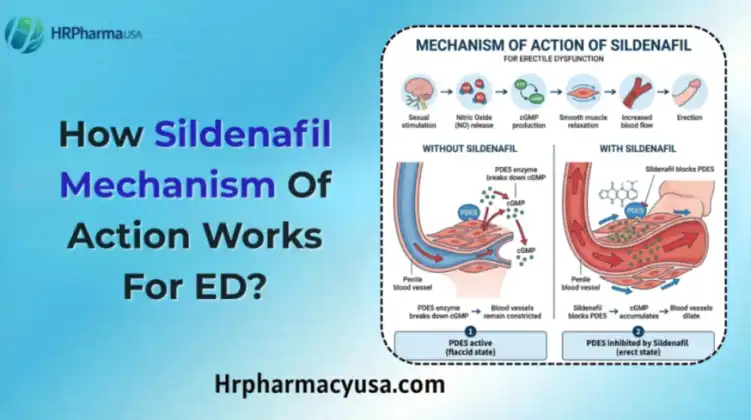
The Core Biology: The NO–cGMP Pathway
Knowing about NO, cGMP, and PDE5 covers sildenafil’s basics.
Nitric Oxide (NO): The Natural Starter Signal
During sexual stimulation, nerve endings and cells in the penile tissue release nitric oxide (NO). NO is like the body’s “relax the muscle” starter pistol.
cGMP: The “Relax” Message
NO triggers the formation of a messenger molecule called cyclic GMP (cGMP) inside smooth muscle cells.
How cGMP Changes Blood Flow
cGMP causes smooth muscle to relax. Relaxed smooth muscle means:
- penile arteries can widen (vasodilation),
- erectile spaces can expand,
- Blood flows in more easily and fills the tissue.
PDE5: The Enzyme That Hits the Brakes
Your body also has a built-in shutdown system. PDE5 (phosphodiesterase type 5) is an enzyme whose job is to break down cGMP.
Why PDE5 Matters Specifically in ED
If cGMP gets broken down too quickly, smooth muscle tightens back up sooner, arterial widening fades, and the erection is weaker or doesn’t last.
So in simple terms:
- NO makes cGMP
- cGMP helps erections
- PDE5 destroys cGMP
- Sildenafil blocks PDE5
Sildenafil’s Mechanism of Action: Step-by-Step
Here’s the full chain reaction, start to finish, in a way that matches what’s happening in real life.
Step 1: Sexual Stimulation Triggers Nerve Signals
This can be physical touch, visual stimulation, fantasy—whatever flips the switch for you.
Psychological vs Physical Stimulation (Both Count)
The brain is part of the erection pathway. That’s why stress, distraction, or performance anxiety can disrupt things even if blood vessels are healthy.
Step 2: Nitric Oxide Gets Released in Penile Tissue
Those nerve signals lead to the release of nitric oxide in the erectile tissue.
Step 3: NO tells the Body to Make More cGMP
NO activates an enzyme that raises cGMP in smooth muscle cells.
cGMP as a “Text Message” to Smooth Muscle
If NO is the alert, cGMP tells muscles: Relax and fill with blood.
Step 4: PDE5 Starts Breaking Down cGMP
PDE5 breaks down cGMP, keeping erections from lasting too long.
Step 5: Sildenafil Inhibits PDE5
This is the centerpiece: sildenafil inhibits PDE5, so PDE5 can’t break down cGMP as fast.
What “Inhibits” Means (Without the Chemistry Headache)
Inhibition means sildenafil blocks PDE5 and slows its action.
Why cGMP Sticks Around Longer
With less PDE5 activity, cGMP stays high and muscles relax longer.
Step 6: Smooth Muscle Relaxes, Arteries Open Up
Relaxed smooth muscle causes vasodilation (widening) in penile arteries and arterioles.
More Inflow: Filling the Spongy Tissue
The erectile chambers fill like a sponge soaking up water—except it’s blood, and it’s pressure-controlled.
Step 7: Veins Get Compressed, Blood Stays Trapped
As the erectile tissue expands, it presses against the veins that normally drain blood away.
The Veno-Occlusive “Lock-In” Effect
This is the “trap” mechanism: inflow increases, outflow decreases, pressure rises, and the erection becomes firm enough for sex.
Step 8: Sildenafil Wears Off and the System Resets
When sildenafil fades and arousal stops, cGMP falls, muscles tighten, and the erection ends.
Why Sildenafil Doesn’t Work Like an Instant Switch
You Still Need Sexual Arousal
Sildenafil only works with arousal. No arousal means little NO, low cGMP, and less for sildenafil to block.
A useful analogy: sildenafil doesn’t start the campfire. It keeps the fire going by slowing down how quickly the fuel gets used up.
Why Performance Anxiety Can Override the Biology
Anxiety can activate the sympathetic nervous system (“fight or flight”), which tends to tighten blood vessels and oppose erection physiology. So you can have the right drug on board and still struggle if stress is dominating the moment.
How Fast It Works, How Long It Lasts, and Why
Mechanism isn’t just what it does—it’s also when it can do it.
Onset: Typical Timing
Most people notice effects in about 30–60 minutes, though it can vary.
Food Effects (Especially High-Fat Meals)
A heavy, high-fat meal can slow absorption, meaning:
- It may take longer to kick in,
- It may feel less predictable.
How long does Cenforce 100mg last?
Peak Effect and Duration
Sildenafil usually works for about 4 hours. This means improved responsiveness, not a constant erection.
Metabolism: Why Drug Interactions Matter
Sildenafil is processed in the liver, largely through enzymes including CYP3A4.
CYP3A4 and Common Interaction Triggers
Other medications or substances can change how long sildenafil lasts or how strong its effects are.
Side Effects Explained by the Same Mechanism
Sildenafil affects blood vessel tone in different parts of the body, leading to some side effects.
Common Side Effects (And Why They Happen)
Headache and Flushing
If blood vessels dilate in the head/face, you can get:
- headache,
- Facial flushing may occur as a result.
Nasal Congestion
Nasal tissue swelling leads to a stuffy nose feeling.
Indigestion/Heartburn
Relaxed smooth muscle may sometimes lead to indigestion or heartburn.
Vision Changes: The PDE6 “Collateral” Effect
Sildenafil may also affect retinal enzyme PDE6, causing vision changes.
Blue Tint and Light Sensitivity
That’s why some people report:
- a blue-ish tinge to vision,
- increased light sensitivity,
- blurred vision (typically temporary).
Rare but Serious Effects
Priapism
A prolonged, painful erection is a medical emergency as it can harm tissue.
Sudden Hearing or Vision Loss (Rare)
Sudden hearing or vision loss is rare but needs urgent attention.
Safety Red Flags: When Sildenafil Can Be Dangerous
This part matters because sildenafil’s core action—vasodilation—can become risky in certain combinations.
Nitrates + Sildenafil: The Classic No-Go
Nitrate medications (often used for chest pain/angina) and recreational nitrates (“poppers”) also increase cGMP signaling and widen blood vessels.
Why Blood Pressure Can Crash
If you combine nitrates with sildenafil, blood vessels can dilate too much, causing a dangerous drop in blood pressure. This is one of the best-known and most important contraindications.
Alpha-Blockers and Other Blood Pressure Meds
Alpha-blockers (often used for prostate symptoms or hypertension) can also lower blood pressure. Combining them with sildenafil may increase dizziness or fainting risk, depending on timing and dose.
Grapefruit, Alcohol, and Recreational “Poppers”
Mixing Risks That Catch People Off Guard
- Grapefruit can affect drug metabolism in some people and may raise levels.
- Alcohol can worsen dizziness, reduce performance, and muddy the results (“Did the pill fail, or was I just too buzzed?”).
- Poppers (nitrates) are a serious risk with PDE5 inhibitors.
Who Typically Benefits Most (And Who Might Not)
Best Responders
Mild-to-Moderate Vascular ED
If the main issue is reduced blood flow or less responsive smooth muscle, sildenafil often works well because it supports the natural NO–cGMP pathway.
Harder-to-Treat Situations
Severe Diabetes-Related ED
Diabetes can damage blood vessels and nerves. If NO release is reduced and vascular function is impaired, sildenafil may help, but sometimes less robustly.
After Prostate Surgery or Nerve Injury
If the nerve signals that start the NO release are significantly disrupted, sildenafil may have a limited effect—because there’s less “starter signal” to amplify.
How to Get Better Results (Without Guesswork)
Timing, Dose, and “Do I Need to Try Again?”
Sildenafil response is not always perfect on the first try. Some people need a few attempts on different days—especially to dial in timing, meals, and comfort level.
Why More Than One Attempt Matters
Real life is messy: stress levels change, sleep changes, meals change, and chemistry changes. One trial isn’t always a fair test.
Real-Life Habits That Boost the Medication’s Odds
Sildenafil helps the plumbing, but lifestyle often affects the plumbing too.
Sleep, Exercise, Smoking, and Stress
Better cardiovascular health generally improves erectile function because erections are a blood-flow-intensive event. Even modest improvements can make the medication work more smoothly.
Sildenafil vs Other PDE5 Inhibitors
Same Pathway, Different Timing Profiles
Sildenafil, tadalafil, vardenafil, and avanafil all target PDE5 and support the same NO–cGMP pathway. Differences are mainly about:
- onset,
- duration,
- side-effect profile,
- personal preference and tolerability.
Tadalafil vs Sildenafil
A common comparison is:
- Sildenafil: more “plan-ahead for tonight.”
- Tadalafil: more “wider window / more flexible timing.”
But the underlying mechanism—protecting cGMP by inhibiting PDE5—is the shared core.
Conclusion
Sildenafil works for ED by blocking PDE5, the enzyme that breaks down cGMP, which is the molecule that helps penile smooth muscle relax so blood can flow in and stay in. It doesn’t create arousal, and it doesn’t flip erections on like a light switch. Instead, it supports your body’s natural erection pathway—making the signal last longer and the blood-flow response stronger when sexual stimulation is present.
FAQs
How does sildenafil work if I have poor circulation?
It helps by enhancing the NO–cGMP pathway so blood vessels in penile tissue relax more effectively. If circulation problems are severe (advanced vascular disease), results may be weaker because there’s only so much widening the vessels can achieve.
Why do I get a headache from sildenafil?
Because it can widen blood vessels beyond the penis, too. That extra vasodilation—especially in head/face blood vessels—can trigger headaches and flushing in some people.
Does sildenafil increase testosterone or sex drive?
No. Sildenafil doesn’t raise testosterone and doesn’t directly increase libido. It improves the physical blood-flow response to arousal; desire is a separate system.
Why didn’t sildenafil work the first time I tried it?
Common reasons include taking it too close to a heavy meal, not enough sexual stimulation, high anxiety, alcohol effects, or needing adjusted timing/dosing under a clinician's guidance.
Is sildenafil basically the same as other ED meds?
Mechanism-wise, yes: most popular ED medications are PDE5 inhibitors that preserve cGMP. The differences are mainly how fast they start, how long they last, and how your body personally tolerates them.