


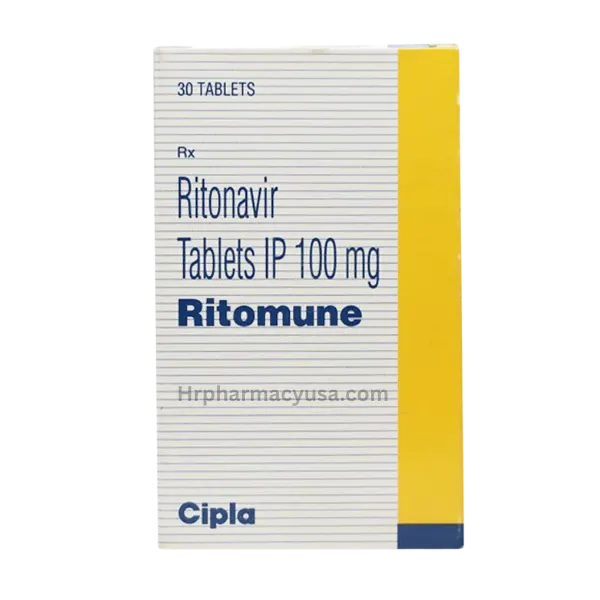
Ritomune (Ritonavir) – 100 mg
Price range: $90.00 through $240.00
Ritomune (Ritonavir) is an antiretroviral medication used in combination therapy for HIV. It enhances the effect of other HIV drugs and helps control infection.
| Active Ingredient | Ritonavir |
|---|---|
| Manufacturer | Cipla Limited |
| Packaging | 60 Tablets in 1 box |
| Strength | 100gm |
| Delivery Time | 6 To 15 days |
In Stock
Ritomune (Ritonavir) – 100 mg Tablets
Ritomune 100 mg is ritonavir in a simple tablet. It’s mainly used as a “booster” to raise the levels of other HIV protease inhibitors (PIs), so they work better and last longer in your body. In plain words, you pair Ritomune with certain HIV meds to help them hit harder and stay steady. It isn’t taken alone to treat HIV.What Ritomune 100 mg Is Used For (and who it’s for)
Ritomune (ritonavir) is used to “boost” the blood levels of certain HIV protease inhibitors. By slowing how your liver breaks down those meds, ritonavir helps them stay at the right levels for longer. Doctors add Ritomune to:- Atazanavir-based regimens (commonly atazanavir 300 mg + ritonavir 100 mg once daily, with food)
- Darunavir-based regimens (often darunavir 800 mg + ritonavir 100 mg once daily for many treatment-naive adults, or darunavir 600 mg + ritonavir 100 mg twice daily in some treatment-experienced cases)
- Other, less common PIs (historically saquinavir, fosamprenavir, tipranavir—specialist use only)
How Ritonavir Works (in plain words)
Ritonavir blocks a liver enzyme (CYP3A) that would normally clear certain HIV meds too quickly. When you add a small dose of ritonavir, your main PI sticks around longer and at better levels. So, you get stronger and more stable HIV control with the same PI dose, and often with fewer pills than older regimens.When Doctors Choose Ritomune 100 mg
Your provider may add Ritomune if:- Your regimen includes a PI that needs boosting (like atazanavir or darunavir)
- You’re switching from another booster (like cobicistat) for tolerance or interaction reasons
- There are drug–drug interactions that make ritonavir the better fit as a booster
- You’re pregnant and a boosted PI regimen is preferred (tablets are preferred over oral solution in pregnancy)
Dosage and How to Take
Your exact dosing depends on the PI you’re boosting and your clinical situation. Typical adult doses:- With atazanavir: Ritonavir 100 mg once daily with food (exact combo decided by your doctor)
- With darunavir:
- 100 mg once daily with darunavir 800 mg for many treatment‑naive adults
- 100 mg twice daily with darunavir 600 mg twice daily for some treatment‑experienced or interaction‑prone cases
- With tipranavir (specialist use): 200 mg ritonavir twice daily (that’s 2 tablets twice a day), with food
- Take with food to reduce stomach upset and help absorption.
- Swallow tablets whole with water. Don’t crush or chew unless your prescriber says it’s okay.
- Keep taking all meds in your regimen daily. Consistency is everything.
- If you remember within a few hours, take it with some food. If it’s close to the next dose, skip the missed one. Don’t double up.
- If you throw up within about 1–2 hours after a dose, call your care team for advice on whether to retake it.
- Contact a healthcare professional right away if you’ve taken more than prescribed.
Side Effects
Most people notice stomach-related effects at the start. Many fade as your body gets used to it. Common:- Nausea, diarrhea, vomiting
- Abdominal pain, indigestion
- Headache, tiredness
- Taste changes (things may taste weird/metallic)
- Tingling around the mouth or in fingers (paresthesia)
- Increases in cholesterol and triglycerides
- Changes in blood sugar or insulin resistance
- Elevated liver enzymes
- Pancreatitis (look for severe stomach pain, nausea/vomiting)
- Liver problems (yellow skin/eyes, dark urine, persistent nausea)
- Severe rash or allergic reaction (hives, swelling, difficulty breathing)
- Heart rhythm effects (PR interval prolongation) in susceptible people—report dizziness, fainting, or palpitations
Warnings and Precautions
- Liver disease: Use with caution. Your provider will watch liver enzymes closely.
- Pancreatitis risk: Higher if you have very high triglycerides or past pancreatitis.
- Diabetes/insulin resistance: Ritonavir can raise blood sugar. Monitor if you’re at risk.
- Bleeding in hemophilia: Increased bleeding episodes have been reported.
- Steroids: Strong interaction with some steroids, especially fluticasone and budesonide (inhaled, nasal, injected). This can cause Cushing’s syndrome/adrenal suppression. Beclomethasone is generally preferred—check with your prescriber.
- Pregnancy/breastfeeding: Ritonavir tablets are commonly used as a booster during pregnancy; discuss details with your provider. The oral solution contains alcohol/propylene glycol and is generally avoided in pregnancy—tablets are preferred.
- Driving/machinery: If you feel dizzy or very tired, wait until you feel normal to drive.
Major Drug Interactions
Ritonavir is a strong inhibitor of CYP3A and P‑gp (and can induce certain enzymes with repeated dosing). This means it can raise or lower levels of many drugs. Always share a complete list of prescriptions, over-the-counter meds, and herbal supplements with your provider. Do not use with (contraindicated or generally avoided):- Rifampin (TB drug): Strong inducer—can crash PI levels
- St. John’s wort: Lowers levels of many HIV meds
- Anti‑arrhythmics: Amiodarone, dronedarone, flecainide, propafenone, quinidine (risk of serious arrhythmias)
- Ergot alkaloids: Ergotamine, dihydroergotamine (risk of toxicity)
- Sedative‑hypnotics: Triazolam, oral midazolam (dangerous sedation/resp depression)
- Antipsychotics: Pimozide, lurasidone (serious arrhythmia/toxicity risk)
- Statins: Simvastatin, lovastatin (severe muscle toxicity risk)
- Alpha‑blocker: Alfuzosin (hypotension risk)
- Antiplatelets: Ticagrelor (bleeding/toxicity risk); clopidogrel may be less effective
- Colchicine: Contraindicated with renal/hepatic impairment; strict dose limits otherwise
- PDE‑5 inhibitors for PAH: Sildenafil for pulmonary hypertension is contraindicated (ED dosing may be used with reduced doses—doctor will advise)
- Anticoagulants: Apixaban (dose adjustments), rivaroxaban (often avoid), warfarin (INR changes), dabigatran (P‑gp interactions)
- Other anticonvulsants: Carbamazepine, phenytoin, phenobarbital (induce enzymes—reduce PI levels)
- Macrolides/azoles: Clarithromycin, itraconazole, ketoconazole (levels may increase—monitor)
- Opioids: Fentanyl (levels increase—respiratory depression risk)
- Benzodiazepines: Prefer lorazepam, oxazepam, temazepam; avoid triazolam/oral midazolam
- Acid reducers with atazanavir: Coordinate timing and doses per clinician guidance
Monitoring and Follow‑Ups
- HIV labs: Viral load and CD4 count to confirm suppression
- Liver tests: ALT/AST, bilirubin
- Lipids: Cholesterol and triglycerides
- Glucose/HbA1c: If diabetes risk or symptoms appear
- Amylase/lipase: If stomach pain suggests pancreatitis
- ECG: If you have underlying conduction issues or symptoms suggest rhythm problems
Storage and Handling
- Store below 30°C (86°F) in a dry place, away from sunlight
- Keep in the original blister/bottle until use
- Keep out of reach of children and pets
- Do not use after the expiry date on the pack
- Tablets only: If you ever receive oral solution, note that handling and storage are different—follow the label carefully
What’s in the Box (may vary)
- Strength: Ritonavir 100 mg film‑coated tablets
- Common pack sizes: Bottles or blisters (often 30 or 60 tablets)
- Leaflet: Detailed instructions, dosing guidance, and safety info
Why Choose Ritomune 100 mg
- Reliable booster for key HIV protease inhibitors
- Helps maintain optimal drug levels for strong viral suppression
- Tablet form that’s simple to take with food
- Widely used and trusted by HIV specialists
Real‑World Tips
- Take it with a meal or snack—your stomach will thank you.
- Set phone reminders. Same times each day makes adherence easier.
- Bring your full med/supplement list to every appointment—interactions matter a lot here.
- Ask before starting any new medicine, even over‑the‑counter or “herbal.”
- If side effects bug you, don’t quit quietly—call your care team. Small tweaks can help.
Frequently Asked Questions (FAQ)
Q1. What is Ritomune 100 mg used for? Ritomune 100 mg (ritonavir) is used to boost other HIV protease inhibitors like atazanavir or darunavir. It’s not taken alone to treat HIV. Q2. How does ritonavir “boost” other HIV meds? It blocks a liver enzyme (CYP3A), so the partner PI isn’t cleared too fast. That keeps drug levels steady and effective between doses. Q3. What’s the usual dose? Often 100 mg once daily or 100 mg twice daily, depending on the PI. For example, atazanavir commonly uses ritonavir 100 mg once daily; darunavir can be once daily or twice daily. Your doctor sets the exact plan. Q4. Should I take Ritomune with food? Yes, taking it with food is recommended. It helps with stomach comfort and can improve absorption. Q5. Can I use Ritomune by itself to treat HIV? No. It’s a booster. You’ll always take it with a complete antiretroviral regimen chosen by your HIV specialist. Q6. What are common side effects? Nausea, diarrhea, vomiting, stomach pain, headache, tiredness, taste changes, and tingling sensations. Many settle after the first few weeks.| size | 120 Tablet/s, 150 Tablet/s, 300 Tablet/s, 90 Tablet/s |
|---|



Reviews
There are no reviews yet.