


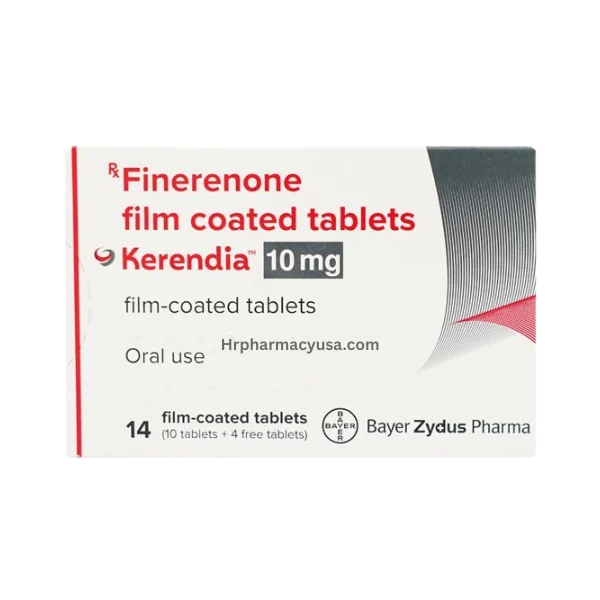
Kerendia 10mg (Finerenone)
Price range: $80.00 through $235.00
In Stock
Kerendia 10mg (Finerenone): What’s the Deal?
First off, Kerendia isn't really a diabetes medicine. I mean, you take it because you have type 2 diabetes, but it’s not for your blood sugar. It’s for your kidneys. Here’s what happens. When you have type 2 diabetes, high blood sugar over the years starts to mess with your kidneys. Your kidneys are basically giant filters, right? They clean your blood. Diabetes damages those filters. We call that chronic kidney disease, or CKD. Now, your body has this hormone called aldosterone. In small amounts, it’s fine. But in people with diabetes and kidney stress, your body sometimes makes too much, or the kidneys react badly to it. Aldosterone basically starts causing inflammation and scarring inside the kidneys. It’s like pouring salt on a wound. Kerendia's job is to block that hormone. It steps in the way and says, "Nope, stop scarring the kidneys." It’s called an MRA (mineralocorticoid receptor antagonist), but forget that name. Just think of it as a shield for your filters. The whole point of taking this pill is to slow down that damage. Kidney disease gets worse slowly, and the goal here is to hit the brakes so you don't end up needing dialysis down the road.How Do You Actually Take It?
It’s super simple, which is nice. You take one 10mg tablet, once a day. That’s it. The good news? You can take it whenever. Morning with breakfast, bedtime, middle of the day. With food or on an empty stomach. It doesn't matter. The only rule is to try and take it around the same time every 24 hours, just so you don't forget. Swallow the pill whole. Don't chew it or crush it up. What if you forget? We all forget. If you remember later that day, take it. If you don't remember until the next morning, just skip the missed one and take your normal dose. Do not—and I mean do not—take two pills at once. That won't help anything.Who Is This Pill NOT For?
Kerendia isn't right for everyone.- Type 1 Diabetes: This drug is specifically studied and approved for Type 2.
- Dialysis: If your kidneys are already at the point where you need dialysis, this isn't the fix.
- DKA (Diabetic Ketoacidosis): If you’ve had this (it’s when your blood sugar gets dangerously high and acidic), you shouldn't take it.
- Allergies: If you take it and break out in a rash, obviously stop.
Let’s Talk Side Effects (The Real Stuff)
Most people do just fine on Kerendia. But like any medicine, things can happen. The main one doctors watch is potassium.1. High Potassium (Hyperkalemia)
This is the big one. Kerendia can make your potassium levels go up. Potassium is important for your heart and muscles, but too much is bad. How do you know? You might feel weak, or like your muscles are cramping or tingling. Some people feel nauseous or notice their heart beating funny. This is why you HAVE to get blood tests. Your doctor will check your potassium about a month after you start, and then regularly after that. They might tell you to cut back on high-potassium foods like bananas, oranges, or potatoes.2. Low Blood Pressure
Sometimes it can drop your blood pressure a bit, making you feel dizzy when you stand up too fast.3. Swelling
A few people notice their ankles or legs swelling up a little. If any of this bothers you, call your doctor. Don't just stop the pill.Warnings You Shouldn't Ignore
Look, Kerendia is serious medicine. Pregnancy is a No-Go: If you are pregnant, or even thinking about trying to get pregnant, tell your doctor immediately. Kerendia could harm the baby. You need to be on reliable birth control while taking this. Drug Mix-Ups: This is crucial. Kerendia does not play well with certain other drugs.- Potassium Stuff: Obviously, don't take potassium supplements.
- Water Pills: Some diuretics (water pills) can mess with your potassium, too.
- NSAIDs: Stuff like Advil (Ibuprofen) or Aleve (Naproxen) can be hard on the kidneys anyway, and mixing them with Kerendia might raise your potassium.
- Blood Pressure Meds: Some common ones, like ACE inhibitors (Lisinopril) or ARBs (Losartan), can also raise potassium. Your doctor might still prescribe them together, but they’ll watch your blood work like a hawk.
- Certain Antifungals/Antibiotics: Some strong infection meds clash with Kerendia.
Storing Your Meds
Just keep the bottle in a cool, dry place. A kitchen cabinet or a drawer is fine. Don't keep it in the bathroom—the steam from the shower is bad for pills. Keep it away from kids, obviously.Living With Kerendia
Taking Kerendia doesn't mean you can ignore the rest of your health. You still need to manage your diabetes. Keep your blood sugar in check, watch your blood pressure, and try to eat right. Kerendia is part of the team, not the whole solution. The goal here is protection. You might not "feel" any different on Kerendia, and that's okay. It’s working behind the scenes to keep your kidneys running.Frequently Asked Questions (FAQ)
Q: How long do I have to take Kerendia? A: Usually, it's a long-term thing. Chronic kidney disease doesn't just go away. Think of it as ongoing protection, like taking a daily vitamin, but way more important. Don't stop taking it just because you feel fine. Q: Will Kerendia lower my blood sugar? A: Nope. It has almost no effect on blood sugar. You still need your other diabetes medications (like Metformin or insulin). Q: What if I take too many pills by accident? A: Call Poison Control or go to the emergency room right away. The biggest risk is your potassium shooting up dangerously high, which messes with your heart. Q: Why did my doctor start me on 10mg and not 20mg? A: Doctors usually start low (10mg) to see how your body reacts, especially your potassium. If your kidneys and potassium look good after a month or so, they might bump you up to 20mg for maximum protection. Q: Can I drink alcohol while taking Kerendia? A: You should ask your doctor. Alcohol isn't great for your kidneys or diabetes anyway, so moderation is key. Q: Does it cause weight gain? A: It wasn't really seen in the studies. If you notice weight gain, it might be fluid swelling, so let your doctor know. Q: Can I take this if I have heart failure? A: Sometimes. Kerendia also showed benefits for the heart in people with diabetes. Your cardiologist and kidney doctor will decide if it's right for you.Related Products You Might Hear About
If you're managing type 2 diabetes and kidney health, Kerendia isn't the only tool in the box. Your doctor might mention these others, often used alongside Kerendia or instead of it: 1. Farxiga (Dapagliflozin) This is a totally different type of drug (an SGLT2 inhibitor). It lowers blood sugar by making you pee out the extra glucose. But the cool side effect is that it's great for protecting the kidneys and the heart. Many people take both Farxiga and Kerendia. 2. Jardiance (Empagliflozin) Very similar to Farxiga. It works the same way and also helps the kidneys and heart. It’s super popular now. 3. Invokana (Canagliflozin) Another one in the same family as Farxiga and Jardiance. It was one of the first shown to protect kidneys. 4. Lisinopril (or Losartan, Valsartan, etc.) These are common blood pressure pills (ACE inhibitors or ARBs). They have been the standard for kidney protection for years. Kerendia is often added on top of these when they aren't enough. 5. Metformin The classic diabetes pill. Almost everyone with type 2 diabetes starts here. It helps your body handle insulin better. 6. Ozempic (Semaglutide) This is an injection (or the pill Rybelsus). It lowers blood sugar and helps with weight loss. Newer studies show it might help the kidneys, too.| size | 28 Tablet/s, 56 Tablet/s, 84 Tablet/s |
|---|



Reviews
There are no reviews yet.