


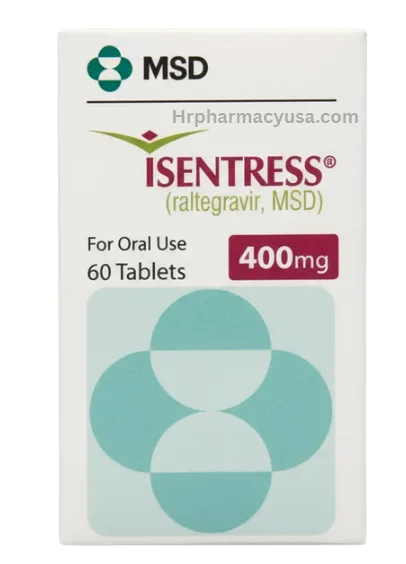
Isentress 400 mg (Raltegravir)
Price range: $247.00 through $720.00
Isentress 400 mg (Raltegravir) is an antiretroviral drug used in HIV treatment. It helps reduce viral load and supports immune function when used with other HIV medicines.
| Active Ingredient | Raltegravir |
|---|---|
| Manufacturer | MSD Pharmaceuticals India Pvt. Ltd. |
| Packaging | 60 tablets in 1 bottle |
| Strength | 400mg |
| Delivery Time | 6 To 15 days |
In Stock
Isentress 400 mg (Raltegravir) Tablets
Straight to the point: Isentress 400 mg is a trusted HIV-1 medicine that helps bring down viral load when used with other antiretrovirals. It’s an integrase inhibitor (INSTI), so it blocks the step HIV needs to insert its DNA into your cells. One tablet, twice a day. Food doesn’t really matter. Stay consistent and it does the heavy lifting in the background.What Is Isentress 400 mg Used For?
Isentress 400 mg helps treat HIV-1 infection. It’s part of a complete antiretroviral combination, not a standalone pill. Doctors use it for:- Treatment of adults with HIV-1
- Treatment of adolescents and some pediatric patients as advised by a specialist (different formulations/doses may be used for children)
- Post-exposure prophylaxis (PEP) in certain protocols, paired with other meds, when a clinician recommends it
How Raltegravir Works (in simple terms)
HIV tries to blend its genetic material into your cells. Raltegravir blocks the “integrase” enzyme that makes that blending happen. No integration, less virus making copies. Over time, your viral load drops, your CD4 count can improve, and your overall health outlook gets better so long as you keep taking your meds on schedule.Who Is Isentress 400 mg For?
- Adults starting or continuing HIV treatment, as part of a full regimen
- People switching regimens (due to side effects or resistance) when their clinician says it fits
- Patients who prefer twice-daily dosing or can’t use once-daily Isentress HD (600 mg tablets) for any reason
- Anyone allergic to raltegravir or any tablet ingredients
- People taking strong enzyme inducers (like rifampin) without proper dose adjustments
- Those with a history of severe skin reactions to antiretrovirals
- Always discuss pregnancy, breastfeeding, liver disease, kidney issues, muscle disorders, or mental health conditions with your provider first
Key Benefits You May Notice
- Strong and reliable viral load reduction when used with a complete regimen
- Rapid onset of action compared to some older drugs
- Generally well-tolerated; many people experience few or mild side effects
- Food flexibility (take with or without meals)
- Multiple formulations exist (400 mg BID or the once-daily HD option) to fit different routines
What’s Inside Each Tablet
- Active ingredient: Raltegravir 400 mg (immediate-release)
- Inactive ingredients: Standard tablet excipients (may include lactose, microcrystalline cellulose, povidone, magnesium stearate, etc.). Check your pack if you have allergies or intolerances.
Dosage and How to Take It
- Usual adult dose: 400 mg twice daily
- Timing: Morning and evening works well for many. Consistency matters far more than exact hours.
- With or without food: Your call. Food doesn’t meaningfully change how it works.
- Swallowing: Take tablets whole with water. Don’t crush or chew unless your doctor says it’s okay. Different formulations (chewables, granules) exist for patients who need them.
- Duration: Long-term, ongoing therapy. HIV treatment is a marathon, not a sprint. Keep taking it even if you feel great.
- If taking rifampin (a strong inducer), your doctor may adjust to 800 mg twice daily with the immediate-release tablets. The once-daily HD regimen typically isn’t used with rifampin.
- Pediatric patients: Dosing depends on weight and formulation (chewables or granules often used). The 400 mg tablets aren’t typically used for small kids.
- Renal issues: No routine dose change. Hepatic issues: Mild to moderate—usually okay; tell your doctor everything so they can decide what’s safe.
- If you remember within a few hours, take it. If it’s close to your next dose, skip and resume your normal time. Don’t double up.
- If you throw up within about 1–2 hours of a dose, call your care team to see if you should repeat it.
- If you’ve taken more than directed, contact a healthcare professional right away.
Side Effects
Most people tolerate Isentress well. Side effects are usually mild and fade as your body adjusts. If something feels off, speak up—your care team wants to help. Common:- Headache
- Nausea or upset stomach
- Dizziness or fatigue
- Trouble sleeping
- Abdominal discomfort
- Rash or itching
- Abnormal dreams
- Elevated liver enzymes or creatine kinase (CK)
- Severe skin reactions (e.g., Stevens‑Johnson syndrome)
- Allergic reactions (swelling, difficulty breathing, severe rash)
- Muscle problems (myopathy, rhabdomyolysis) with significant muscle pain or weakness and dark urine
- Mood changes, including depression or suicidal thoughts (especially if you’ve had these before)
- Immune reconstitution inflammatory syndrome (IRIS) as your immune system rebounds
Interactions You Should Know About
Raltegravir is mainly processed by UGT1A1 (glucuronidation). Some meds speed it up or slow it down. Important interactions:- Rifampin (TB drug): Lowers raltegravir levels. Doctors may adjust to 800 mg twice daily with immediate-release tablets. The once‑daily HD regimen is generally not advised with rifampin.
- Other strong inducers (e.g., carbamazepine, phenytoin, phenobarbital, St. John’s wort): Can reduce raltegravir levels—avoid or monitor closely.
- Aluminum- or magnesium-containing antacids: Can lower raltegravir absorption. Avoid these together. Calcium carbonate is usually okay.
- Polyvalent cations (iron, zinc, magnesium in supplements): May interfere. Separate dosing or use alternatives as advised.
- Atazanavir (UGT1A1 inhibitor): Can raise raltegravir levels; typically no dose change needed, but your doctor will watch your labs.
- Proton pump inhibitors (like omeprazole): Can increase raltegravir levels; usually fine.
Warnings and Precautions
- Not monotherapy: Always take Isentress as part of a complete antiretroviral regimen to prevent resistance.
- Hepatitis B or C coinfection: Your doctor may monitor liver enzymes more closely.
- Muscle symptoms: Report new or severe muscle pain, tenderness, or weakness.
- Severe skin reactions/allergy: Stop and get help if you notice widespread rash, blisters, or peeling skin.
- Mental health: If mood swings or depression show up or worsen, let your provider know promptly.
- Pregnancy and breastfeeding: Raltegravir is often considered in pregnancy. Plans differ by country and personal situation. Discuss what’s best for you and your baby.
- Driving/machinery: If you feel dizzy or very tired, take it easy until you feel normal.
Monitoring and Follow‑Up
- Viral load (HIV RNA): To confirm suppression and catch any blips early
- CD4 count: To track immune recovery
- Liver and kidney tests: Especially if you have underlying conditions or are on multiple meds
- Creatine kinase (CK): If you develop muscle symptoms
- Adherence check-ins: Simple but critical—keeping doses on time prevents resistance
Storage and Handling
- Store below 30°C (86°F), dry place, away from sunlight
- Keep in the original bottle or blister until use
- Keep out of reach of children and pets
- Don’t use after the expiry date on the pack
What You Get (Packaging May Vary)
- Strength: 400 mg immediate‑release film‑coated tablets
- Common pack size: Bottles of 60 tablets (varies by region)
- Color/shape: Varies by manufacturer; check your label
- Leaflet: Includes detailed instructions, dosing info, and safety notes
Why People Choose Isentress 400 mg
- Long track record and trusted by clinicians worldwide
- Quick viral load reduction with a strong barrier to resistance when used correctly
- Twice‑daily option for those who prefer it or can’t use the once‑daily HD version
- Generally gentle on day‑to‑day life—food flexible, easy to schedule
Real‑Life Tips for Best Results
- Set reminders. Alarms, apps, sticky notes—whatever keeps you on track.
- Pair doses with daily routines (like brushing your teeth). Makes it almost automatic.
- Keep all clinic visits and labs. They’re your progress report.
- Don’t stop or change anything without your provider. If side effects bug you, there are tweaks and swaps that can help.
- Tell your team about all meds and supplements. Seriously—everything.
Frequently Asked Questions (FAQ)
Q1. What is Isentress 400 mg used for? Isentress 400 mg (Raltegravir) is used to treat HIV‑1 infection as part of a combination antiretroviral regimen. It helps lower your viral load so your immune system can recover. Q2. Is Isentress a cure for HIV? No. It controls HIV while you take it. Many people reach “undetectable,” which also means they can’t sexually transmit HIV (U=U), as long as they stay on therapy. Q3. How do I take Isentress 400 mg? Take one 400 mg tablet twice daily, with or without food. Try to take it around the same times every day. Q4. What’s the difference between Isentress 400 mg and Isentress HD? Isentress 400 mg is taken twice daily (BID). Isentress HD is 600 mg tablets, taken as 2 tablets once daily (total 1200 mg). Not everyone can use the HD version—especially if you’re on rifampin. Q5. Can I take antacids with Isentress? Avoid aluminum- or magnesium-containing antacids because they can reduce absorption. Calcium carbonate is typically okay. If you take minerals (iron, zinc), separate the doses per your clinician’s advice. Q6. What if I miss a dose? Take it as soon as you remember unless it’s almost time for your next one. If it’s close, skip and go back to your usual schedule. Don’t double up.| size | 120 Tablet/s, 150 Tablet/s, 300 Tablet/s, 90 Tablet/s |
|---|



Reviews
There are no reviews yet.