


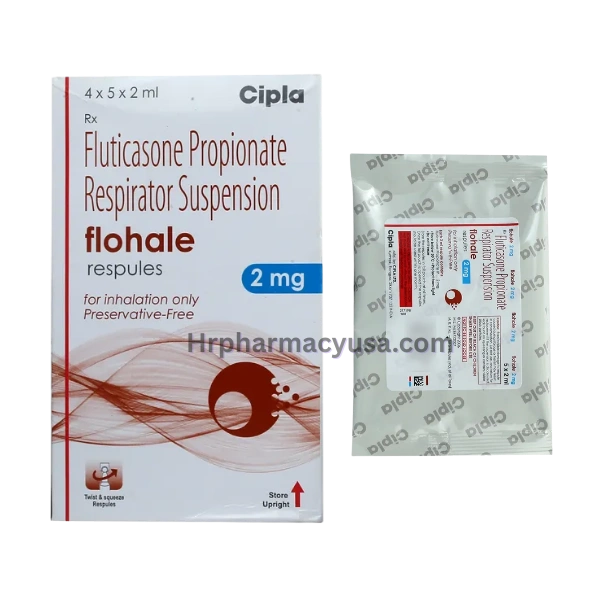
Flohale 2 mg Respules (Fluticasone Propionate)
Price range: $79.50 through $181.25
Flohale 2 mg Respules (Fluticasone Propionate) is an inhaled corticosteroid made for nebuliser use to help control airway inflammation linked with asthma and similar breathing conditions. It’s used regularly to reduce symptoms such as wheezing and chest tightness over time. It’s not meant for quick relief during sudden breathing attacks. Use only as prescribed.
| Active Ingredient: | Fluticasone Propionate |
|---|---|
| Indication: | in the treatment of asthma |
| Manufacturer: | Cipla Limited |
| Packaging: | 5 respules in 1 packet |
| Strength: | 2mg |
| Delivery Time: | 6 To 15 days |
In Stock
What are Flohale 2 mg Respules?
Flohale 2 mg Respules (Fluticasone Propionate) is a prescription inhalation medicine used through a nebuliser. It belongs to a group of medicines called inhaled corticosteroids. People are usually prescribed a medicine like this when ongoing airway inflammation contributes to symptoms such as wheezing, coughing, shortness of breath, or frequent flare-ups. Many breathing problems are not just about the airways “tightening.” In many cases, the lining of the airways becomes irritated and swollen. That swelling can make the lungs more sensitive to triggers like dust, smoke, cold air, respiratory infections, or allergies. Flohale contains fluticasone propionate, which helps calm that inflammation over time when used consistently as directed.What Flohale Respules are used for
Doctors commonly use nebulised fluticasone as a controller medicine. That means it is generally intended for long-term management rather than instant symptom relief. If you are having sudden trouble breathing, a fast-acting rescue medicine is usually needed instead. If you are unsure which medication is your rescue vs controller, it’s worth confirming with your prescriber.How Flohale 2 Mg Works
Fluticasone propionate works locally in the lungs to reduce the production of inflammatory chemicals and reduce swelling in the airways. With steady use, many people notice fewer symptoms, fewer nighttime awakenings, and less need for rescue medication. The change is often gradual rather than immediate.How to use Flohale 2 mg Respules
Flohale Respules are intended for use with a nebuliser machine. The reservoir is typically twisted open, and the liquid is placed into the nebuliser cup, then inhaled through a mouthpiece or mask as the device turns the medicine into a mist. A few practical points many people overlook:- Use it only by inhalation through a nebuliser. Do not swallow it or use it as eye or skin medicine.
- Try to use it at the same time each day if your dosing schedule is daily, since consistency matters for controller therapy.
- After each dose, rinse your mouth and spit it out. This helps lower the chance of oral thrush (a yeast infection in the mouth), which can happen with inhaled steroids.
- Keep your nebuliser clean and dry between uses. A dirty nebuliser can irritate the lungs and increase the risk of infection.
Side effects and what to care about
Many people tolerate inhaled fluticasone well, especially compared with oral steroids. Still, side effects can happen. Common ones include:
- Hoarseness or voice changes
- Sore throat or throat irritation
- Oral thrush (white patches, mouth soreness)
- Cough right after nebulising
Drug and condition considerations
It’s important to share your full medication list. Some medicines can change steroid levels in the body, especially certain strong inhibitors that affect how drugs are metabolised. Also, tell your clinician if you have frequent infections, untreated fungal infections, or eye conditions such as glaucoma or cataracts, since steroid exposure may matter in those situations.Available strengths
Fluticasone propionate respules are commonly found in multiple strengths, depending on the brand and market availability. Options often include:
- 0.5 mg respules
- 1 mg respules
- 2 mg respules
- Duonase Nasal Spray (Azelastine/Fluticasone Propionate)
- Flohale Respules (Fluticasone Propionate)
- Flomist Nasal Spray 0.05% (Fluticasone Propionate)
- Flixonase Nasal Spray (Fluticasone Propionate)
- Furamist Nasal Spray 6g (Fluticasone)
- Clostaf Cream 15 gm(Clobetasol Propionate)
- Flutivate Cream (Fluticasone)
- Seroflo Multihaler 500
Only use the strength and schedule that your prescriber selected. Do not “swap strengths” to match a dose unless a clinician specifically instructs you to.
FAQs About Flohale 2 mg Respules
1. What should I do if I miss a dose of Flohale Respules?
Take it when you remember if it’s not close to the next dose. If it’s close, skip the missed dose and return to your regular schedule. Do not double doses unless your prescriber tells you to.2. Can I mix Flohale with other nebuliser medicines in the same cup?
Don’t mix unless your prescriber or pharmacist confirms it’s appropriate. Compatibility can depend on the specific medicine and nebuliser setup.3. How should I store Flohale Respules day to day?
Follow the package directions. Many repulses are stored at room temperature and protected from light. Keep them in their original packaging until use.4. Can I travel with Flohale Respules?
Yes, most people can travel with respirators. Keep them in the labelled packaging and avoid extreme heat or freezing. If flying, carrying them in your hand luggage is often safer than checked baggage.5. Is Flohale safe during pregnancy or while breastfeeding?
This is individualised. Inhaled steroids are commonly used when needed, but your prescriber should weigh the benefits and risks based on your history and symptom control.| size | 20 Respule/s, 40 Respule/s, 60 Respule/s |
|---|



Reviews
There are no reviews yet.