


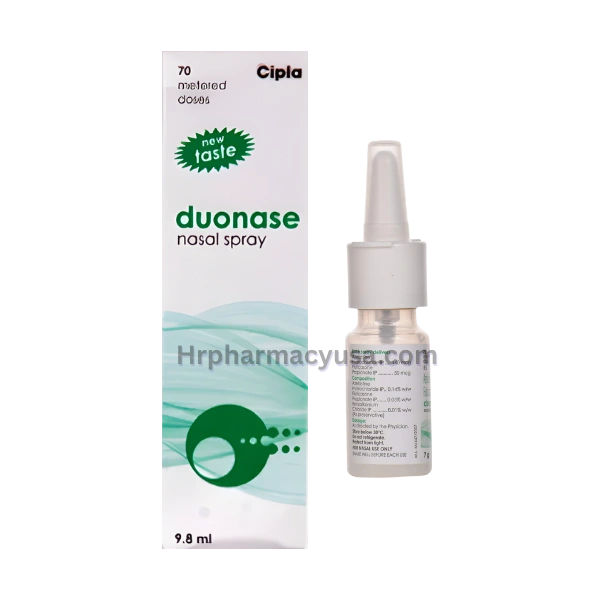
Duonase Nasal Spray (Azelastine/Fluticasone Propionate)
Price range: $18.75 through $39.00
Duonase Nasal Spray (Azelastine/Fluticasone Propionate) is a prescription nasal spray used for allergy symptoms such as a stuffy or runny nose, sneezing, and nasal itching. It combines an antihistamine with a corticosteroid to target both the trigger and the inflammation. Many people use it for seasonal or year-round allergic rhinitis when one spray alone is not enough. Your clinician will tell you the dose and timing.
| Active Ingredient: | Azelastine/Fluticasone Propionate |
|---|---|
| Indication: | Sneezing and runny nose due to allergies |
| Manufacturer: | Cipla Limited |
| Packaging: | 70 MDI in 1 packet |
| Strength: | 140 mcg+50 mcg |
| Delivery Time: | 6 To 15 days |
In Stock
Duonase Nasal Spray (Azelastine/Fluticasone Propionate)
Duonase Nasal Spray (Azelastine/Fluticasone Propionate) is designed for people who experience allergy-related symptoms that do not improve or go away. If you are stuck cycling through sneezing fits, a constantly runny nose, nasal itching, or that "blocked up" congestion that makes it hard to breathe through your nose, this is the type of prescription allergy nasal spray your clinician may choose when a single-ingredient spray has not been enough.What Duonase is used for
Duonase is commonly used for allergic rhinitis, which includes both seasonal allergies (like pollen) and year-round allergies (like dust mites or pet dander). People often look for this medication when they search terms such as:- azelastine fluticasone nasal spray
- prescription allergy nasal spray
- nasal spray for sneezing and congestion
- allergic rhinitis treatment
- spray for a runny nose and postnasal drip
Why a two-in-one nasal spray can make sense
Duonase combines two well-known approaches in one bottle:- Azelastine (an antihistamine): helps block histamine-related symptoms like sneezing, runny nose, and itching.
- Fluticasone propionate (a corticosteroid): helps calm inflammation inside the nasal passages that drives congestion and swelling.
What to expect
Some people notice relief fairly quickly with the antihistamine side, while the steroid side tends to work best with steady, daily use. If you are evaluating whether it is working, it often helps to think in terms of "better control over time" rather than instant perfection after one dose. If you still feel blocked up, it may be technique, timing, triggers at home, or you may need your prescriber to reassess the plan.How to use it correctly
Nasal sprays often fail due to poor aiming. A few practical tips many clinicians recommend:- Gently blow your nose first.
- Prime the spray if it is new or has not been used for a while (follow the package instructions).
- Tilt your head slightly forward.
- Aim the nozzle slightly outward, toward the outside wall of your nostril, not straight up the middle. This helps reduce irritation and nosebleeds.
- Breathe in gently as you spray. Sniffing hard can push the medicine into the throat rather than allowing it to coat the nose.
- If it drips into your throat, that can happen. Try a lighter inhale next time.
Common side effects of Duonase Nasal Spray
Side effects are not the same for everyone, but with sprays like this, commonly reported ones include:- bitter taste or unusual taste
- nose irritation or burning
- mild drowsiness in some people (more likely from the antihistamine component)
- headache
- nosebleeds
Safety notes worth knowing
Because this contains a corticosteroid, it is best to use the lowest effective dose and avoid sharing the spray with anyone else. Let your prescriber know if you have ongoing nasal sores, repeated nosebleeds, recent nasal surgery, or frequent sinus infections. If your symptoms are actually due to a cold or another cause, the plan may differ. Also, tell your prescriber about other medicines you use, including other allergy treatments, since duplicating therapy can increase side effects without improving results.Available Strengths
Combination azelastine/fluticasone nasal sprays are typically available as:- Azelastine 137 mcg + Fluticasone propionate 50 mcg per spray (often the standard combination strength; bottle spray counts can vary by manufacturer, so check the product label)
- Azelastine nasal spray 0.1% (137 mcg/spray)
- Azelastine nasal spray 0.15% (205.5 mcg/spray)
- Fluticasone propionate nasal spray 50 mcg/spray
- Allegra Nasal Duo Spray
- Zolmist Nasal Spray (Zolmitriptan)
- Avamys Nasal Spray
- Furamist AZ Nasal Spray
- Furamist Nasal Spray 27.5mcg
- Flomist Nasal Spray
- Flixonase Nasal Spray
Storage and handling
Store at room temperature and keep the cap on to protect the nozzle. Try to keep the tip clean and avoid rinsing it under hot water unless the package directions say it is okay. If the spray seems clogged, follow the label instructions rather than poking the nozzle with sharp objects.FAQs About Duonase Nasal Spray
Can Duonase Nasal Spray be used during pregnancy or while breastfeeding?
Ask your prescriber. They will weigh symptom control against safety data and may recommend a different approach depending on your situation.Can Duonase Nasal Spray be used in children?
Age limits vary by product and labeling. Confirm the approved age range and dosing with the child's clinician.Does Duonase Nasal Spray interact with alcohol?
Alcohol can worsen sleepiness for some people. If you feel drowsy after doses, consider avoiding alcohol until you know how you respond.Can I use Duonase Nasal Spray if I have glaucoma or cataracts?
Steroid medicines can be a concern for some eye conditions. Bring this up with your prescriber and eye doctor so they can advise you.What should I do if Duonase Nasal Spray tastes bitter every time?
Double-check your spray angle and avoid strong sniffing. If bitterness persists, ask a pharmacist to observe your technique and suggest practical fixes.| size | 1 Spray (70 Doses), 2 Spray (140 Doses), 3 Spray (210 Doses) |
|---|


Reviews
There are no reviews yet.