


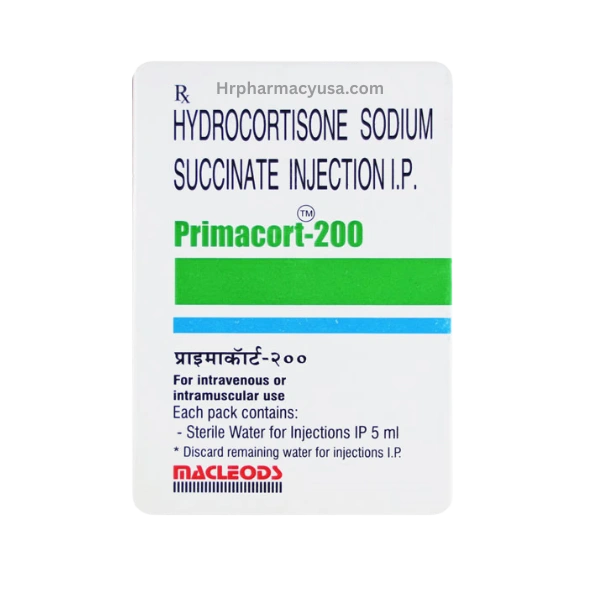
Primacort injection 200mg (Hydrocortisone)
Price range: $11.00 through $24.00
Primacort injection 200mg is a prescription corticosteroid injection used by healthcare professionals to help control inflammation and allergic reactions when fast, reliable relief is needed. If your clinician has recommended a steroid shot for a flare-up or a serious episode, this strength may be part of the plan. It is not a first-aid medicine you self-inject. Always use Primacort under medical supervision and follow your provider's guidance on monitoring, dosing, and follow-up.
| Active Ingredient: | Hydrocortisone |
|---|---|
| Indication: | Severe allergic reactions, Allergy symptoms, Cancer |
| Manufacturer: | Macleods Pharmaceuticals Pvt Ltd |
| Packaging: | 10 ml in 1 vial |
| Strength: | 200mg |
| Delivery Time: | 6 To 15 days |
In Stock
What is Primacort injection 200mg
If you have been prescribed a steroid injection for a serious flare-up, Primacort injection 200mg may be what your clinician has in mind. The name suggests a corticosteroid formulation that helps calm inflammation, reduce immune overactivity, and support your body through acute episodes. Brands and labelling vary by country, so the exact active ingredient behind the Primacort name can differ by manufacturer. In many markets, similar prescription steroid injections are based on hydrocortisone or methylprednisolone. If you are unsure which steroid is in your vial, check the package insert or consult your pharmacist before use.What Primacort injection 200mg is used for
- To control moderate to severe inflammation that is not responding to oral medicines.
- To help manage acute allergic reactions as part of a broader treatment plan.
- To support patients with certain autoimmune flare-ups when fast systemic corticosteroid action is needed.
- To manage adrenal insufficiency or stress dosing when a rapid steroid effect is required, as directed by a clinician.
How it works
Corticosteroids act like your body's own stress hormone signals. They temper the immune system and reduce the production of inflammatory chemicals. When inflammation is driving pain, swelling, wheeze, or skin reactions, a steroid injection can bring that process under control. In an acute setting, an injection reaches the bloodstream faster than tablets, which is why clinicians often choose it when time is of the essence.How Primacort injection 200mg is given
- Route: Typically given by a healthcare professional as an IV push or infusion into a vein, or as an intramuscular injection into a large muscle. Some steroids are also used intra-articularly for joint inflammation, but that depends on the exact formulation.
- Setting: Hospital, clinic, or supervised care setting is preferred. This is not intended as a home self-injection unless your clinician has specifically taught you and deemed it safe.
- Dosing: The dose and repeat schedule depend on your condition, weight, other medications, and your response. Your clinician will determine the regimen. Do not adjust your dose without consulting a doctor.
- Aftercare: You may be observed for a period after the injection, especially if you received treatment for a severe reaction. Ask when you can resume your usual medications and what warning signs to watch for.
Who should not use it without medical advise
- Anyone with a known allergy to the active steroid, inactive ingredients, or preservatives in the vial.
- People with systemic fungal infections or certain untreated infections where steroids could make things worse.
- Individuals with poorly controlled diabetes, severe hypertension, heart failure, peptic ulcer disease, osteoporosis, glaucoma, or psychiatric conditions should be assessed carefully. It does not mean you cannot receive it, but the prescriber will weigh risks and benefits.
- If you are pregnant or breastfeeding, consult your obstetrician or pediatrician to discuss the risks and timing. Steroids are used during pregnancy when the benefits outweigh the risks, but personalized guidance is key.
Primacort Injection 200mg Side Effects
- Short-term effects may include mood changes, flushing, headaches, elevated blood pressure, increased blood sugar levels, fluid retention, and trouble sleeping.
- Stomach upset or heartburn may occur. Taking food later and using GI protection, as advised, can help if you transition to oral steroids.
- With injections into joints or muscles, localized soreness may happen for a day or two.
More serious or less common effects
- Worsening of infections or delayed healing.
- Vision changes, eye pain, or severe headache that does not improve.
- Marked mood swings, confusion, or agitation.
- Significant swelling, shortness of breath, or chest pain.
- If anything feels off after your injection, contact your healthcare team or seek urgent care.
Drug interactions to mention to your provider
- Diabetes medicines. Steroids can increase blood sugar levels, so insulin or oral medications may require adjustments.
- Blood pressure medicines and diuretics.
- Blood thinners like warfarin. Monitoring may be needed.
- NSAIDs such as ibuprofen and naproxen can increase the risk of GI irritation when combined with steroids.
- Certain antibiotics, antifungals, and seizure medicines can alter steroid levels.
- Always provide your doctor and pharmacist with a current list of all your prescriptions, over-the-counter products, and supplements.
Storage and handling
- Storage varies by formulation. Many steroid vials are stored at controlled room temperature and protected from light. Do not freeze unless the label specifically instructs you to do so.
- Keep vials in original packaging so you can read the lot number and expiry date.
- Never use a vial that looks discoloured, cloudy, or compromised. If the powder needs reconstitution, use only the supplied diluent or the diluent provided by your pharmacist, and follow the professional instructions.
Active ingredients in Primacort injection 200mg
Primacort is not a name most US patients encounter frequently, and branding can vary by country. The safest move is to confirm the exact active ingredient on your vial before searching or comparing. Examples of common corticosteroid injectables:- Hydrocortisone sodium succinate
- Methylprednisolone sodium succinate
- Methylprednisolone acetate
- Triamcinolone acetonide
- These are not interchangeable one-to-one, and they are used for different scenarios. A 200 mg hydrocortisone dose is not the same as 200 mg methylprednisolone. Your clinician will choose the molecule and dose for you.
Available Strengths:
- Primacort injection 100mg (Hydrocortisone)
- Primacort injection 200mg (Hydrocortisone)
- Primacort injection 400mg (Hydrocortisone)
What to expect after an injection
- Symptom relief: Many people experience improvement within hours for certain conditions, although the full effect may take longer, depending on the indication and the steroid used.
- Blood sugar: If you have diabetes or prediabetes, plan on checking your glucose more frequently for the next day or two. Have a plan with your clinician for adjustments if needed.
- Sleep and mood: You might feel wired or have trouble sleeping the first night. Setting a wind-down routine, avoiding caffeine late in the day, and letting your care team know if mood changes are strong can help.
- Follow-up: Ask when to check back, whether you need lab tests, and if you should transition to an oral taper.
Who might consider a different strength
- Mild to moderate episodes sometimes respond to lower strengths or oral options.
- Severe episodes or certain hospital protocols may call for higher strengths or repeated dosing under close monitoring.
- Children typically use weight-based dosing, which makes the exact strength even more case-specific.
Comparing brands and generics
- Many corticosteroid injections have FDA-approved generics in the United States. Generics must meet the same quality standards and contain the same active ingredient as the brand.
- Small differences in excipients or preservatives may exist. If you have a specific allergy or sensitivity, please inform your pharmacist.
- If cost is a concern, ask whether a therapeutically equivalent generic can be dispensed based on your prescription.
Practical tips before your appointment
- Bring a current medication list and your allergies.
- Mention past reactions to steroid injections or anesthetics.
- If you have diabetes, bring your glucose log or device. Ask for a plan to manage temporary spikes.
- If you are prone to stomach issues and transitioning to oral steroids later, ask about GI protection.
- Ask how long you need to remain in the clinic after the injection and whether you should arrange a ride home.
Responsible use reminders
Steroid injections are powerful and effective when used appropriately. They are not for casual use, cosmetic use, or as a general pick-me-up. Repeated or high-dose use can carry risks if not monitored. The safest path is to use the lowest effective dose for the shortest time necessary to control your condition, with regular follow-up and laboratory checks as directed.FAQs for Primacort injection 200mg (Hydrocortisone)
What is Primacort injection 200mg used for?
Primacort injection 200mg is a prescription-strength corticosteroid used to help control significant inflammation and allergic responses, or to support patients during acute medical situations when a rapid steroid effect is appropriate. The exact uses depend on the active ingredient in your specific product and your clinician's plan.
Do I need a prescription in the USA?
Yes. Corticosteroid injections are prescription-only in the United States. Online orders require a valid prescription, and the medication should be administered by, or under the guidance of, a licensed healthcare professional.
How fast does Primacort injection 200mg start working?
Many people experience relief within hours, although the timing varies depending on the condition being treated and the specific steroid formulation used. Your healthcare provider can set expectations for your case and tell you what changes to monitor over the next 24 to 48 hours.
What side effects should I be aware of?
Short-term effects may include a flushed face, elevated blood sugar levels, mood changes, headaches, and trouble sleeping. Call your provider if you have severe or persistent symptoms, vision changes, signs of infection, or anything that worries you. If you experience severe allergic reactions or breathing difficulties, seek emergency care immediately.
Are there other strengths besides 200 mg?
Yes. Across brands and markets, common strengths include 100, 200 and 400 Mg. Not every strength is available in every brand or pharmacy. Always confirm the exact active ingredient and the labelled strength on your vial, and follow your clinician's dosing instructions.
| size | 1 Injection, 2 Injection/s, 3 Injection/s |
|---|

Reviews
There are no reviews yet.