


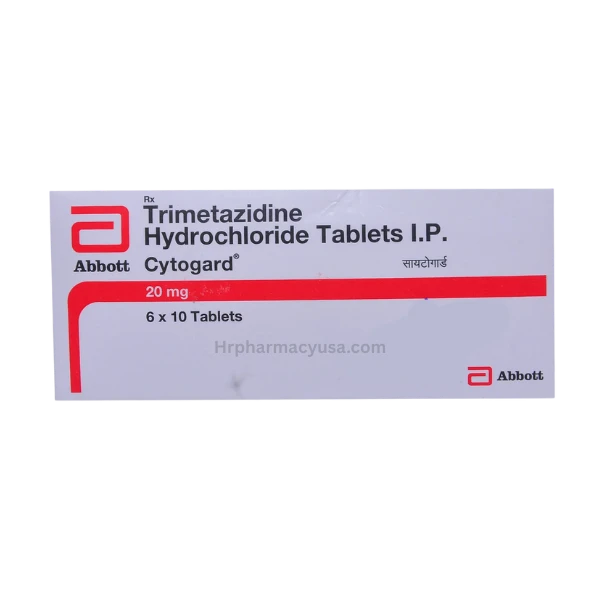
Cytogard (Trimetazidine)
Price range: $17.10 through $34.38
Cytogard is a brand name that commonly refers to trimetazidine, a prescription medicine used in many countries as add-on therapy for stable angina. It helps the heart use oxygen more efficiently during stress. Cytogard does not treat sudden chest pain or heart attacks and is not approved by the FDA in the United States. If your doctor has prescribed it or you are considering it, talk with a licensed clinician about safety, alternatives that are FDA-approved, and whether it fits your treatment plan.
| Active Ingredient: | Trimetazidine |
|---|---|
| Indication: | Chest pain (Angina) |
| Manufacturer: | Abbott India Pvt Ltd |
| Packaging: | 10 tablet in 1 strip |
| Strength: | 20mg |
| Delivery Time: | 6 To 15 days |
In Stock
What is Cytogard?
Cytogard is typically known as trimetazidine, a metabolic antianginal medicine that supports the heart during times of low oxygen. If you live with stable angina and still get chest discomfort despite standard treatments, you might have heard of this option from friends abroad or while reading about heart medicines. In many countries, cardiologists use trimetazidine as an add-on when first-line therapies do not fully control symptoms or are not well tolerated. In the United States, Cytogard is not FDA-approved, so doctors usually recommend other FDA-approved options first.What Cytogard is used for
- Symptomatic treatment of stable angina as an add-on to standard therapy in adults is approved.
- It is not for sudden chest pain, heart attack, or unstable angina.
- It is not a rescue medicine and will not quickly open narrowed arteries.
A quick reality check for U.S. shoppers
- The FDA disapproves of Cytogard. Pharmacies in the U.S. generally do not stock trimetazidine products.
- If you have angina, your U.S. care team will usually start with or adjust beta blockers, calcium channel blockers, long-acting nitrates, ranolazine, statins, aspirin, or antiplatelet agents as appropriate, along with lifestyle modifications.
- If you came across Cytogard online, use that as a cue to ask your cardiologist about your current plan and whether adjustments to approved medications could provide you with similar or better control.
How Cytogard works in simple terms
Your heart needs oxygen to function correctly. When the heart's own arteries are narrowed, oxygen delivery drops during activity, and you feel angina, which can feel like pressure, tightness, or burning. Trimetazidine helps heart muscle cells shift their energy use toward glucose, which requires less oxygen than burning fat. That shift can make each heartbeat more efficient during stress. It does not lower heart rate or blood pressure on its own. Think of it as metabolic support for the heart rather than a blood flow opener.Who might be considered for Cytogard in countries where it is approved
- Adults with stable angina who still have symptoms despite guideline-based therapy.
- People who cannot tolerate higher doses of first-line medicines due to side effects like low blood pressure, slow heart rate, or fatigue.
- Patients are seeking additional symptom control without significant changes in heart rate or blood pressure.
Who should avoid or use caution
- People with Parkinson's disease, tremor, or other movement disorders. Trimetazidine has been linked to tremors and Parkinsonian symptoms in some patients, especially older adults.
- Those with moderate to severe kidney problems. Dose adjustments or avoidance may be needed because the kidneys clear the medicine.
- Anyone who has had a prior allergic reaction to trimetazidine.
- Pregnancy and breastfeeding. Safety data are limited. Discuss the risks and benefits with your healthcare provider.
- Children. This medicine is intended for adults and is not generally recommended in pediatric patients.
Benefits and limitations
What it may help with:- Fewer episodes of angina during daily activities.
- Improved exercise tolerance when used in conjunction with first-line medications.
- Less reliance on short-acting nitroglycerin for day-to-day symptoms.
- It does not treat a heart attack or unstable chest pain.
- It does not replace core therapies, such as statins, antiplatelets, or risk factor control.
- It does not directly address artery blockages. Revascularization procedures or other medicines may still be needed.
How to take Cytogard
This is general information from markets where trimetazidine is approved. Your own doctor’s instructions always come first.- Many people take the modified-release form with food, typically once or twice daily, at the exact times each day.
- Swallow modified-release tablets whole. Do not crush or split unless your pharmacist confirms your specific tablet can be altered.
- If you miss a dose, take it as soon as you remember on the same day. If it is close to the next dose, skip the missed one. Do not double up.
- If you notice new tremors, stiffness, slow movement, or imbalance, discontinue the medicine and contact your healthcare provider.
Cytogard Side Effects
- Nausea or stomach upset
- Headache
- Dizziness or tiredness
- Diarrhea or constipation
- Tremor, stiffness, or other movement problems
- Gait instability or falls
- Rash or itching
- Palpitations
- Low blood pressure symptoms like lightheadedness
Drug and alcohol interactions
- Trimetazidine is not known for many significant drug interactions, but always share your complete medication list with your clinician and pharmacist.
- Caution with other medicines that can cause movement disorders.
- Alcohol can worsen dizziness. Go slowly until you know how you feel.
Monitoring and follow up
- Tell your clinician promptly about any new tremor, stiffness, or balance issues.
- If you have kidney issues, you may need periodic kidney function checks.
- Keep track of angina episodes, nitroglycerin use, exercise tolerance, and any side effects. A simple diary can help your clinician fine-tune your plan.
Availability and Practical Guidance
- Since trimetazidine is not FDA-approved, most U.S. patients will not be prescribed Cytogard.
- If you are researching it because your angina is not controlled, ask your cardiologist about optimizing approved options. Topics to discuss:
- Beta blocker or calcium channel blocker adjustments
- Adding or switching to ranolazine if appropriate
- Long-acting nitrates with nitrate-free intervals
- High-intensity statin therapy and lipid goals
- Blood pressure, diabetes, and weight management
- Smoking cessation, sleep apnea assessment, and cardiac rehab
- If you saw Cytogard listed on international sites, be cautious. Importing prescription medicines that the FDA disapproves raises safety and legal concerns. Your doctor can help you choose safe, effective, and approved alternatives that fit your history.
- Pace your activity. Warm up before exertion and slow down when climbing or walking in cold weather or against the wind.
- Keep nitroglycerin readily available if it is part of your treatment plan, and be familiar with its proper use.
- Manage daily stress and sleep. Both can influence angina.
- Collaborate with your care team to set exercise goals. Cardiac rehab, if available, is evidence-based and personalized.
- Track triggers such as cold exposure, large meals, or emotional stress. Adjusting routine can reduce symptoms.
Available strengths in the market
In countries where Cytogard or equivalent trimetazidine products are marketed, you may see:- 20 mg immediate-release tablets
- 35 mg modified-release tablets
- 60 mg modified-release tablets
- Names, exact strengths, and release types can vary by country and manufacturer. Always check your package label and follow the dosing your clinician prescribes. In the U.S., trimetazidine products are generally not available through standard pharmacies.
Directions your clinician may give in countries where approved
This section is informational only and may not apply in the U.S.- Immediate-release tablets are often taken multiple times per day with meals.
- Modified-release tablets are usually taken once or twice daily with meals.
- Doses can be adjusted in older adults or those with kidney impairment.
- If your prescription looks different, follow your clinician's instructions and the pharmacy label. Do not change your dose without consulting a doctor.
Who should talk to a doctor first
- You have a history of movement disorders, tremor, or Parkinson's disease.
- Your kidneys are not functioning well, or you have been told that your eGFR is reduced.
- You are pregnant, might become pregnant, or are breastfeeding.
- You are 65 or older and have noticed changes in balance or walking.
- You take many medicines and want to review your regimen for interactions or duplications.
Storage and handling
- Store at room temperature in a dry, dark place, away from direct sunlight.
- Keep in the original container and out of reach of children and pets.
- Do not use past the expiration date.
- If a dose schedule is hard to follow, ask your pharmacist about reminders or blister packs.
What many patients want to know about Cytogard
- It is not a cure, and it does not open clogged arteries. It is often used in conjunction with other heart medications.
- If you ever feel sudden, severe, or unusual chest pain, do not wait. Call 911.
- If your symptoms are not improving after a fair trial of therapy, ask your clinician about next steps, such as stress testing, adjusting your medication, or additional procedures.
Important labels and warnings to recognize
- Not for acute coronary syndrome or initial treatment of unstable angina.
- Stop and report any neurologic side effects, such as tremors or slow movement.
- Use caution when driving if you feel dizzy or drowsy.
- Kidney function matters for dosing decisions.
FAQs About Cytogard
- Is Cytogard available in the United States?Cytogard, which usually contains trimetazidine, is not FDA-approved. Most U.S. pharmacies do not dispense it. If you are exploring options for angina, ask your cardiologist about approved alternatives that fit your medical history.Does Cytogard stop a heart attack?No. It is not a rescue medicine and does not treat a heart attack or sudden, worsening chest pain. If you have chest pain that does not go away with rest or nitroglycerin, call 911.What side effects should I be aware of?Common ones include nausea, headache, and dizziness. Less commonly, people report tremor, stiffness, slow movement, or imbalance. If you notice any changes in your movement, stop taking the medicine and contact your healthcare provider.Can I take Cytogard with my beta blocker or calcium channel blocker?In places where it is approved, it is often used together with those medicines for stable angina. In the U.S., your clinician will typically adjust approved therapies first. Always review your plan with your cardiologist or pharmacist to ensure it is accurate and up-to-date.Are there other strengths of Cytogard?Yes, in some markets you will find 20 mg immediate-release, 35 mg modified-release, and 60 mg modified-release tablets. Strengths and names vary by manufacturer and country. Always follow the exact dose on your prescription label.
| size | 30 Tablet/s, 60 Tablet/s, 90 Tablet/s |
|---|



Reviews
There are no reviews yet.