




Your cart is empty Continue Shopping
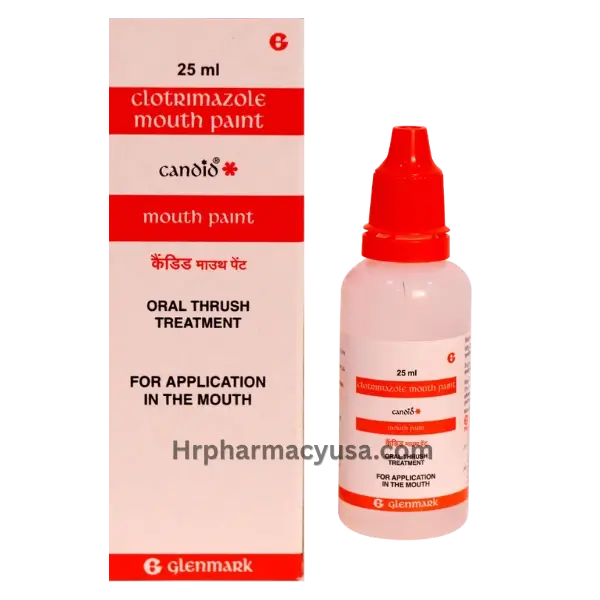
Candid Mouth Paint
Price range: $8.99 through $44.96
Candid Mouth Paint is a topical antifungal solution used to treat oral thrush (oral candidiasis). It coats the affected areas of the mouth to help clear white patches, soreness, and burning caused by Candida yeast. Most formulations contain 1% w/v clotrimazole. Use exactly as directed by your clinician and complete the full course, even if symptoms improve.
| Active Ingredient: | Clotrimazole |
|---|---|
| Indication: | Treats fungal infections of the mouth |
| Manufacturer: | Glenmark Pharmaceuticals Ltd. |
| Packaging: | 25ml in bottle |
| Strength: | 1% |
| Delivery Time: | 6 To 15 days |
In Stock
Introduction About Candid Mouth Paint
Candid Mouth Paint is used when a fungal infection in the mouth (most commonly Candida) causes symptoms that are hard to ignore, like creamy white patches on the tongue or inner cheeks, redness, a cottony feeling, mild bleeding when scraped, or a burning sensation. Oral thrush can show up after a course of antibiotics, with dry mouth, in people using steroid inhalers, or alongside certain health conditions. The goal with mouth paint is simple: get the antifungal medicine to sit directly on the affected area long enough for it to work. Most mouth paint products sold under this name are clotrimazole-based (often clotrimazole 1% w/v), though you should still verify the active ingredient on your specific pack, as formulations can vary by manufacturer and market. Clotrimazole is an antifungal medication that helps stop yeast from growing by disrupting the fungal cell membrane. For oral thrush, this local contact approach can be useful because the medicine is applied directly to the infected area.What it’s typically used for
Candid Mouth Paint is commonly used for:
- Oral candidiasis (oral thrush) affects the tongue, inner cheeks, gums, or palate.
- Red, sore areas in the mouth are linked to fungal overgrowth.
- Fungal-related irritation that may flare up after antibiotics or steroid inhaler use
If symptoms are severe, keep returning, or you have a fever, trouble swallowing, or symptoms spreading beyond the mouth, it is worth getting checked promptly. Thrush can look like other conditions, so getting the diagnosis right matters.
How to apply
Mouth paints are meant to be applied directly to affected areas to form a thin coating. Many people use a clean finger or a cotton swab to gently spread a small amount over the visible patches and sore spots. Dosing schedules vary, but it is often used multiple times per day. Follow the directions on your label or the plan your clinician gave you. A couple of practical tips that help in real life:- Apply it to clean, dry-ish areas when possible to keep it in contact longer.
- Try to cover the patches gently. Aggressive rubbing can irritate already sensitive tissue.
- Use it for the full prescribed duration, even if the mouth looks better earlier. Stopping too soon can allow yeast to rebound.
Possible side effects
Many people tolerate topical antifungals well. Still, side effects can happen, including:
- Mild burning, stinging, or irritation where applied
- An unusual taste or temporary mouth dryness
- Nausea in some people (this can happen if a noticeable amount is swallowed)
Stop using it and seek medical advice if you notice signs of an allergic reaction (rash, swelling, severe itching, or breathing trouble).
Precautions and interactions
Tell a clinician or pharmacist if you have had an allergy to clotrimazole or other azole antifungals. Also, share a list of medicines and supplements you take. Mouth-applied clotrimazole is generally considered to have low absorption, but interactions are still worth checking, especially if you take medicines with narrow safety ranges (for example, certain blood thinners). If you have frequent thrush, it is also smart to look for the underlying trigger rather than repeatedly treating symptoms alone.Storage
Store at room temperature, tightly closed, away from heat and moisture. Do not use past the expiration date.
Available Strengths and Other Dosage Options
Candid Mouth Paint is most commonly available as clotrimazole 1% w/v mouth paint, typically in bottle sizes of 15 mL and 20 mL (availability may vary). In some markets, clotrimazole is also available in other forms that treat oral thrush, such as:
- Clotrimazole troches/lozenges (often 10 mg)
- Other topical oral antifungals (gel, buccal tablets)
- Oral antifungal tablets for more persistent cases (prescription only)
- Candid-V 6 100 Mg (Clotrimazole)
- Candid V Gel (Clotrimazole Vaginal Gel)
- Clotrimazole Cream 15 gm (Generic)
- Clocip Cream 15 gm (Clotrimazole)
- Candid-V 3 200 Mg (Clotrimazole)
Substitutes Available in the Market
Substitutes depend on the cause and severity of symptoms, as well as whether treatment needs to be topical or systemic. Common alternatives used for oral thrush include:
- Nystatin oral suspension (swish and swallow or swish and spit, as directed)
- Clotrimazole troches/lozenges (dissolve slowly in the mouth)
- Miconazole buccal tablet (sticks to gum and releases medicine over time): Zole Ointment (Miconazole)
- Fluconazole tablets (often used for moderate to severe or recurrent thrush, prescription)
A clinician can help choose the best option based on your age, medical history, and whether thrush is recurring.
FAQs
1. Can I eat or drink right after using Candid Mouth Paint?
It is usually best to wait a bit so the medicine stays in contact with the affected areas. If your label does not specify a time, ask a pharmacist for a practical recommendation based on the exact product.
2. What if I accidentally swallow some of it?
A small amount is often swallowed during normal use, but you should follow the label instructions. If a large amount is swallowed or you feel unwell (vomiting, dizziness, severe nausea), contact a clinician or poison control for guidance.
3. Can children use Candid Mouth Paint?
Sometimes, but the dosing and how it is applied can differ in children. A pediatric clinician should confirm the diagnosis and provide the correct directions.
4. Is it safe to use during pregnancy or while breastfeeding?
This is a common question with antifungals. The safest choice depends on the ingredient, how often it’s used, and your situation. Bring the product name and active ingredient to your OB-GYN or pharmacist before using.
5. Can I use it if I wear dentures or dental aligners?
It may still be usable, but dentures and appliances can trap yeast and need their own cleaning routine. Ask a dentist or pharmacist how to time applications and sanitise appliances to reduce the risk of reinfection.| size | 1 Bottle, 3 Bottle/s, 6 Bottle/s |
|---|
Reviews
There are no reviews yet.