


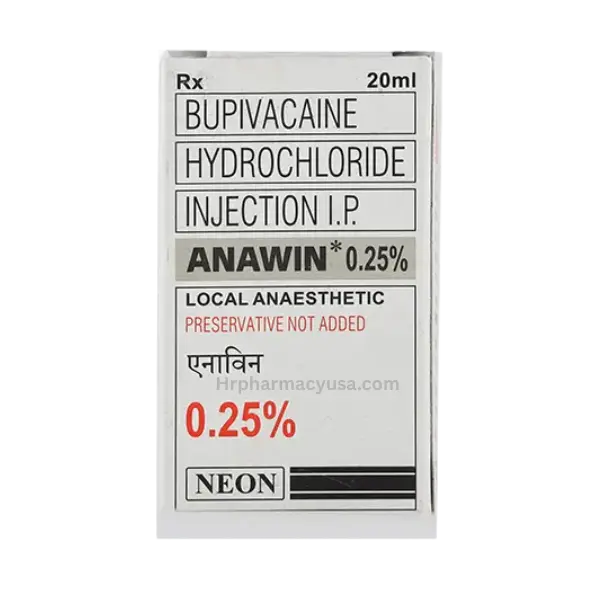
Anawin 0.25% Inj. (Bupivacaine)
Price range: $35.00 through $85.00
Anawin 0.25% Inj. is a local anesthetic that helps numb a specific area so procedures feel more comfortable. It typically contains bupivacaine 0.25 percent, which is known for longer-lasting pain control compared to faster but shorter-acting options. This injection is for use by trained healthcare professionals only. If you are a patient, you will not self-inject this at home. Your care team chooses the dose and technique that fit your procedure and medical history.
| Active Ingredient: | Bupivacaine |
|---|---|
| Indication: | Local Anaesthesia |
| Manufacturer: | Neon Laboratories |
| Packaging: | 20ml in bottel |
| Strength: | 0.025% |
| Delivery Time: | 6 To 15 days |
In Stock
What is Anawin 0.25% Inj.?
Anawin 0.25% Inj. is used by clinicians to numb tissue for procedures such as wound repair, minor surgery, dental work in specific settings, and a wide range of regional nerve blocks. The active ingredient is usually bupivacaine hydrochloride at 0.25 percent, or 2.5 mg/mL. Many teams reach for this strength when they want steady anesthesia that lasts for several hours without needing frequent re-injections. If you are a clinician, you already know that technique, dose, and site selection matter just as much as the medication itself. If you are a patient reading up before a visit, it is normal to have questions. This page breaks down what this injection is, why a clinician might pick the 0.25 percent concentration, and what to expect during and after the numbing wears off.What this medicine is, in plain language
- Drug class: amide-type local anesthetic.
- Role: it numbs a targeted area so pain signals do not reach the brain.
- How it works: it blocks sodium channels in nerves where it is placed. That stops pain messages from traveling for a while.
- Why 0.25 percent: this strength supports broad tissue infiltration and many regional blocks with a long tail of pain relief.
Where and why it is used
- Local infiltration around an incision or wound, such as in general surgery or plastic procedures.
- Field blocks and regional nerve blocks, including work on the arm, hand, leg, or foot.
- Perioperative pain control to help reduce the need for strong systemic pain medications right after a procedure.
- In some obstetric and orthopedic settings, as part of a multimodal plan chosen by experienced clinicians.
What patients tend to feel
- During injection you may feel a brief sting or pressure. Some teams pair agents or buffer solutions to ease the start-up.
- Numbness usually builds gradually with bupivacaine. It is not the fastest starter, but it often outlasts shorter-acting options.
- The blocked area can feel heavy or weak while the medicine is active. That is expected.
- Sensation returns slowly. Protect the area from heat, cold, or sharp objects until full feeling and strength come back.
Safety basics you should know
- Prescription only and not for self-use. This must be given by trained staff in a proper medical setting.
- Avoid intravascular injection. Careful aspiration and incremental dosing are standard clinical practice.
- Facilities should have monitoring and resuscitation equipment, including lipid emulsion for rare local anesthetic systemic toxicity.
- Do not use in patients with a known allergy to amide local anesthetics.
- Use caution for patients with severe heart rhythm problems, advanced liver disease, poor protein states, or frailty. Dose adjustments and close monitoring may be needed.
- Obstetric use requires experience and specific techniques. Certain concentrations are avoided in some obstetric cases for safety reasons.
Anawin 0.25% Inj. Side Effects
Not everyone has side effects, but these can happen:- Expected effects at the site include numbness, tingling, temporary weakness, or limited movement in the affected area.
- Injection site irritation or mild bruising.
- Central nervous system signs, if the drug becomes systemic, may include dizziness, ringing in the ears, a metallic taste, or visual changes. Severe cases can lead to seizures.
- Cardiovascular effects can include changes in blood pressure or heart rate. In rare cases, severe rhythm disturbances can occur with systemic exposure.
- Allergic reactions are uncommon with amide anesthetics; however, symptoms such as hives, swelling, wheezing, or trouble breathing require urgent care.
Drug and Substance Interactions
- Other local anesthetics. Total dose across products matters.
- Medicines that affect cardiac conduction, including certain antiarrhythmics, are involved.
- Potent CYP inhibitors may alter metabolism. Your prescriber will review your list.
- Alcohol, benzodiazepines, or opioids can add to sedation. Follow the instructions provided before and after your procedure.
What clinicians appreciate about the 0.25 percent option
- Reliable tissue spread for infiltration and field blocks.
- Long-lasting comfort that can carry into the recovery window.
- Useful in many specialties, from orthopedics and general surgery to emergency care and dermatology.
- Often supports an opioid-sparing pain plan when paired with other non-opioid strategies.
Patient tips before and after the procedure
- Tell your care team about all medicines, vitamins, and supplements you take.
- Share any history of reactions to local or regional anesthesia.
- Ask how long the area may stay numb so you can plan for rides and help at home if needed.
- After the procedure, keep the numb area safe. It is easy to bite a numb lip, twist an ankle, or burn a hand on a hot pan without noticing.
- Wait to drive or make important decisions until your clinician says you are good to go.
How it is given
- Routes: local infiltration, field blocks, and peripheral nerve blocks. It may be used in epidural or spinal techniques depending on the exact product and protocol, which are handled by specialists.
- Dose is individualized based on the site, expected duration, and the patient’s health status. Maximum safe dose is part of clinical guidance and is not something patients should manage.
Storage and handling
- Store at controlled room temperature per the product label.
- Protect from excessive heat and strong light.
- Inspect the solution. Do not use if it is discolored, cloudy, or past the expiry date.
- Many vials are single use. Discard leftover solution according to your facility’s policy.
Available strengths in the market
Availability can vary by region and manufacturer. Common strengths and presentations include:- Anawin 0.25% Inj. 2.5 mg per mL bupivacaine HCl.
- Anawin 0.5% Inj. 5 mg per mL.
- Anawin 0.75% Inj. 7.5 mg per mL.
- Anawin Heavy 0.5% with dextrose for intrathecal use. This is meant for spinal anesthesia in controlled settings only.
- Preservative free options and specific vial sizes, including single dose and multi dose vials, may be available depending on the product line. Always confirm the exact label and indications for the vial you have.
What patients often ask about numbness and recovery
- How long does it last. It can last several hours and sometimes longer. The exact time depends on the total dose, the site, and your own metabolism.
- Will it hurt when it wears off. You may feel a gradual return to normal sensation. Your care team can set up a pain plan that fits your needs for aftercare.
- Can I use heat or ice. Ask your clinician before using heat or ice on a numb body part. It is easy to overdo it while sensation is muted.
Who should not receive this medicine
- Anyone with a known allergy to amide type local anesthetics.
- People with severe heart conduction problems unless a specialist has reviewed and cleared a specific plan.
- Situations where proper monitoring and emergency response are not available.
Pregnancy and breastfeeding
- Bupivacaine is used in labor and delivery in specific ways. The concentration and technique are chosen carefully by experienced clinicians.
- If you are pregnant, planning a pregnancy, or breastfeeding, tell your care team. They will weigh the benefits and risks and pick what is safest for you and your baby.
How this compares to shorter acting local anesthetics
- Bupivacaine is not the fastest at onset, but it shines with duration.
- Lidocaine and similar agents start quickly but may fade sooner. Some teams use a mix or sequence to get the best of both worlds.
- The right pick depends on the procedure, the site, and patient factors. Your clinician weighs all of that when choosing a plan.
Signs of local anesthetic systemic toxicity to know
- Early signs may include a metallic taste, ringing in the ears, numbness around the mouth, lightheadedness, or blurry vision.
- If it progresses, there can be confusion, seizures, or heart rhythm issues.
- In a clinic or hospital, staff are trained to respond right away. This is rare, but readiness matters.
Simple prep checklist for patients
- Bring a list of your medicines and allergies.
- Arrange a ride home if your team expects you to be drowsy or weak after the procedure.
- Wear clothes that make it easy to reach the injection site.
- Ask how to care for the area once you are home and what warning signs should prompt a call.
FAQs About Anawin 0.25% Inj.
Is Anawin 0.25% Inj the same as bupivacaine 0.25%? In most listings, yes. Anawin 0.25 percent typically refers to bupivacaine hydrochloride at 2.5 mg/mL. Branding and packaging can vary by region, so always check the vial or carton to confirm the active ingredient and strength before use. How long will the numbness last with the 0.25 percent strength? It often lasts several hours and sometimes longer, depending on dose, site, and patient factors. Your care team can provide a more personalized estimate after selecting the dose and technique for your procedure. Can I use Anawin 0.25% Inj at home for pain? No. This is not a home-use product. Licensed professionals must administer it in a setting where monitoring and emergency response are available. If you have pain at home, talk to your clinician about safe options. What side effects should I watch for after the block? Mild soreness at the injection site and temporary weakness in the numb area are common. Call your clinician immediately if you notice a spreading rash, trouble breathing, severe dizziness, fainting, or unusual heart symptoms. What strengths of bupivacaine injections are available in the market? You will commonly see 0.25 percent, 0.5 percent, and, in some settings, 0.75 percent. There is also a 0.5 percent solution with dextrose for spinal anesthesia, often labeled as heavy. Availability varies by region and intended route, so verify the label before ordering or using.| size | 3 Injection/s, 6 Injection/s, 9 Injection/s |
|---|



Reviews
There are no reviews yet.