


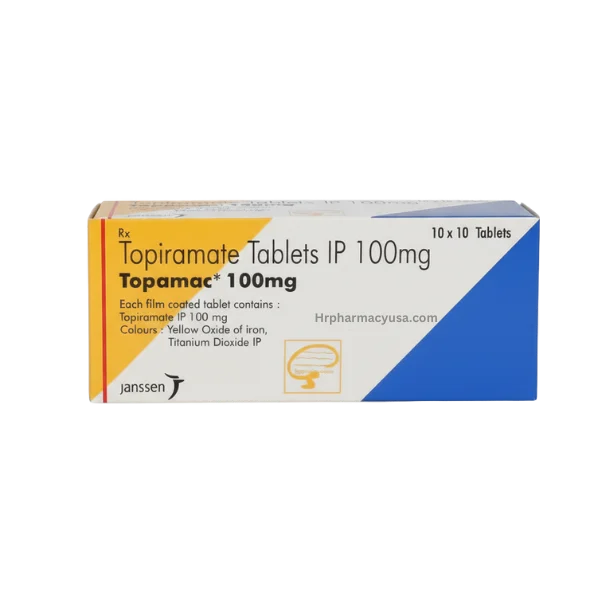
Topamac 100 Mg
Topamac 100 mg (Topiramate) is a prescription medication primarily used to treat epilepsy (seizures) and prevent migraine headaches. It works by calming overactive nerve signals in the brain.
| Active Ingredient | Topiramate |
|---|---|
| Manufacturer | Johnson |
| Packaging | 10 tablets in 1 strip |
| Strength | 100 Mg |
| Delivery Time | 6 To 15 days |
Topamac 100 mg – Product Description
Topamac 100 mg is a medicine that doctors often prescribe to people who deal with epilepsy or frequent migraine attacks. The tablet contains Topiramate as its active ingredient. This drug belongs to a group called anti-epileptics, sometimes also known as anticonvulsants. In simple terms, it helps calm down unusual brain activity. That’s why it works well for seizures and also lowers the number of migraines.
When nerve cells in the brain send out signals in an abnormal or overactive way, it can trigger seizures. The same type of irregular activity is also linked with migraines. Topiramate helps control these signals. It makes the brain more stable and keeps the nerve activity balanced. For patients, that means fewer seizures and fewer days ruined by migraine pain.
The medicine comes in tablet form, meant to be swallowed with water. Usually, it’s taken once or twice daily. Some people start with a smaller dose, like 25 mg, and slowly increase to 100 mg depending on how well they handle it. Doctors always decide the dosage because every person reacts differently. It’s not the type of medicine you can adjust by yourself.
Why People Use Topamac 100 mg
Epilepsy
The main reason Topamac 100 mg is given is for epilepsy. Seizures happen when brain signals fire off in the wrong way. Topamac keeps that under control. It can be used on its own or alongside other anti-seizure medicines. Both adults and children may be prescribed this treatment, depending on their needs.
Migraine Prevention
Another big reason doctors turn to Topamac is for migraine prevention. Migraines are more than just headaches — they are often severe, can last for hours or even days, and may bring nausea, sensitivity to light, or vision changes. Topamac doesn’t stop a migraine once it’s started, but it does reduce how often they come back. Many patients report fewer migraine days after starting treatment.
Other Uses
Sometimes, doctors prescribe Topamac for conditions outside of its main use. These are called off-label uses. For example, it may be given to people with bipolar disorder to help stabilize mood. Some patients struggling with weight problems may also be given Topiramate as part of a broader treatment plan. In certain cases, it’s used in treating alcohol dependence. But all of these uses depend fully on the doctor’s advice.
How It Works in the Body
Topiramate, the key ingredient in Topamac, works on brain chemistry. It affects the way electrical signals pass between nerve cells. When those signals are too strong or too frequent, seizures or migraines happen. Topiramate reduces this overactivity.
It does this by:
-
Blocking certain excitatory signals that trigger seizures.
-
Strengthening calming signals that help relax the brain.
-
Changing how some ion channels in brain cells work, so nerve firing becomes steadier.
If that sounds complicated, the simple way to put it is this: it slows things down in the brain where they are firing too fast and balances them where they are out of control.
How to Take Topamac 100 mg
-
The tablet is taken by mouth with water.
-
It can be taken with or without food.
-
Try to take it at the same time every day.
-
Doctors may start you on a lower dose and slowly build up to 100 mg or more.
-
Never stop suddenly. That can make seizures return or migraines worse.
If a dose is missed, you can take it when you remember. But if it’s already close to the next dose, just skip the missed one. Doubling up is not recommended.
Possible Side Effects
Not everyone experiences side effects, but some do. Most are mild, though a few can be serious.
Common side effects:
-
Feeling sleepy or tired
-
Dizziness
-
Loss of appetite or weight loss
-
Stomach pain or nausea
-
Tingling sensation in hands or feet
-
Changes in taste (food may taste odd)
Less common but more serious side effects:
-
Mood swings, depression, or confusion
-
Trouble with focus or memory
-
Vision changes, sudden eye pain, or blurred sight
-
Kidney stones
-
Allergic reactions such as swelling, rash, or itching
If severe symptoms appear, medical attention should be taken immediately.
Warnings Before Use
-
Pregnancy: Topamac may harm an unborn baby. It should only be used during pregnancy if absolutely necessary.
-
Breastfeeding: The drug may pass into breast milk. Always consult a doctor before use.
-
Driving and operating machines: Since it can make you dizzy or drowsy, avoid risky activities until you know how your body reacts.
-
Alcohol: Drinking alcohol with Topamac is not safe, as it can worsen side effects.
-
Other medical conditions: People with kidney problems, liver issues, or eye conditions should let their doctor know before starting.
-
Other medicines: Topamac can interact with birth control pills, antidepressants, and other seizure medicines. Always share your full medication list with your doctor.
Storage Instructions
-
Keep the tablets at room temperature, below 30°C.
-
Store them in a dry place, away from moisture and sunlight.
-
Make sure children cannot reach them.
Related Products
-
Topamac 25 mg – Often prescribed at the beginning of treatment.
-
Topamac 50 mg – Medium strength, used during dose adjustment.
-
Topamac 200 mg – Higher dose for patients who need stronger control.
-
Topiramate capsules – Another option for people who prefer capsules.
-
Other anti-epileptics – Like Levetiracetam, Carbamazepine, and Valproate, depending on the doctor’s prescription.
FAQs
Q1. What is Topamac 100 mg used for?
It is mainly used to control seizures in epilepsy and to prevent migraine headaches.
Q2. Can Topamac cure migraines?
No, it doesn’t cure migraines. It prevents them from happening frequently, but it cannot stop one once it starts.
Q3. How long does it take to work?
For seizures, benefits can be seen within weeks. For migraines, it can take two to three months to show full effect.
Q4. Does it cause weight loss?
Some people lose weight or feel less hungry while taking Topamac. Not everyone will have this effect.
Q5. Can I stop taking Topamac suddenly?
No, stopping suddenly can cause seizures or severe headaches to return. Always taper under medical advice.
| size | 30 Tablet/s, 60 Tablet/s, 90 Tablet/s |
|---|





Reviews
There are no reviews yet.