


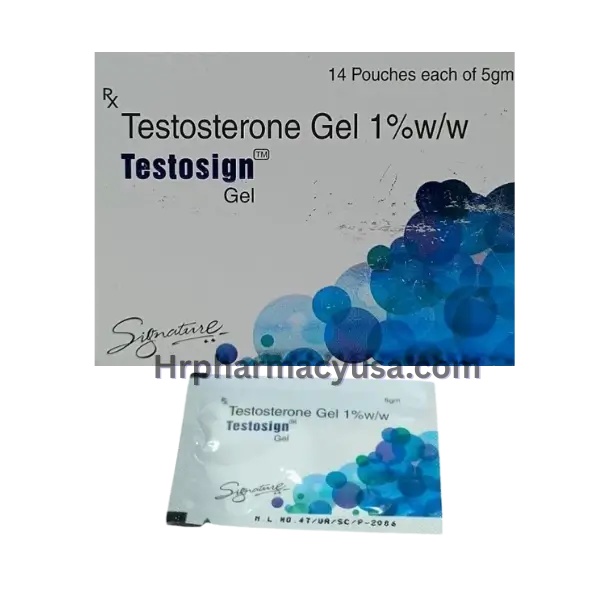
Testosign Gel 5g (Testosterone)
Price range: $31.50 through $151.20
Testosign Gel 5g (Testosterone) is a prescription topical hormone used for adult men with lab-confirmed low testosterone. Applied to clean, dry skin once daily, it helps restore testosterone to a normal range, which may improve energy, sex drive, and mood. Let it dry fully and prevent skin contact transfer to others. Use only as directed by your clinician. Not for women, children, or bodybuilding.
| Active Ingredient: | Testosterone |
|---|---|
| Indication: | Male Hypogonadism |
| Manufacturer: | HAB Pharmaceuticals & Research Ltd |
| Packaging: | 5gm in 1 Sachet (14 Sachet in 1 Box) |
| Strength: | 5g |
| Delivery Time: | 6 To 15 days |
In Stock
What is Testosign Gel 5g (Testosterone)
Testosign Gel 5g (Testosterone) is a topical testosterone medicine designed for testosterone replacement therapy when your body is not making enough testosterone on its own. Low testosterone (often called “low T”) is more than just feeling tired. For many men, it shows up as low sex drive, erectile problems, low energy, depressed mood, loss of muscle, increased body fat, or trouble concentrating. The key point is that treatment is usually meant for men with symptoms plus blood tests showing consistently low testosterone, not just a single borderline result.What Testosign Gel 5g is and how it works
Testosterone gel delivers testosterone through the skin into the bloodstream. The goal is to bring testosterone levels back into a healthy range and keep them steadier day to day compared with some short-acting options. When levels improve, some men notice better libido, mood, and energy. Changes in muscle strength or body composition can take longer and still depend heavily on sleep, diet, and activity. This is a prescription-only treatment, and testosterone is a controlled substance in the Schedule III category. That is mostly about safe handling and preventing misuse. It also means your prescriber should be monitoring you.How to use Testosign Gel
Most testosterone gels are used once daily at the same time each day. Apply only to the areas listed in the product instructions (common sites for many gels include the shoulders or upper arms; follow your specific labelling). Put it on clean, dry, intact skin. After applying:- Wash your hands with soap and water.
- Let the gel fully dry before dressing.
- Cover the application area with clothing once dry, when possible.
Side effects and safety notes of Testosign Gel 5g
Like any testosterone replacement, side effects can happen. Common ones reported with topical testosterone products can include acne or oily skin, mild swelling (fluid retention), headache, mood changes, and irritation where it’s applied. Some men notice increased body hair or male-pattern hair loss if they are already prone to it. More serious risks are less common but important: testosterone can increase red blood cell count (raising clot risk in some situations), may worsen untreated sleep apnea, and can affect the prostate. There is ongoing debate and mixed evidence around testosterone and heart risk in certain patients, so it’s worth a direct conversation with your clinician, especially if you’ve had heart disease, stroke, or clotting problems. Tell your prescriber if you have (or have had) prostate cancer, male breast cancer, severe urinary symptoms from an enlarged prostate, or unusually high hematocrit. These situations often change whether testosterone is appropriate.Interactions and monitoring
Testosterone can interact with certain medicines. A few examples of medications clinicians commonly monitor include blood thinners such as warfarin, corticosteroids, and some diabetes treatments. This does not mean you can’t use them together, but it does mean monitoring may need to be tighter. Monitoring usually includes testosterone levels and labs such as hematocrit. Many clinicians also monitor PSA (a prostate marker) and check for symptom improvement and side effects over time.Available strengths and other dosage forms
Testosterone gel products commonly come in different strengths and delivery formats, depending on the manufacturer, such as:
- Testosterone Gel 37.5 Gm (Generic)
- Androtas Gel 37.5 Gm (Testosterone)
- Cernos Gel
- Unit-dose gel packets are often available in 2.5 g, 5 g, 7.5 g, or 10 g (the testosterone content per packet varies by concentration).
- Metered-dose pumps (commonly 1% or 1.62% formulations) that deliver a measured amount per pump.
- Other topical forms, such as solutions or auxiliary applications, are available on the market.
If you’re switching between brands or strengths, dosing is not always “one packet equals one packet.” Your prescriber may adjust the amount based on labs and response.
Alternatives already on the market
If testosterone gel is not a fit (cost, skin irritation, lifestyle, transfer concerns), there are other prescription options your clinician may consider:
- Other testosterone gels: AndroGel, Testim, Fortesta, Vogelxo (availability can vary)
- Nasal testosterone gel: Natesto
- Injections: testosterone cypionate or testosterone enanthate (common), testosterone undecanoate (long-acting, brand examples may include Aveed)
- Oral testosterone undecanoate capsules: Jatenzo, Tlando, Kyzatrex
- Implantable pellets: Testopel
- Patches exist historically (some brands have been discontinued, so availability can be limited)
Your best option depends on medical history, comfort with dosing, insurance coverage, and how closely you want levels managed.
FAQs About Testosign Gel 5g (Testosterone)
- How long does Testosign Gel 5g take to start working? Some men notice changes in libido or energy in a few weeks, but full effects can take longer. Lab monitoring helps confirm whether levels are actually improving.
- Can testosterone gel affect fertility? Yes. Testosterone therapy can reduce sperm production and lower fertility. If having children is a goal, ask about alternatives that support testosterone without suppressing sperm as much.
- What should I do if I accidentally get the gel in my eyes or mouth? Rinse right away with plenty of water and seek medical advice if irritation continues or if a child is exposed.
- Can I travel with testosterone gel? Usually yes, but keep it in its original packaging with the prescription label. Avoid leaving it in hot cars and follow airline liquid rules if flying.
- Is it safe for me to have close contact with pets? The main concern is transfer. Keep pets away from application sites and do not let them lick skin where gel was applied. If exposure happens and a pet shows unusual symptoms, contact a veterinarian.
| size | 14 Sachet/s, 28 Sachet/s, 42 Sachet/s, 84 Sachet/s |
|---|



Reviews
There are no reviews yet.