


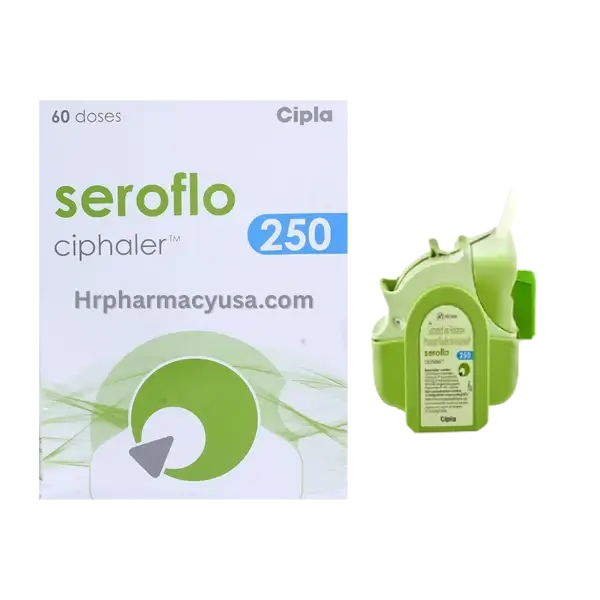
Seroflo Ciphaler 250 (SALMETEROL/FLUTICASONE)
Price range: $30.00 through $85.00
Seroflo Ciphaler 250 (Salmeterol/Fluticasone) is a maintenance inhalation medicine used to help prevent wheezing, chest tightness, and flare-ups in asthma or COPD. It combines a long-acting bronchodilator with an inhaled steroid to keep airways open and calm inflammation. It is not a quick rescue inhaler and works best when used regularly as prescribed. Some people notice easier breathing after steady daily use.
| Active Ingredient: | Salmeterol/Fluticasone |
|---|---|
| Indication: | Asthma, Chronic obstructive pulmonary disease (COPD) |
| Manufacturer: | Cipla Limited |
| Packaging: | 60 MDI in 1 Inhaler |
| Strength: | 250mcg |
| Delivery Time: | 6 To 15 days |
In Stock
What is Seroflo Ciphaler 250 (Salmeterol/Fluticasone)?
Seroflo Ciphaler 250 (Salmeterol/Fluticasone) is a combination controller inhaler made for long-term management, not quick relief. If you deal with asthma symptoms that keep coming back, or COPD symptoms that make everyday activities feel harder than they should, this kind of medicine is often used to reduce flare-ups and improve day-to-day breathing control. It is designed for consistent use, the same way you would take a daily blood pressure or allergy medication, because the goal is prevention. This product combines two well-known types of respiratory medicines:- Salmeterol: a long-acting bronchodilator (often called a LABA). It helps keep airway muscles more relaxed for more extended periods, which can reduce ongoing tightness and improve airflow.
- Fluticasone: an inhaled corticosteroid (ICS). It helps calm airway inflammation, which is a major driver of asthma symptoms and many COPD exacerbations.
What Seroflo Ciphaler 250 is typically used for
- Asthma maintenance treatment in patients who need both an inhaled steroid and a long-acting bronchodilator.
- COPD maintenance treatment to help reduce symptom burden and exacerbations in appropriate patients.
Getting the best results (without overcomplicating it)
One of the biggest reasons controller inhalers "seem like they don't work" is technique or inconsistent dosing. Ciphaler-style inhalers are commonly dry powder capsule inhalers, used with a compatible device. Exact steps can differ by device, so it is worth following the device insert or clinician demonstration closely. In general, people do best when they:- Inhale with a strong, deep breath (dry powder depends on your inhale)
- Keep the device dry
- Use it on schedule, not only when symptoms show up
Side effects to know about
Most people tolerate this type of inhaler well, but side effects are possible. Some common or notable ones (not everyone gets these) include:- hoarse voice or throat irritation
- oral yeast infection (thrush)
- headache
- shakiness or a "racing heart" feeling (more related to the bronchodilator component)
Available Strengths (other dosages)
Seroflo Ciphaler is commonly found in multiple strengths, and availability can vary by supplier/market. You may see options such as:- Seroflo Ciphaler 100
- Seroflo Ciphaler 250
- Seroflo Ciphaler 500
- Seroflo Multihaler 500
- Seretide 250mcg Evohaler (Salmeterol/Fluticasone)
- Seretide 50mcg/250mcg Accuhaler (Salmeterol/Fluticasone)
Alternatives Already (same or similar category)
If you are comparing options, these are widely known alternatives that may be prescribed depending on device preference, insurance, and dose needs: Same active ingredients (fluticasone + salmeterol):- Advair Diskus
- Advair HFA
- Wixela Inhub (generic equivalent to Advair Diskus in many settings)
- AirDuo RespiClick / AirDuo Digihaler
- Symbicort (budesonide/formoterol)
- Dulera (mometasone/formoterol)
- Breo Ellipta (fluticasone/vilanterol)
FAQs About Seroflo Ciphaler 250
What should I do if I miss a dose of Seroflo Ciphaler 250?
Follow the instructions on your prescription label or ask your prescriber. In many cases, you take it when you remember, unless it's close to the next dose, but you should confirm your specific plan.How should I store Seroflo Ciphaler 250 and the capsules/device?
Store as directed on the package, usually in a cool, dry place away from moisture and heat. Keep capsules sealed until use if the packaging recommends it.Can Seroflo Ciphaler 250 be used during pregnancy or while breastfeeding?
This is an individual risk-benefit decision. Ask your OB-GYN or prescriber, especially if your asthma or COPD control affects oxygen levels.Can I travel with Seroflo Ciphaler 250 (flying, carry-on, airport security)?
Usually yes, but keep it in the original packaging with the prescription label when possible. If you have special travel concerns, check with the airline and your pharmacy.Does Seroflo Ciphaler 250 interact with other medications like antifungals or HIV meds?
Some medicines can raise steroid exposure or affect bronchodilator safety. Share a complete medication list with your prescriber, including supplements.| size | 1 Multihaler, 2 Multihaler, 3 Multihaler |
|---|



Reviews
There are no reviews yet.