


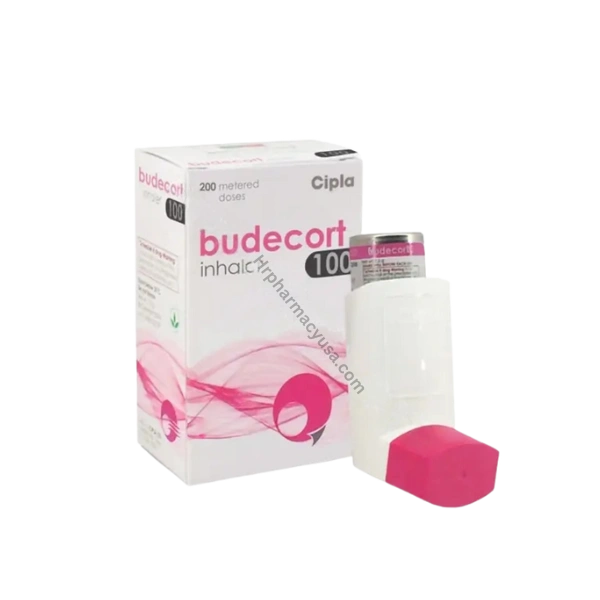
Pink Inhaler (Budesonide)
Price range: $27.00 through $64.00
Pink Inhaler is designed to help reduce breathing symptoms such as wheezing, chest tightness, and shortness of breath when used as directed by your prescriber. In the U.S., color alone does not identify the medicine inside an inhaler, so always check your prescription label and the device sticker. This pink inhaler may be a controller or a reliever, depending on the medication your doctor prescribed. Follow your label, ask questions if you are unsure, and use exactly as directed.
| Active Ingredient: | Budesonide |
|---|---|
| Indication: | Asthma |
| Manufacturer: | Cipla Limited |
| Packaging: | 200 MDI in 1 Inhaler |
| Strength: | 200mcg |
| Delivery Time: | 6 To 15 days |
In Stock
About Pink Inhaler
A pink inhaler is a color-coded device casing that may contain different prescription asthma or COPD medications in the U.S. Several manufacturers use pink. Still, it is not a reliable way to identify which drug is inside. Some pink devices contain a daily maintenance medicine, sometimes called a controller. Others may be reliever or combination inhalers. Always read your pharmacy label, the patient information leaflet, and the dose counter before use. If anything does not match what your doctor told you, ask your pharmacist or prescriber before taking a dose.What pink Inhaler is generally used for
- Helps control chronic breathing problems such as asthma or COPD when used as prescribed.
- May reduce symptoms such as coughing, wheezing, a tight chest, and shortness of breath.
- Depending on the medication, it may be used daily as maintenance or as needed for quick relief. Use it only as your label instructs.
Important note on color and medication
- In the U.S., inhaler color is not standardized across brands.
- Please do not rely on color alone to determine whether it is a reliever or a controller.
- Check the name of the active ingredient and strength on the device, the box, and your prescription label.
Common types of medicines that may be in a pink inhaler
- Inhaled corticosteroids are often used daily to reduce airway swelling. Examples include fluticasone, budesonide, beclomethasone, mometasone, or ciclesonide. These are controllers, not rescue inhalers.
- Combination inhalers that include an inhaled steroid with a long-acting bronchodilator. The long-acting ingredient is usually a beta-2 agonist such as formoterol, vilanterol, or salmeterol. These are for maintenance unless your prescriber has directed as-needed use of a specific combination.
- A short-acting bronchodilator used for quick relief is usually color-coded blue in the U.S. That said, always verify the label because color can vary by brand.
Who can use it
- Adults and children, if prescribed by a healthcare provider.
- Some strengths or devices are for adults only. The prescriber sets pediatric dosing and device choice.
- People with severe milk protein allergy should check the device leaflet. Certain dry powder inhalers contain lactose as an inactive ingredient.
How it works
- Steroid controllers reduce swelling in the airways, which helps prevent flare-ups.
- Long-acting bronchodilators relax airway muscles to help you breathe more smoothly throughout the day.
- Short-acting relievers open the airways quickly when you have sudden symptoms.
- Your exact pink inhaler could have one of these actions or a combination. Confirm with your label.
How to use
There are two standard device types. Your pink inhaler will be one of these if you are not sure which. Compare the instructions below or check the patient leaflet. For pressurized metered dose inhalers, also called MDI- Prime the device the first time or after it has been unused for several days. Spray away from your face as the leaflet instructs.
- Shake if the leaflet says to shake. Not all MDIs need shaking.
- Breathe out fully, away from the device.
- Seal your lips around the mouthpiece. Press the canister and breathe in slowly and deeply at the same time.
- Hold your breath for about 10 seconds, or as long as comfortable, then exhale gently.
- Wait about 30 to 60 seconds between puffs if you are taking more than one.
- If your inhaler contains a steroid, rinse your mouth and spit out the rinse after use. This simple step helps prevent thrush and hoarseness.
- Load a dose as shown in the leaflet. This may be opening the cap, sliding a lever, or inserting a capsule, depending on the device.
- Breathe out away from the mouthpiece. Do not exhale into the device.
- Seal your lips on the mouthpiece and inhale quickly and deeply to pull the powder into your lungs.
- Hold your breath for about 10 seconds, then breathe out slowly.
- Rinse your mouth and spit after steroid doses to lower the chance of thrush.
Tips for better results
- Use a spacer with MDIs if recommended. It can make it easier to get medicine into the lungs.
- Keep the mouthpiece clean and dry. Follow the cleaning steps in your leaflet. Many MDIs can be wiped weekly. Some devices should not be rinsed with water.
- Track doses with the built-in counter or your own reminder.
- If you need your reliever more than your action plan allows, contact your prescriber.
Dosing and frequency
- Always follow the schedule on your prescription label. That is the rule.
- Controller inhalers are often used once or twice daily. These are not for sudden attacks.
- Reliever inhalers are taken as needed for symptoms. Typical limits exist, but do not exceed the label without medical advice.
- If your pink inhaler is a combination controller, it is usually taken every day at the same time. Some specific combinations may be taken as maintenance and reliever therapy, but only if your prescriber told you to do that.
What to do if a dose is missed
- For daily controllers, take the missed dose when you remember, unless it is close to the next time. Do not double up.
- For relievers, use only when you have symptoms or before triggers if directed.
Side effects you may notice
Likely or mild- Throat irritation, cough after inhalation, dry mouth
- Hoarse voice
- Oral thrush or white patches in the mouth from steroid inhalers. Rinsing after use lowers the risk.
- Headache or mild trembling with bronchodilators
- Fast heartbeat, palpitations, or jitteriness with bronchodilators
- High blood pressure, or feeling nervous
- Allergic reaction, such as rash or swelling
- Worsening breathing right after a dose is called paradoxical bronchospasm. If this happens, stop the inhaler and seek medical care right away.
Drug and condition check
- Tell your prescriber about all inhalers, nebulizer solutions, or allergy medicines you use.
- Ask before combining different inhalers. Some ingredients can overlap.
- Mention heart conditions, high blood pressure, glaucoma, osteoporosis, or thyroid issues.
- Certain oral medicines, such as beta blockers, may reduce the effectiveness of some inhalers. Your prescriber will guide you.
When to seek urgent help
- Severe shortness of breath that does not improve after your reliever, or your label says your device is not a reliever
- Blue lips, trouble speaking in complete sentences, ribs pulling in with breaths
- You need to use your rescue inhaler more often than your action plan allows
- Call 911 for life-threatening symptoms
Storage and handling
- Store at room temperature, ideally 68 to 77 degrees Fahrenheit, away from direct heat and sunlight.
- Do not freeze MDIs or leave them in a hot car.
- Do not puncture or burn MDI canisters.
- Keep the cap on to protect the mouthpiece from dust.
- Keep out of reach of children and pets.
Single ingredient inhaled corticosteroids
- Beclomethasone HFA: 40 mcg, 80 mcg per actuation
- Budesonide DPI: 90 mcg, 180 mcg per actuation
- Ciclesonide HFA: 80 mcg, 160 mcg per actuation
- Fluticasone propionate HFA: 44 mcg, 110 mcg, 220 mcg per actuation
- Mometasone HFA: 100 mcg, 200 mcg per actuation
Short acting reliever examples for context
- Albuterol HFA: commonly 90 mcg per actuation
- Note: these are often blue devices, though the exact color can vary. Always check the label.
Who should not use a pink inhaler without medical advice?
- Anyone experiencing severe, sudden breathing trouble should use their prescribed rescue inhaler and seek medical help. Do not start an unfamiliar controller device for a sudden attack.
- People who are sensitive to any listed ingredient on the label.
- Children using an adult strength or device not approved for their age group.
- Pregnant or breastfeeding individuals should consult a clinician to weigh the risks and benefits.
What to discuss with your prescriber
- Your typical symptoms and what triggers them
- How often do you use a rescue inhaler
- Any side effects you have noticed with past inhalers
- Goals such as fewer nighttime symptoms or better exercise tolerance
- Whether a spacer, a different device type, or a different strength might help you
Small everyday habits that help
- Keep a simple symptom and dose log for a week or two. Share it at your next appointment.
- Rinse after steroid doses and brush your teeth at night.
- Clean your mouthpiece weekly per the leaflet instructions.
- Refill before you run out. Many dose counters turn red near the end.
- Store a copy of your asthma or COPD action plan in your phone.
FAQs About Pink Inhaler
- Is the pink inhaler a rescue inhaler? It might be, but color alone is not enough to tell. Some pink devices are controllers, and some are combinations. Look at your prescription label for the drug name and instructions. If your label does not say it is for quick relief, do not use it for sudden symptoms. Ask your pharmacist to confirm.
- How many puffs should I take? Follow the exact number of puffs and how often as written on your prescription label. Different medicines and strengths have different dosing. If you do not see an explicit instruction, call your prescriber before taking a dose.
- Do I need to rinse my mouth after using it? If your pink inhaler contains a steroid, yes. Rinse, swish, and spit after each dose to lower the chance of thrush and hoarseness. If it is a reliever-only device, rinsing is optional, but keeping the mouthpiece clean is still essential.
- Can I use this together with my blue inhaler? Often yes, but it depends on the ingredients in each device and your action plan. Some combinations are designed for daily use with a separate blue rescue inhaler. Others are used on their own. Bring both inhalers to your next appointment so your clinician can check for overlaps.
- How do I store it, and how long does it last? Keep it at room temperature, away from heat and moisture. Use the dose counter to track remaining doses. Do not use after the expiration date or after the counter reads zero, even if it still sprays. Check the leaflet for the exact shelf life once opened, because it can vary by device.
| size | 1 Inhaler, 3 Inhaler/s, 6 Inhaler |
|---|


Reviews
There are no reviews yet.