


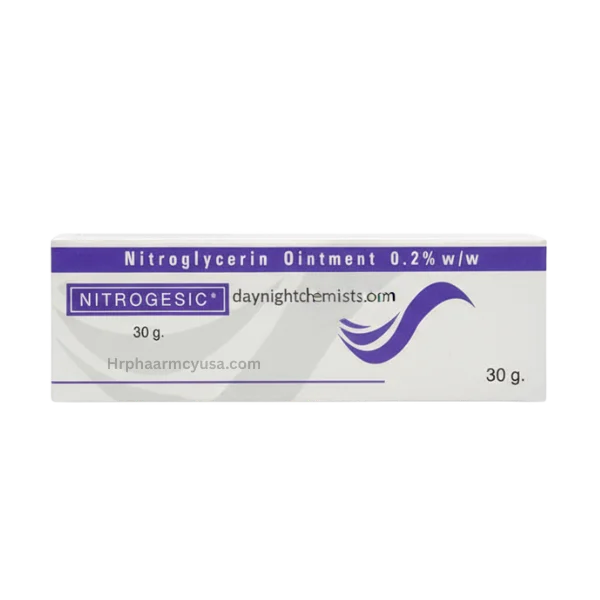
Nitroglycerin Ointment
Price range: $10.00 through $99.00
Nitroglycerin Ointment — a topical medication used to prevent and treat angina (chest pain) caused by coronary artery disease. The ointment works by relaxing blood vessels, improving blood flow to the heart, and reducing the heart’s workload.
| Active Ingredient | Nitroglycerin/Glyceryl Trinitrate |
|---|---|
| Manufacturer | Actiza Pharmaceutical Pvt. Ltd. |
| Packaging | 30 gm in 1 Tube |
| Strength | 30mcg |
| Delivery Time | 6 to 15 days |
In Stock
Nitroglycerin Ointment: The "Pipes Opener" Explained
So, your doctor handed you a prescription for Nitroglycerin Ointment. Maybe they called it Glyceryl Trinitrate. It’s the same thing. Seeing that name can be a little intimidating, right? It sounds serious. But let’s break down what this stuff actually is and how you use it without all the complicated medical talk. Basically, this ointment is a way to help your heart when it feels like it's not getting enough air.What Is This Stuff, Really?
In simple terms, Nitroglycerin Ointment is a "vasodilator." That’s just a fancy word for something that relaxes and widens your blood vessels. Think of your arteries and veins like pipes. Sometimes, especially if you have angina (that tight, heavy chest pain), those pipes get narrow or constricted. Your heart has to work way too hard to push blood through. This ointment soaks through your skin and tells those pipes to chill out and open up. When they open up, blood flows easier, and your heart doesn't have to strain so much. Less strain means less chest pain. It’s important to know that the ointment isn't for a sudden, "call 911" emergency chest pain. You usually have a spray or a little pill under the tongue for that. The ointment is more like a slow-release, background helper. You put it on, and it works steadily for hours to prevent the pain from starting in the first place.The Application Process: It’s a Little Weird
Using this ointment isn't like putting on hand cream. You don't just rub it in. If you do, you'll absorb way too much through your fingers and probably get a wicked headache. Here is the process, step-by-step: 1. The Paper Ruler The ointment tube usually comes with special applicator papers. These papers have little lines or markings on them—like "1/2 inch" or "1 inch." Your doctor will tell you exactly how much to squeeze out. 2. Squeeze It Out You squeeze the prescribed amount of ointment onto the paper. Don't let the ointment touch your fingers. If it does, wash your hands right away with soap and cool water. Seriously. 3. Pick a Spot You apply this to a hairless (or mostly hairless) area of skin. The chest, the upper arm, or the shoulder are common spots. Don't put it on your lower legs or below the elbows; it doesn't absorb as well there. 4. The "No Rub" Rule Place the paper, ointment-side down, onto your skin. You can use the paper to spread it slightly into a thin patch, but do not rub it in. 5. Tape It Down Use some medical tape (or even just regular clear tape if you have to) to keep the paper in place. 6. Clean Up When it’s time for the next dose, take the old paper off, fold it up so the medicine is inside, and throw it away where kids or pets can't find it. Wash the old spot with soap and water. Why Rotate Spots? You can't just put the patch on the exact same inch of skin every day. Your skin gets tired, and the medicine stops absorbing as well. Doctors call this "tolerance." So, today, the left shoulder. Tomorrow, the right arm. The next day, the chest. Give each spot a few days off.The Side Effects (Especially "The Headache")
Okay, let's talk about the elephant in the room: the Nitro Headache. When you first start using the ointment, you will almost certainly get a headache. It can range from a dull ache to a real thumper. This happens because the medicine opens up the blood vessels in your head, too. The good news? The headache usually means the medicine is working. The better news? For most people, the headaches get much milder or go away completely after a week or two as your body gets used to it. In the meantime, plain Tylenol (acetaminophen) usually helps. Other Stuff You Might Feel:- Dizziness or Lightheadedness: Because your blood pressure drops a bit when your veins open up. The golden rule here is: Stand up slowly. Don't jump out of bed. Sit on the edge for a minute first.
- Flushing: Your face might get warm and red. It happens.
- Weakness: Sometimes you just feel a bit "meh."
The Super Serious Warning: No "Blue Pills"
This is the most important rule. If you use Nitroglycerin Ointment, you cannot take medications for erectile dysfunction, like Viagra (sildenafil), Cialis (tadalafil), or Levitra. You also can't take Adcirca or Revatio (which are sometimes used for pulmonary hypertension but are the same type of drug). Mixing these drugs can cause your blood pressure to drop so low, so fast, that it can be fatal. We are talking life-or-death serious. Always, always remind any doctor you see that you are on Nitroglycerin.Living With the Ointment
Using the ointment daily takes some getting used to.- Showering/Bathing: You usually take the patch off before a shower and put a fresh one on after. Check with your doctor on the timing.
- Stains: The ointment is greasy. It can stain your clothes. The paper helps, but it’s not foolproof. Wear an old undershirt under your good clothes if you're worried.
- Timing: You need "nitro-free" time. Your doctor will likely tell you to remove the ointment for 10–12 hours overnight. This stops your body from getting too used to the medicine so it keeps working.
What If You Forget a Dose?
If you remember a few hours late, put it on. But if it's almost time for your next dose anyway, just skip the one you missed. Don't try to "catch up" by using extra.A Quick Word on Storage
Keep the tube tightly closed. Don't leave it in a hot car or a steamy bathroom. Room temperature is fine.FAQ: The Questions People Ask
Q: Is this the same stuff in the movie where the guy puts a pill under his tongue? A: Yes, same ingredient (Nitroglycerin), just a different delivery method. The under-the-tongue pill (or spray) works in seconds for an attack. The ointment works slowly over hours to prevent attacks. Q: Why is the paper applicator so important? A: If you rub the ointment with your bare hands, the medicine goes into you. You'll get a massive headache, and you won't get the right dose on your chest where you need it. Q: Can I use this for anal fissures? A: Sometimes, yes. Doctors prescribe a low dose of this ointment "off-label" for fissures because it relaxes the muscles there, too, helping them heal. If that's why you have it, follow your doctor's application instructions exactly—they'll be different from the chest application. Q: Will I become addicted to it? A: No. Nitroglycerin is not addictive. But don't stop using it suddenly, as that can sometimes cause a rebound effect. Always talk to your doctor first. Q: I got the ointment on my hand, and now I have a headache. What do I do? A: Wash your hand thoroughly with soap and cool water. Take some Tylenol. The headache will pass. Q: Can I drink alcohol while using this? A: Usually, no, or very little. Alcohol also widens blood vessels, and combining it with the ointment can make you dangerously dizzy or faint.| size | 1 Cream, 12 Cream/s, 3 Cream/s, 6 Cream/s |
|---|


Reviews
There are no reviews yet.