


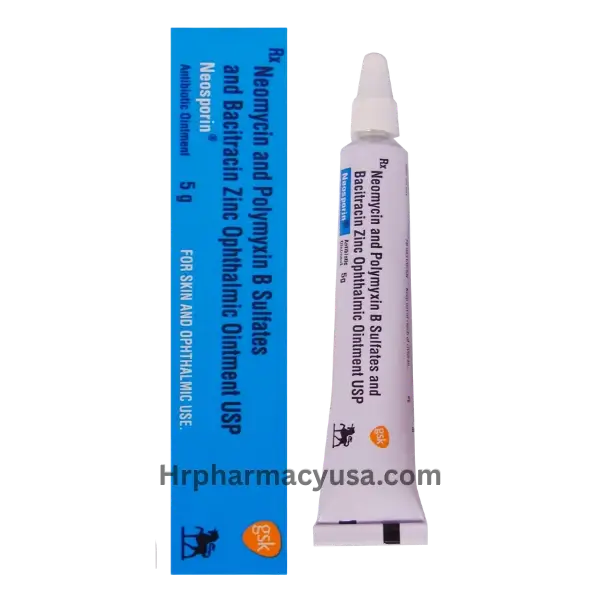
Neosporin 20 g (Bacitracin/Neomycin/Polymyxin B)
Price range: $31.25 through $106.25
Neosporin 20g ointment combines Bacitracin, Neomycin, and Polymyxin B to prevent infection in minor cuts, scrapes, and burns. Learn about uses, application, and side effects.
| Active Ingredient: | Bacitracin/Neomycin/Polymyxin B |
|---|---|
| Indication: | used in the treatment of bacterial skin infections |
| Manufacturer: | GlaxoSmithKline Pharmaceuticals Ltd |
| Packaging: | 20 gm in 1 tube |
| Strength: | 20g |
| Delivery Time: | 6 To 15 days |
In Stock
Shop Neosporin 20 g (Bacitracin/Neomycin/Polymyxin B)
Neosporin 20 g (Bacitracin/Neomycin/Polymyxin B) has been sitting in medicine cabinets across the country for longer than most of us can remember. There is a good reason for that. It packs three different antibiotics into one ointment, and each one goes after bacteria in its own way. Bacitracin messes with how bacteria build their cell walls. Neomycin throws a wrench into their protein production. And Polymyxin B breaks down the outer layer of certain bacteria. That triple action is exactly why this combination handles such a wide range of common skin bacteria.What Is Neosporin 20 g Used For
Neosporin 20 g is mostly about prevention. You put it on minor cuts, scrapes, abrasions, and small burns to stop bacteria from setting up camp in the wound. Broken skin is basically an open door for germs. A thin layer of this ointment acts like a shield while the antibiotics do their job underneath. One thing people sometimes get wrong is reaching for Neosporin when a wound is already clearly infected. If you are seeing spreading redness around the area, warmth radiating from it, pus draining out, or you are running a fever, that has moved past what an over-the-counter ointment can handle. At that point, you really need to talk to a doctor.How to Apply Neosporin 20 g
Start by washing the wound with some mild soap and water. Nothing fancy. Pat it dry gently. Then, squeeze out a thin layer of the ointment and spread it right over the wound. If you want, throw a sterile bandage on top. You can do this anywhere from one to three times a day. Something a lot of people do not realize is that slathering on extra ointment does not speed things up. A thin coat gets the job done just fine. Also, keep it away from your eyes, the inside of your nose and mouth, and do not spread it across large sections of your body.Side Effects of Neosporin
Most folks use Neosporin without running into any trouble at all. Every now and then, someone might get a bit of irritation right where they applied it. Maybe some redness or mild itching. That is pretty normal and usually not a big deal. What fewer people know is that Neomycin, one of the three ingredients, is actually a fairly well-known trigger for contact dermatitis. Out of all the topical antibiotics out there, Neomycin tends to cause skin reactions more often than the others. So if you put Neosporin on a cut and the skin around it starts looking angrier than before, gets puffy, breaks out in a rash, or feels like it is burning more with each application, that is your cue to stop using it. Get in touch with a pharmacist or doctor at that point. Full-blown allergic reactions are not common, but they can happen.Precautions to Keep in Mind
This ointment is built for the small stuff. A paper cut, a kitchen scrape, a mild burn from touching something hot. If you are dealing with a deep wound, a puncture, an animal bite, or a burn that covers a large area, skip the Neosporin and go see someone who can properly evaluate it. Using it on the same spot for weeks on end without a doctor's input is not a great idea either. There is a real concern about bacteria becoming resistant when you overuse topical antibiotics, and your skin can also develop a sensitivity to the ingredients over time. If you already know you are allergic to Bacitracin, Neomycin, or Polymyxin B, this one is obviously not for you. Women who are pregnant or nursing usually get the green light for a small area application, but it still makes sense to run it by a doctor first, just to be safe.Available Strengths
Neosporin comes in a handful of different sizes and versions depending on what you need:
- Neosporin Original Ointment 14 g (0.5 oz)
- Neosporin Original Ointment 20 g
- Neosporin Original Ointment 28.3 g (1 oz)
- Neosporin + Pain Relief Ointment (this one adds Pramoxine HCl for numbing)
- Neosporin + Burn Relief Ointment
- Neosporin Lip Health Overnight Renewal Therapy
Substitutes
There are quite a few alternatives out there, and some of them are practically identical in terms of what is inside:
- Polysporin Ointment contains Bacitracin and Polymyxin B, but leaves out the Neomycin, which is a popular pick for anyone who has had a reaction to Neomycin before
- Generic Triple Antibiotic Ointment from most pharmacies has all three of the same active ingredients at the same strengths.
- Equate Triple Antibiotic Ointment is Walmart's store brand version.
- Up and Up Triple Antibiotic Ointment is Target's version of the same thing.
- Bacitracin Ointment is a simpler option with just one antibiotic.
- Curad Triple Antibiotic Ointment is another branded alternative.
The generic versions are worth considering if price is a factor. They use the same ingredients in the same amounts, so the difference really just comes down to packaging and what you pay at the register.
Storage
Keep the tube at room temperature and away from too much heat or humidity. Make sure the cap is on tight after every use. And check the expiration date before you squeeze any out. Once it is past its date, the ingredients may not work as well as they should.FAQs
1. Can I put Neosporin on my face to help with acne or pimples? That is not what it is made for, and most dermatologists would steer you away from it. Acne involves a specific type of bacteria and skin process that needs targeted acne treatments. Putting Neosporin on breakouts could irritate your skin and contribute to antibiotic resistance without doing much for the acne itself. 2. Is Neosporin safe to use on babies or young kids? For a typical small cut or scrape on a child, it is generally fine when used the right way. With infants or really young toddlers, it is smart to check with a pediatrician before applying it, especially if the wound is somewhere near their mouth or hands, where they might end up licking it off. 3. Should I use Neosporin on a new tattoo while it heals? A lot of tattoo artists and skin doctors actually say no to this one. Fresh tattoo skin is more reactive than normal skin, and the Neomycin in Neosporin is known for triggering contact reactions in that situation. It can mess with both the healing and the look of the tattoo. Most artists recommend plain, fragrance-free moisturizer or specific aftercare products instead. 4. How many days can I keep applying Neosporin to the same wound? If you have been using it for about a week and the wound still is not looking better, or if it seems to be getting worse, stop applying it and go see a doctor. There is no benefit to dragging out the use longer than is needed. 5. Will using Neosporin on a wound help it heal without leaving a scar? It is not a scar treatment by any means. But keeping a wound moist, which Neosporin does, is something that wound care experts have long said promotes cleaner healing. A wound that stays moist and protected tends to form less noticeable scars compared to one that dries out and scabs over. So it can help in that indirect way, but do not expect miracles.| size | 12 Cream/s, 3 Cream/s, 6 Cream/s |
|---|


Reviews
There are no reviews yet.