


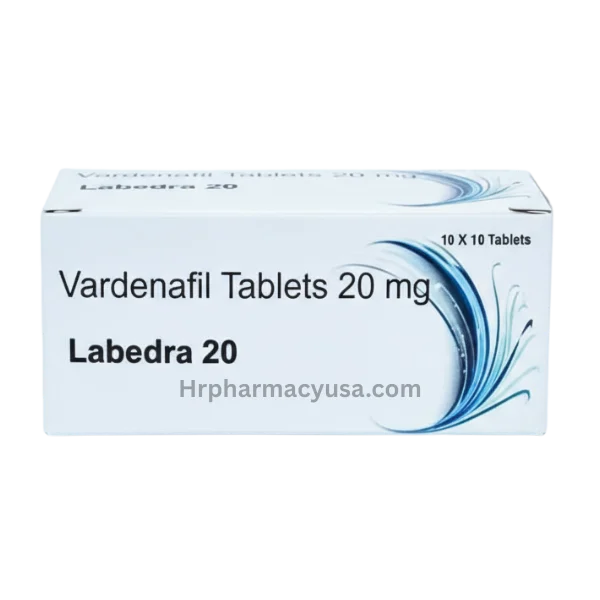
Labedra 20 mg
Price range: $90.00 through $165.00
Labedra 20 mg is a prescription medication commonly used to treat erectile dysfunction (ED) in men. It works by improving blood flow to the penis, helping achieve and maintain an erection during sexual stimulation. Labedra belongs to the class of drugs known as PDE5 inhibitors.
| Active Ingredient | Vardenafil |
|---|---|
| Manufacturer | RSM Enterprises |
| Packaging | 10 Tablets in a strip |
| Strength | 20mg |
| Delivery Time | 6 To 15 days |
In Stock
Labedra 20 mg Tablet – Real Talk for Steady Blood Pressure Control
Hey there—if you’re here because your doc prescribed Labedra 20 mg for your blood pressure, you’re in the right spot. I’m a pharmacy tech who’s handed out this med hundreds of times, so I’ll break down everything you need to know—no fancy medical jargon, just real talk. Let’s dive in.What Exactly Is Labedra 20 mg?
First, the basics: Each oval, off-white Labedra 20 mg tablet has labetalol hydrochloride fancy name for a med that works two ways to calm your blood pressure. It comes in blister packs of 10, 30, 60, or 100 pills, and lasts 2 years from the manufacturing date (write the expiry on your pill bottle—most people forget to check the blister pack’s back!). In plain words? It relaxes the tight walls of your blood vessels (so blood flows easier—no more “straining” for your heart) and slows your heart rate just a tiny bit. The result? Your BP drops, and your heart doesn’t have to work overtime.Why Do Docs Reach for This One?
I hear this question every day. Here’s the real deal:- Two jobs in one: Unlike some meds that only relax vessels or slow your heart, Labedra does both. Perfect for folks whose BP still spikes after trying single-action pills.
- Steady, not sudden: Most people feel a little relief (like less racing heart) in 1–2 hours, but full BP control takes 2–4 weeks. Be patient—your body needs time to adjust.
- Flexible dosing: Starting dose is usually 100 mg a day (split into two 50 mg pills, like morning and night). Your doc will tweak it if needed—don’t mess with it on your own. I’ve had patients who thought “more is better” and ended up dizzy—don’t be that person.
- Proven for stress/exercise spikes: If your BP skyrockets before work meetings or when you walk up stairs, this med helps keep it steady. I had a patient last month who could barely walk her dog 10 minutes—after 2 weeks on Labedra, she did 2 miles without stopping. Small wins, big deals.
Who Should (and Shouldn’t) Take It?
This is for folks with mild to moderate high blood pressure—especially if other meds didn’t work enough. But:- Always chat with your doc first: If you have asthma, diabetes, kidney issues, or are pregnant/breastfeeding, they’ll check if this plays nice with your body. I once had an asthma patient take this without checking—her breathing got tight, so don’t skip that convo.
How to Take It (Like a Pro)
No fancy steps—just routine and common sense:- Follow your doc’s slip exactly: If it says “50 mg twice daily,” take one when you brush your teeth in the morning and one before bed. Set a phone alarm if you’re forgetful (I use one for my own allergy meds—no shame).
- Food or no food? Doesn’t matter: Take it with cereal, a soda, or on an empty stomach—works the same. Just pick a routine and stick to it.
- Missed a dose? Don’t panic: If it’s less than 4 hours until your next dose, skip the missed one. If it’s more, take it right away. Never take two at once—I’ve seen patients do that and get super dizzy. Not worth it.
- Don’t quit cold turkey: This is non-negotiable. Stopping suddenly can make your BP spike dangerous high (like, go-to-the-ER high). If you want to stop, call your doc first—they’ll have you taper off slowly.
What to Watch For (Side Effects, Real Talk)
No med is perfect—here’s what might pop up, and what to do:- Dizziness when standing: Super common at first, especially if you stand up fast. Just take it slow: Sit on the bed for 30 seconds before standing, and drink more water (dehydration makes it worse).
- Tiredness: Your body needs 1–2 weeks to adjust. If you’re still dragging after that, call your doc—they might lower the dose.
- Cold hands/feet: Beta-blockers do that (they slow blood flow to your extremities). Keep socks on or wiggle your toes—annoying, but not a big deal.
- Ankle swelling: Some people get this from fluid retention. If it’s bad (you can’t put on shoes), call your doc—they might add a water pill or adjust your dose.
- Weird, serious stuff: Rash, chest pain, or trouble breathing? Call 911 or go to the ER immediately. These are rare, but don’t wait.
Storage (The No-Brainer Rules)
- Room temp only: 68–77°F (20–25°C) if you want to be precise, but just keep it away from heat and moisture.
- NEVER the bathroom: Steam from showers ruins meds faster than you think. I’ve had patients bring in melted pills—save yourself the trip.
- Keep it away from kids: This isn’t candy—even one pill can hurt a little kid. Put it in a high cabinet or a child-locked pill box.
Frequently Asked Questions (FAQs I Get Every Day)
These are the exact questions patients ask me at the pharmacy—no formal fluff: Q: Can I drink coffee while taking Labedra? A: Yep—moderation is key. 1–2 cups a day is fine. More than that? Caffeine raises BP, so you’re working against the med. Save the 4-shot latte for a special day. Q: I missed a dose yesterday—will my BP be messed up? A: Probably not super bad, but don’t make it a habit. Get back on your schedule today. If you feel dizzy or your home BP monitor says it’s high, call your doc—they might have you take an extra half dose (but only if they say so). Q: Will this make me gain weight? I’m already stressed about that. A: Most people don’t gain weight on Labedra (unlike some other BP meds). But a few get ankle swelling (from fluid retention) that feels like weight gain. If your pants are tighter around the waist (not just ankles), talk to your doc—could be diet or exercise habits, too. Q: I’m pregnant—can I take this? A: Don’t guess—call your OB/GYN right away. Labedra is sometimes used in pregnancy for high BP, but only if your doc says it’s safe. Never start/stop any med while pregnant without checking first. Q: How long until I feel “normal” again? A: You might notice your heart doesn’t race as much after 1–2 days. But for full BP control? 2–4 weeks. I had a patient who stopped after 3 days because “it wasn’t working”—big mistake. Give it time. Q: Can I take allergy/cold meds with this? A: Some have decongestants (like pseudoephedrine) that raise BP. Check the label—if it says “decongestant” or “for sinus pressure,” don’t take it without asking your pharmacist first. I can’t tell you how many patients come in with spiked BP from mixing Sudafed and their BP med.Related Meds Our Patients Love (If Labedra Isn’t Quite Right)
Labedra works great for most people, but if your doc wants to try something else, here are meds our patients often switch to or use together:- CardioEase 50 mg: A gentler beta-blocker for mild BP. Older patients love this—fewer cold hand side effects.
- Vasotrol 100 mg: Another dual-action med (like Labedra) but with a longer half-life—take it once a day instead of twice. Perfect for people who hate setting multiple alarms.
- Amlodil 5 mg: A calcium channel blocker that relaxes blood vessels. Often used with Labedra if one med isn’t enough.
- Diurese 25 mg: A water pill (diuretic) that fixes ankle swelling. If Labedra causes fluid buildup, your doc might add this.
- HeartCalm 10 mg: A low-dose beta-blocker for folks who only need help with stress-related BP spikes (like before presentations).
| size | 120 Tablet/s, 60 Tablet/s, 90 Tablet/s |
|---|


Reviews
There are no reviews yet.