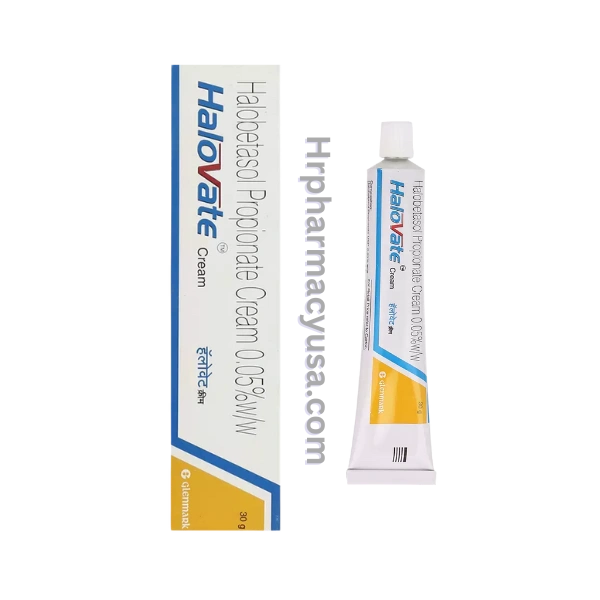
What is Halovate Cream (Halobetasol)?
Halovate Cream (Halobetasol) is a very strong topical corticosteroid that’s commonly prescribed when a milder steroid has not controlled a flare.
People usually look for this kind of medicine when they are dealing with inflamed skin that feels hot, itchy, rough, or thickened, such as plaque psoriasis or certain types of dermatitis.
It is not a moisturizer, and it does not “cure” the underlying condition. Instead, it helps reduce skin inflammation, making the flare more manageable.
What Is Use of Halovate Cream
Halobetasol is considered a super-high-potency steroid. In practice, that means it can be effective for short bursts on tough, stubborn areas, such as thicker plaques or patches that keep coming back.
Clinicians may prescribe it for:
- Plaque psoriasis with thick, scaly patches
- Steroid‑responsive dermatitis (often including contact dermatitis or atopic dermatitis in select cases)
- Inflammatory skin flares where a high‑potency topical steroid is appropriate
Because this is a strong medication, it is usually reserved for smaller body areas and limited timeframes, based on the prescriber’s plan.
How Halovate Works
During a flare, the immune response in the skin can get overactive. This leads to redness, swelling, itching, and scaling.
Halobetasol reduces inflammatory signals in the skin, which can ease itching and help the skin look and feel calmer. Many people notice the itch improves before the skin texture fully smooths out.
How to apply it
Follow the exact instructions on your prescription label. In general, topical steroids like halobetasol are used by:
- Applying a thin film to the affected skin only
- Using clean, dry hands before and after application
- Avoiding healthy surrounding skin as much as possible, since overuse can irritate or thin skin
Many halobetasol products are prescribed for short courses (often around 1 to 2 weeks), but your plan may differ depending on the diagnosis, body area, and response.
If you feel you need it daily for long periods to keep symptoms down, that is a signal to check back in with a clinician for a safer long-term strategy.
Areas to avoid unless specifically directed
High‑potency steroids are more likely to cause side effects on thin or sensitive skin. Unless your prescriber tells you to, it’s generally best to avoid using halobetasol on:
- Face
- Groin
- Underarms
- Broken skin, open wounds, or areas with active infection
Also, avoid covering treated skin with airtight wraps or tight bandages unless you were told to do so. Occlusion can increase absorption and raise the risk of side effects.
side effects and safety notes
Topical steroids can cause local skin effects, especially if used for too long or on sensitive areas. Possible effects include:
- Burning, stinging, dryness, or irritation where applied
- Thinning of the skin, stretch marks, easy bruising, and visible small blood vessels
- Acne-like bumps or changes in skin color
With super‑potent steroids, using large amounts, using them for too long, or applying under occlusion can increase systemic absorption. In rare cases, this can affect hormone balance (adrenal suppression). This is one reason prescribers keep courses short and limit total weekly use.
Seek medical advice promptly if the treated area becomes very painful, oozes, develops crusting, or looks infected. Steroids can sometimes mask infection symptoms while the infection worsens.
Available Strengths
Halovate Cream (Halobetasol) is commonly associated with 0.05% cream, but halobetasol topical products are available in other strengths and dosage forms, depending on the manufacturer and specific product.
Examples seen in the market include:
Availability can vary by pharmacy, supplier, and prescription selection.
FAQs About Halovate Cream (Halobetasol)
1. Can I use Halovate Cream (Halobetasol) with moisturizer?
Often yes, but timing matters. Ask your prescriber or pharmacist whether to apply the steroid first or the moisturizer first, and how long to wait between layers.
2. What should I do if I forget a dose?
Apply it when you remember, unless it’s close to the next scheduled application. Do not double up to “catch up” unless a clinician specifically instructed that.
3. Can Halovate Cream (Halobetasol) be used during pregnancy or while breastfeeding?
This depends on the body area, amount used, and duration. A clinician should weigh risks and benefits for your specific situation.
4. Can I use it on my scalp?
Creams are not always ideal for hair-bearing areas. Your clinician may prefer a lotion, foam, solution, or another scalp-friendly option.
5. Will it interact with other medicines I take by mouth?
Most interactions are unlikely with short, small-area topical use, but risks increase with heavy use or occlusion. Share your full medication list with your clinician and pharmacist.







Reviews
There are no reviews yet.