


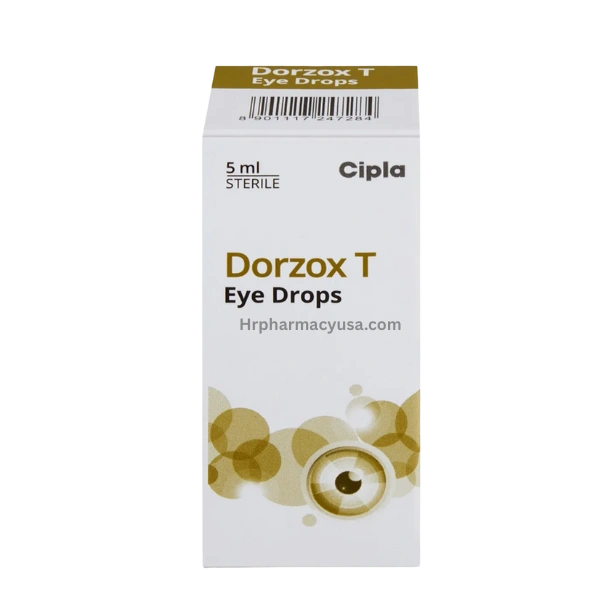
Dorzox T Eye Drop 5ml (Dorzolamide / Timolol)
Price range: $10.00 through $50.00
Dorzox T Eye Drop 5ml combines dorzolamide 2% and timolol 0.5% to help lower high eye pressure in open-angle glaucoma and ocular hypertension. It reduces fluid production inside the eye and slows pressure buildup that can harm the optic nerve over time. This is a multi-dose bottle that typically contains a preservative. Use exactly as directed by your eye doctor, and space other eye drops at least 5 to 10 minutes apart.
| Active Ingredient: | Dorzolamide/Timolol |
|---|---|
| Indication: | Glaucoma |
| Manufacturer: | Cipla Limited |
| Packaging: | 5 ml in 1 Bottle |
| Strength: | 5ml |
| Delivery Time: | 6 To 15 days |
In Stock
What Dorzox T Eye Drop 5ml
Dorzox T Eye Drop 5ml is a fixed-dose combination of dorzolamide 2% and timolol 0.5% used to help control elevated intraocular pressure in open-angle glaucoma and ocular hypertension. If your eye doctor wants a more substantial pressure-lowering effect than a single drop can provide, a combination like this is a common next step. The idea is straightforward. Lower the pressure, protect the optic nerve, and help preserve vision for the long haul.What Dorzox T Eye Drop 5ml is
- Active ingredients: Dorzolamide hydrochloride 2% and timolol maleate 0.5%.
- Class: Carbonic anhydrase inhibitor plus beta blocker.
- Purpose: Lowers eye pressure when it is above your target level.
- Format: Multi-dose bottle, typically preserved to maintain sterility after opening.
- Typical bottle size: 5 mL. Some sellers may also offer 10 mL bottles, depending on availability.
How it works
- Dorzolamide 2% reduces the production of aqueous humor, the clear fluid your eye naturally makes. Less fluid means less pressure buildup.
- Timolol 0.5% also reduces fluid formation by blocking beta receptors in the ciliary body. The two ingredients work through different mechanisms, which can lead to a more substantial overall pressure reduction compared with either one alone.
Who it might be right for
- Adults with open-angle glaucoma who need more pressure reduction than a single medication provides.
- People with ocular hypertension who have not reached their target pressure on one drop.
- Patients who prefer one bottle that combines two medicines to simplify their routine may find it beneficial.
How to use Dorzox T Eye Drop 5ml
Follow your prescription label. A typical schedule for dorzolamide plus timolol combinations is one drop in the affected eye or eyes twice daily, usually morning and evening. Your doctor may adjust timing to fit your overall plan.Step-by-step use
- Wash and dry your hands.
- Shake the bottle gently if your package insert advises it. Most solutions do not require shaking.
- Tilt your head back and pull down your lower eyelid to create a small pocket.
- Hold the bottle above the eye. Avoid touching the tip to your eye, lashes, or skin.
- Instill one drop into the pocket. Do not blink hard.
- Close your eyes gently. Press a finger lightly at the inner corner where the eyelid meets the nose for 1 to 2 minutes. This is called punctal occlusion and helps keep the drop in your eye while reducing aftertaste and systemic absorption.
- If you use another eye medication, wait at least 5 to 10 minutes before the next drop.
- Recap the bottle right away and store it as directed.
Contact lens guidance
- Remove soft contact lenses before using the drops.
- Wait at least 15 minutes before reinserting lenses.
- Many multi-dose bottles contain benzalkonium chloride as a preservative. This can bind to soft lenses and irritate the eye surface. Giving your eyes a short break helps.
What you might feel after a drop
- Mild stinging or burning that fades within a minute or two.
- Temporary blurred vision.
- A brief, bitter, or metallic taste in your mouth.
Dorzox T Eye Side Effects and Safety Info
Not everyone gets side effects, but it is good to know what to watch for.Commonly reported
- Mild eye irritation or redness
- Watery eyes or dryness
- Foreign body sensation
- Headache
- Bitter taste
Less common
- Light sensitivity
- Eyelid inflammation
- Corneal swelling in those with certain corneal conditions
- Nausea or fatigue
Systemic effects to watch for with beta blockers
- Slow heart rate, low blood pressure, dizziness
- Shortness of breath or wheezing, especially in asthma or COPD
- Worsening of heart failure symptoms
- Fatigue, cold hands, and feet
- Masking signs of low blood sugar in diabetes, such as a racing heart
- Rare mood changes
Important cautions
- Breathing issues: Do not use without medical advice if you have asthma, severe COPD, or a history of bronchospasm.
- Heart rhythm or heart failure: Avoid use unless cleared by your cardiologist if you have bradycardia, second or third degree heart block, or uncontrolled heart failure.
- Sulfonamide allergy: Dorzolamide is related to sulfonamides. If you have a sulfa allergy, discuss risks with your doctor before use.
- Kidney problems: Dorzolamide is generally not recommended in severe renal impairment. Check with your prescriber.
- Diabetes and thyroid: Timolol may mask signs of low blood sugar and hyperthyroidism. Monitor closely and keep your care team informed.
- Eye surface disease: If you have corneal disease or severe dry eye, mention it to your doctor. Preservatives and certain ingredients can affect comfort.
- Pregnancy and breastfeeding: Evidence is limited. Ask your obstetrician or ophthalmologist about risks versus benefits.
- Children: Use only if a pediatric eye specialist advises it.
Interactions
Tell your prescriber about all medications and supplements. Key ones to mention:- Oral beta blockers or calcium channel blockers like metoprolol, atenolol, verapamil, and diltiazem
- Digoxin and antiarrhythmics
- Clonidine
- Other glaucoma drops, especially additional beta blockers or carbonic anhydrase inhibitors
- Oral carbonic anhydrase inhibitors such as acetazolamide or methazolamide
When to contact a doctor
- Sudden vision change, severe eye pain, or halos around lights
- Shortness of breath, chest pain, fainting, or a very slow pulse
- Persistent eye redness, swelling, or pain that does not ease
- Signs of an allergic reaction, such as rash, facial swelling, or trouble breathing
- If you swallow the drops or use more than directed and feel unwell
Storage and handling
- Store at room temperature unless your package insert says otherwise.
- Keep the cap tightly closed.
- Do not touch the dropper tip.
- Keep away from heat and sunlight. Do not freeze.
- Keep out of reach of children and pets.
- Track your open date if your packaging recommends discarding the product after opening.
Tips to Stay Consistent
- Set phone reminders for morning and evening.
- Keep a spare bottle in a safe place if your provider approves a multi-month supply.
- Use punctal occlusion for 1 to 2 minutes to improve comfort and reduce aftertaste.
- If vision is momentarily blurry after a drop, wait until it clears before driving.
- Bring your drops to appointments so your doctor can review technique and check the bottle.
What to expect from treatment
You usually will not feel eye pressure going down. That is normal. The benefits show up in your pressure readings at follow-up visits and in the health of your optic nerve and visual fields over time. If your pressure is not at target, your doctor may tweak the plan by adjusting timing, adding a nighttime prostaglandin analog, or considering laser options. Stick with the dosing schedule you are given and keep all follow-ups. Consistency makes a big difference.Available strengths
Dorzolamide plus timolol combinations are generally standardized at dorzolamide 2% with timolol 0.5%. You may see:How this combo fits with other glaucoma treatments
Your doctor may pair dorzolamide-timolol with another class if needed:- Prostaglandin analogs at night, such as latanoprost, bimatoprost, or travoprost
- Alpha agonists like brimonidine
- In some cases, oral acetazolamide for short periods
- Remember to space different drops by 5 to 10 minutes and use gels or ointments last.
Small comfort hacks that help
- Look slightly up when instilling the drop to create a good pocket.
- Keep tissues handy to dab the cheek, not the eye surface.
- If you experience a bitter taste, punctal occlusion usually reduces it.
- If your eyes feel dry, ask your provider about preservative-free artificial tears, but separate them from pressure drops by at least 10 minutes.
FAQs About Dorzox T Eye Drop 5ml
What is Dorzox T Eye Drop 5ml used for? Dorzox T Eye Drop 5ml contains two active ingredients, dorzolamide 2% and timolol 0.5%, that work together to lower high eye pressure in open-angle glaucoma and ocular hypertension. Reducing pressure helps protect the optic nerve and preserve vision. How often should I use it? Many people use one drop in the affected eye or eyes twice daily, typically morning and evening. Always follow your prescription label. If you use several eye medications, leave 5 to 10 minutes between drops so each one can absorb properly. Can I use Dorzox T Eye Drop 5ml if I wear contact lenses? Yes, but take out soft lenses before applying the drops and wait at least 15 minutes before putting them back in. Preservatives in multi-dose bottles can bind to soft lenses and may irritate if lenses are reinserted too quickly. Who should not use dorzolamide plus timolol without medical advice? People with asthma or severe COPD, a very slow heart rate, specific heart rhythm problems, or uncontrolled heart failure should not use timolol-containing drops unless a doctor says it is safe. Those with severe kidney disease, sulfa allergy, diabetes, or thyroid disorders should discuss risks and monitoring needs with their provider. What other strengths or versions are available? This combo is typically available as dorzolamide 2% with timolol 0.5% in 5 mL or 10 mL multi-dose bottles. Some manufacturers offer preservative-free unit-dose vials with the same strengths. Related products include dorzolamide 2% alone and timolol 0.25% or 0.5% alone. Availability varies by region and manufacturer.| size | 1 Eye Drop, 3 Eye Drop/s, 6 Eye Drop/s |
|---|


Reviews
There are no reviews yet.