


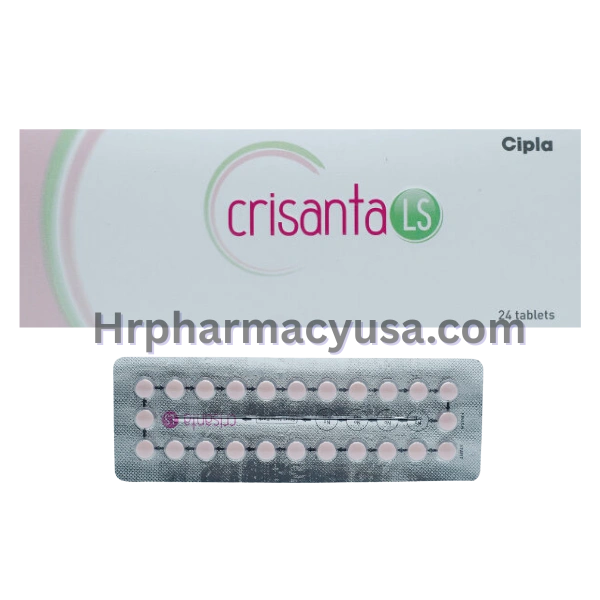
Crisanta LS (Ethinylestradiol/Drospirenone)
Price range: $15.00 through $30.00
Crisanta LS (Ethinylestradiol/Drospirenone) is a prescription combined birth control pill used to help prevent pregnancy. It works by stopping ovulation and making it harder for sperm to reach an egg. Like other hormonal contraceptives, it may also help make periods more predictable for some people. Your clinician can confirm if it fits your health history.
| Active Ingredient: | Ethinylestradiol/Drospirenone |
|---|---|
| Indication: | Contraception |
| Manufacturer: | Cipla Limited |
| Packaging: | 24 tablets in strip |
| Delivery Time: | 6 To 15 days |
In Stock
What is Crisanta LS (Ethinylestradiol/ Drospirenone)
Crisanta LS (Ethinylestradiol/Drospirenone) is a prescription oral contraceptive that combines two hormones: an estrogen (ethinylestradiol) and a progestin (drospirenone). People often look for this kind of “combined pill” when they want reliable pregnancy prevention that does not require a device or an injection. If you have ever felt overwhelmed by the number of birth control options, you are not alone. Many people just want something consistent, easy to fit into a routine, and guided by clear medical advice.What Crisanta LS is used for
Crisanta LS is primarily used to prevent pregnancy. Combined oral contraceptives work mainly by preventing ovulation (so an egg is not released). They also thicken cervical mucus, which can make it harder for sperm to move, and they can change the uterine lining. These are standard mechanisms for combination birth control pills. Some clinicians may also consider combined pills for cycle control goals, such as reducing irregular bleeding patterns, depending on the individual and the exact product. Not every benefit you see online applies to every pill, so it is worth confirming expectations with a clinician.What makes drospirenone different
Drospirenone is a progestin with properties that can affect fluid balance and potassium levels in the body. For many people, this does not cause problems. For others, it matters a lot, especially if you have kidney, liver, or adrenal problems, or if you take medications that can raise potassium levels (such as certain blood pressure medicines, potassium supplements, or some anti-inflammatory medicines used frequently). Because of this, clinicians sometimes recommend potassium monitoring early on for higher-risk patients.Important safety notes people should know upfront
Combined hormonal contraceptives carry a risk of blood clots. The risk is higher if you smoke and are over age 35, and it is also higher in certain medical situations or personal/family histories. This is one of the main reasons a real medical review matters before starting or restarting a pill. You should also know that birth control pills do not protect against sexually transmitted infections. Barrier protection is still the go-to for STI prevention.Possible side effects
Side effects vary a lot from person to person. Some people notice nausea, breast tenderness, headaches, spotting between periods, or mood changes, especially in the first few months. Others feel fine quickly. Serious symptoms like chest pain, sudden shortness of breath, severe leg pain/swelling, or sudden vision changes need urgent medical attention because they can be signs of a clot. This safety guidance is consistent with FDA labeling for combined oral contraceptives.Drug interactions to know
A few medication categories can reduce contraceptive reliability by affecting hormone levels. Certain seizure medications and some tuberculosis treatments are well-known examples. Also, vomiting or severe diarrhea can interfere with absorption. If you are starting a new prescription, it is smart to ask directly if it interacts with hormonal contraception.Available strengths in the market
Crisanta LS refers to a drospirenone plus ethinylestradiol combination, and drospirenone/ethinylestradiol products are commonly marketed in these strengths:
- Ethinylestradiol 0.02 mg / Drospirenone 3 mg (often considered a lower-estrogen option)
- Ethinylestradiol 0.03 mg / Drospirenone 3 mg
- Ovral L Tablet (Ethinyl Estradiol/Levonorgestrel)
- Progynova 2 mg (Estradiol)
FAQs for Crisanta LS
1. When does Crisanta LS start working to prevent pregnancy?
It depends on when you start your cycle and whether you are switching from another method. Your prescriber or pharmacist can tell you if back-up contraception is needed at the start.2. What should I do if I miss one pill or more than one pill?
Follow the missed-pill instructions that come with your exact pack, since directions can differ by week and by product schedule. If you are unsure, ask a pharmacist promptly.3. Can I skip the inactive pills to avoid having a period?
Some people use continuous or extended cycling with certain pills, but it should be done with a clinician's guidance to reduce breakthrough bleeding and avoid confusion with pack timing.4. Do common antibiotics make Crisanta LS less effective?
Most antibiotics do not, but a few medications do interact with hormonal contraception. Always check with a pharmacist before starting a new medication.5. Will my fertility come back after I stop Crisanta LS?
For many people, ovulation returns soon after stopping combined pills, but timing varies. If cycles do not return as expected, a clinician can evaluate other causes.| size | 24 Tablet/s, 48 Tablet/s, 72 Tablet/s |
|---|

Reviews
There are no reviews yet.