


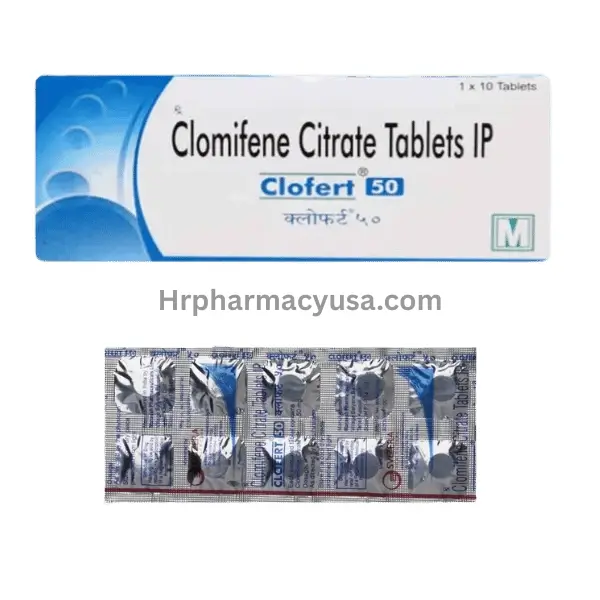
Clofert 50 mg (Clomiphene)
Price range: $18.00 through $41.25
Clofert 50 mg (Clomiphene) is a prescription fertility medicine used to help trigger ovulation in people who do not ovulate regularly, often with PCOS. It works by encouraging the body to release hormones needed to mature and release an egg. Use only under medical guidance with cycle tracking and monitoring.
| Active Ingredient: | Clomiphene |
|---|---|
| Indication: | Female infertility |
| Manufacturer: | Svizera Maneesh Pharma |
| Packaging: | 10 Tablets in Strip |
| Strength: | 50 mg |
| Delivery Time: | 6 To 15 days |
In Stock
About Clofert 50 mg (Clomiphene)
Clofert 50 mg (Clomiphene) is a well-known ovulation induction medicine that many fertility specialists use when pregnancy is difficult because ovulation is not happening reliably. It contains clomiphene citrate, the same active ingredient found in brand-name Clomid, and it is typically used as a first-step option before moving on to injectable fertility medications.What Clofert 50 mg is used for
The most common use for clomiphene is helping people with ovulatory dysfunction (meaning the ovaries are not releasing an egg regularly). It is often prescribed when irregular or absent ovulation is linked to PCOS (polycystic ovary syndrome), cycle irregularity, or unexplained ovulation problems. Some clinicians also prescribe clomiphene for certain male fertility or hormone-related concerns (an off-label use). If that is your situation, it is worth discussing expected benefits and monitoring with a specialist, since goals and lab follow-up can be different.How Clofert Works
Clofert works by signaling the brain to increase the hormones that stimulate the ovaries. That hormone push can help follicles develop and lead to ovulation. In many cycles, ovulation happens several days after the last tablet, which is why timing and tracking matter.Typical dosing and how it is taken
Most protocols start with 50 mg once daily for 5 days, taken early in the menstrual cycle. A typical schedule is cycle days 3 to 7 or 5 to 9, depending on your clinician's plan. If ovulation does not occur, the dose may be increased in a later cycle (often to 100 mg daily, usually by taking two 50 mg tablets). Many clinicians limit the number of treatment cycles, frequently around 3 to 6 cycles, because success rates tend to drop after that, and it may be time to reassess the plan. Because response varies, many patients are advised to track ovulation using ultrasound monitoring, bloodwork, or ovulation predictor kits, depending on the clinic and their risk factors.What to expect while using it
People often notice changes that come from shifting estrogen levels. Some cycles feel normal, and some feel more "hormonal." It is also common for clinicians to talk about timing intercourse or performing an IUI (intrauterine insemination) based on when ovulation is expected.Side effects of Clofert 50 mg
Side effects can range from mild to more disruptive. Possible side effects include:- Hot flashes
- Bloating or pelvic discomfort
- Breast tenderness
- Nausea
- Headache
- Mood changes
- Spotting or changes in cervical mucus
- Vision changes (blurred vision, spots, flashes). This should be reported promptly and may require stopping the medication.
- Ovarian enlargement and, rarely, ovarian hyperstimulation (more common with injectables, but still a concern).
- Increased chance of multiple pregnancy (twins are the most discussed risk).
Who should be cautious or avoid it?
Your prescriber will screen for conditions where clomiphene is not appropriate. It is generally not used in people with:- Pregnancy (it should not be taken once pregnant)
- Liver disease or a history of significant liver problems
- Unexplained abnormal uterine bleeding
- Certain ovarian cysts are not related to PCOS.
- Uncontrolled thyroid or adrenal disorders
Storage tip
Store at room temperature, away from heat and moisture, and keep it out of reach of children.Available Strengths and Dosage Options
Clofert is commonly seen as 50 mg tablets. Clomiphene citrate may also be found in other strengths depending on the manufacturer and market availability, such as:- 25 mg tablets
- 50 mg tablets
- 100 mg tablets (or achieved by taking two 50 mg tablets if directed)
Alternatives
If clomiphene is not a good fit, or if it does not lead to ovulation or pregnancy, clinicians may consider:- Letrozole (Femara): commonly used for ovulation induction, especially in PCOS
- Gonadotropin injections (FSH products such as Gonal-f, Follistim): stronger ovarian stimulation with closer monitoring
- hCG trigger shots (such as Ovidrel or Pregnyl): used to time ovulation once follicles are ready
- Metformin (for selected patients with PCOS and insulin resistance): sometimes used alongside ovulation meds
- Tamoxifen: occasionally used off-label for ovulation induction in specific cases
FAQs About Clofert 50 mg
Do I need a prescription for Clofert 50 mg (Clomiphene)?
Yes. Clomiphene is a prescription-only fertility medication and should be used under a clinician's supervision.What should I do if I miss a dose?
Contact your prescriber or clinic for instructions. Because dosing is tied to cycle days, doubling up without guidance can cause timing problems.Can I drink alcohol while taking clomiphene?
Ask your clinician. Alcohol may worsen side effects like headaches or nausea, and many fertility plans recommend limiting alcohol while trying to conceive.Can I cut or crush the tablet?
If swallowing is difficult, ask a pharmacist first. Some tablets can be split, but you should confirm the tablet type and get the correct dose.When should I take a pregnancy test after a clomiphene cycle?
Your clinic may recommend a specific day based on ovulation timing or IUI timing. Testing too early can be misleading, so follow their schedule.| size | 30 Tablet/s, 60 Tablet/s, 90 Tablet/s |
|---|


Reviews
There are no reviews yet.