


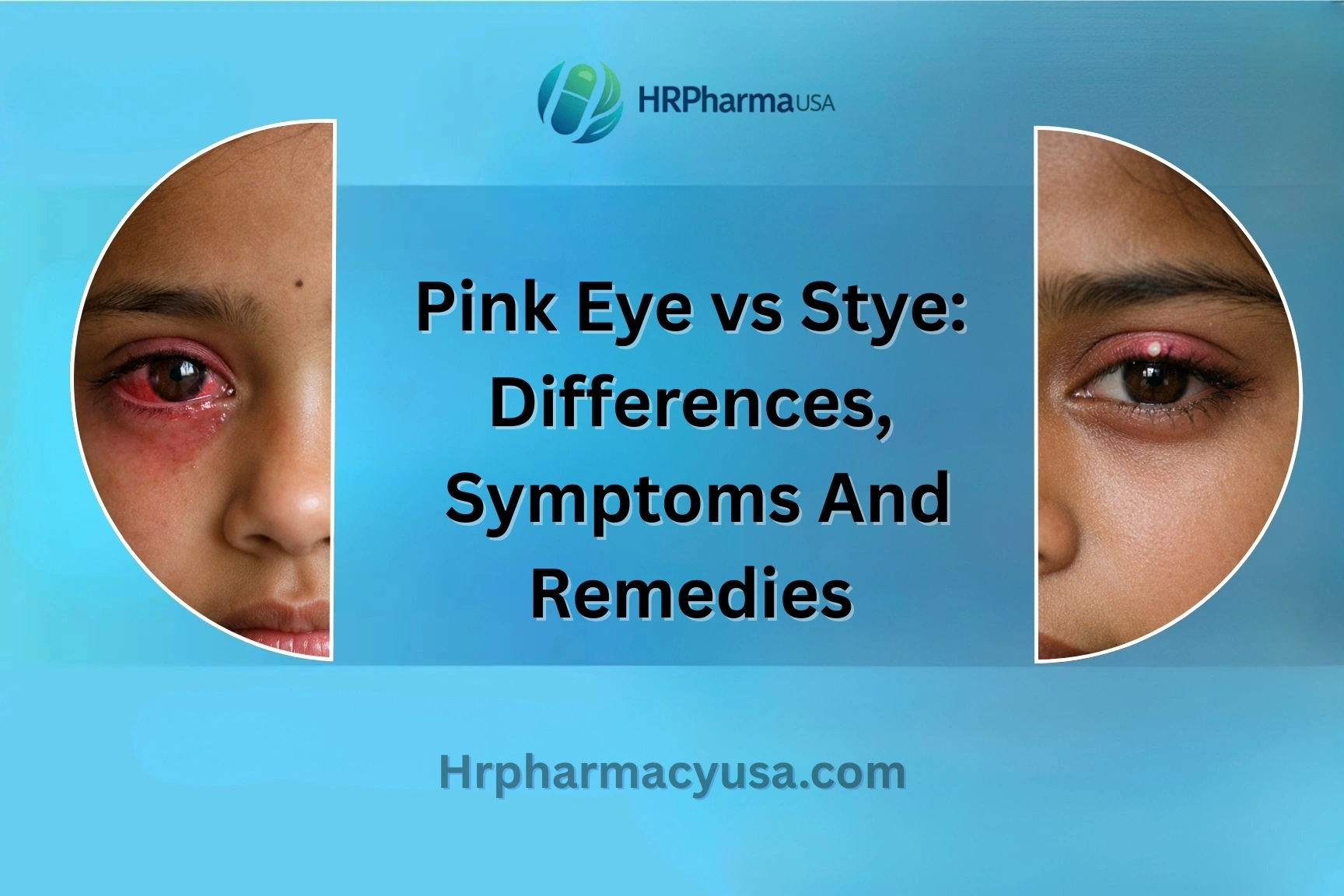
When your eye turns red, or your eyelid swells up, it can feel like your face is staging a tiny rebellion. Is it pink eye? A stye? Both can look dramatic, but they’re different problems—and the right fix depends on which one you’re dealing with.
Pink eye (conjunctivitis) is inflammation of the thin, clear tissue over the white of the eye and inner eyelids. A stye (hordeolum) is more like a pimple-like infection/inflammation of an eyelid oil gland or hair follicle.
Comparison Table: Pink Eye vs Stye
| Main location | Surface of the eye + inner lid | Eyelid margin or inside eyelid |
| Look | Diffuse redness, watery or gooey discharge | Localized tender bump, swelling |
| Sensation | Gritty, itchy, irritated | Painful, sore, “bruise-like” spot |
| Discharge | Watery (viral/allergy) or thick (bacterial) | Usually minimal; may tear more |
| Contagious | Often (viral/bacterial) | Not typically person-to-person |
| Best home care | Cool compress, lubrication, hygiene | Warm compress, lid hygiene |
| Typical timeline | Days to ~2 weeks (depends on cause) | Often improves within ~1–2 weeks |
The One-Sentence Rule of Thumb
If the white of your eye looks uniformly pink/red and feels gritty/itchy, think pink eye; if there’s a tender, swollen bump on the eyelid edge, think stye.
What Is Pink Eye
Pink eye is inflammation of the conjunctiva—the clear membrane covering the white part of your eye and lining the inside of your eyelids. When it gets irritated or infected, it can turn your eye pink/red and make it water or ooze.
Pink eye isn’t one single thing. It’s more like a “trash can diagnosis” for several causes that all look similar at first glance. The cause matters because treatment and contagiousness change depending on the type.
Types of Pink Eye
Viral Conjunctivitis
This is the classic “caught it from someone” pink eye. It often starts in one eye and then crashes the party in the other eye within a day or two. Expect watery tearing, irritation, and sometimes cold symptoms tagging along (sore throat, runny nose). Viral conjunctivitis is commonly contagious.
Bacterial Conjunctivitis
This type is more likely to produce thicker discharge—think yellow/green goop—and to cause eyelids to stick together in the morning. It can be contagious too, especially in close-contact settings. Some cases are mild and self-limited, but others may need prescription antibiotic drops depending on severity and risk factors.
Allergic Conjunctivitis
If your eyes are itchy like you’ve been crying through pollen season, allergies might be the culprit. Allergic conjunctivitis often affects both eyes and is often accompanied by sneezing or a runny nose. It’s not contagious.
Irritant and Chemical Conjunctivitis
Smoke, chlorine, shampoo, fumes—your eyes can react fast to irritants. This type can feel intense at first, but often improves once the irritant is gone. Chemical exposures can be serious; flushing the eye promptly and getting urgent evaluation is important, depending on what got in
What Is a Stye
A stye is a tender, inflamed bump on the eyelid, usually caused by a clogged gland that becomes irritated or infected. It’s basically your eyelid’s version of a clogged pore—except it hurts more and sits in a spot you can’t ignore.
Clinically, a stye is called a hordeolum. It often appears along the lash line or just inside the eyelid.
External vs Internal Style
External Stye
An external stye forms near the base of an eyelash (often involving a lash follicle or nearby glands). It’s usually easy to spot: a red, swollen bump right on the lid edge.
Internal Stye
An internal stye forms deeper within one of the oil glands of the eyelid. It can cause more diffuse lid swelling and tenderness, sometimes without a distinct “pimple head” on the surface.
Stye vs Chalazion: The Common Mix-Up
A chalazion is usually a blocked oil gland, too, but it tends to be less painful and more like a firm lump that lingers. People often call any eyelid lump a stye, but if it’s not tender and persists, it's more likely a chalazion.
Causes and Triggers
How Pink Eye Starts
Pink eye begins when the conjunctiva becomes irritated or inflamed. Common triggers include:
- Viruses (often the same families that cause colds)
- Bacteria
- Allergens like pollen, dust mites, and pet dander
- Irritants like smoke, chlorine, and pollution
- Contact lens issues (overwear, poor cleaning, sleeping in lenses)
Because some causes are contagious and some aren’t, the origin story matters.
How a Stye Starts
Styes usually begin with a blocked oil gland or irritated lash follicle. Helpful (and common) contributing factors:
- Touching/rubbing your eyes with unwashed hands
- Eye makeup buildup, old mascara, not removing makeup fully
- Blepharitis (chronic eyelid inflammation)
- Skin conditions like rosacea
- Contact lens handling without good hygiene
Think of it like a tiny traffic jam in an oil gland—then inflammation pulls up like emergency vehicles, and now you’ve got swelling and pain.
Symptoms: What You Feel
Pink Eye Symptoms
Pink eye usually feels like irritation on the surface of the eye:
- Burning, stinging, or gritty feeling (“sand in my eye”)
- Itching (especially with allergies)
- Excess tearing
- Mild light sensitivity
- Feeling like something is in your eye (but nothing is)
Stye Symptoms
A stye feels more like a sore spot in the eyelid:
- Localized eyelid pain and tenderness
- Swelling of part (or most) of the eyelid
- Sensation of a bump or pressure
- Tearing and sensitivity because the lid is irritated
Signs: What You See in the Mirror
Where the Redness Shows Up
- Pink eye: Redness is usually spread across the white of the eye, sometimes more intense near the eyelids.
- Stye: The eye itself might look a little watery or mildly red, but the main event is the eyelid bump/swelling.
Discharge, Crusting, and Tearing
- Pink eye: Can be watery (viral/allergic) or thicker and crustier (more typical in bacterial cases).
- Stye: More often just watery tearing; you might see a little crusting along lashes if there’s associated eyelid inflammation, but it’s usually not the same “both lids glued shut” vibe.
Swelling Location: Eyelid vs Eyeball
Here’s a simple mirror check:
- If the eyelid looks like it’s growing a painful pimple—stye.
- If the eyeball surface looks inflamed and glossy, it is red—pink eye.
Pain, Itch, and the “Sand in My Eye” Feeling
This is where the body’s signals can be surprisingly useful:
- Itch is a big clue for allergies. If you want to rub your eyes like you’re trying to buff a scratch out of glass, allergic conjunctivitis climbs the suspect list.
- Pain that’s pinpoint and tender (especially when you touch the lid) points to a stye.
- Gritty irritation across the whole eye suggests pink eye.
That said, you can have overlap—especially if you’ve been rubbing your eye nonstop. Rubbing can inflame the conjunctiva and irritate the eyelid, turning one problem into a messy combo.
Is It Contagious
When Pink Eye Spreads
Viral and bacterial conjunctivitis can be contagious, commonly spreading through direct contact with eye secretions, contaminated hands, towels, and pillowcases, and through respiratory droplets in viral illnesses. Good hand hygiene and not sharing personal items matter a lot.
Allergic and irritant pink eye are not contagious. Nobody “catches” pollen from your eyeballs.
Are Styes Contagious: The Myth and the Truth
A stye itself isn’t typically considered contagious in the way pink eye is. It’s usually your own eyelid gland getting blocked and inflamed. Still, the bacteria that live on skin can spread through shared makeup or poor hygiene—so it’s smart to treat it like a “don’t share eye stuff” situation.
Who’s Most at Risk
Kids, School, and Daycare
Kids touch everything, then touch their faces, then touch everything again. That’s basically a perfect delivery system for contagious conjunctivitis. Frequent handwashing and teaching “hands off your eyes” helps—but yes, that’s like asking a cat to respect boundaries.
Contact Lens Wearers
Contact lenses raise the stakes. Red, painful eyes in contact lens wearers can signal problems beyond simple conjunctivitis, including corneal inflammation or infection. If you wear contacts and your eyes become red, painful, or light-sensitive, stop wearing lenses and consider prompt evaluation. Public health guidance emphasizes that contact lens wearers should remove lenses when pink eye symptoms occur.
Blepharitis, Rosacea, and Eye Makeup Habits
If you deal with chronic eyelid irritation (blepharitis) or rosacea, your eyelid glands can clog more easily. Old makeup, sleeping in mascara, and not cleaning lids can also set the stage for repeated styes.
How It’s Diagnosed
Questions a Clinician Will Ask
Expect questions like:
- One eye or both?
- Itching or pain?
- Watery or thick discharge?
- Any cold symptoms?
- Any allergy history?
- Contact lens use?
- Any vision changes or significant light sensitivity?
Those answers often point strongly to the right bucket: viral, bacterial, allergic, irritant, or eyelid-gland issue.
When Tests or Cultures Matter
Most cases don’t need special tests. Cultures may be considered in severe, recurrent, or unusual cases, or when certain high-risk infections are a concern.
Home Remedies That Actually Help
Let’s keep this practical: home care is often the main treatment for mild cases, and it can make you feel dramatically better.
At-Home Relief for Pink Eye
Cool Compresses
A cool, clean compress can calm irritation and reduce swelling—especially for allergy-related pink eye. Use a clean cloth each time. Think “spa day for your eyes,” not “reuse the same mystery towel.”
Artificial Tears and Comfort Care
Over-the-counter lubricating eye drops (artificial tears) can reduce the gritty feeling and dilute irritants. Avoid drops that “get the red out” (vasoconstrictors) for frequent use, since they can cause rebound redness in some people.
Hygiene That Stops Reinfection
If contagious pink eye is on the table:
- Wash your hands often.
- Don’t share towels/pillowcases.
- Change pillowcases regularly while symptomatic.
- Avoid touching your eyes.
- Don’t share eye makeup, and consider replacing products used during infection.
At-Home Relief for a Stye
Warm Compresses
Warm compresses are the MVP for styes. Heat helps loosen blocked oils and encourages natural drainage. Many eye-health orgs recommend warm compresses as first-line home care.
How to do it:
- Use warm (not hot) water on a clean cloth.
- Hold the closed eyelid for about 10–15 minutes.
- Repeat 3–5 times daily.
Lid Massage After Heat
After warming, a gentle massage along the lid (toward the lash line) can help move clogged oil. Gentle is the keyword—no aggressive squeezing.
Gentle Lid Cleaning
If your lids are crusty or you have blepharitis tendencies, gentle lid hygiene can help:
- Use a clean, warm cloth to wipe the lash line.
- Or use commercially available eyelid wipes.
Treatments You Might Need
Pink Eye Medications
When Antibiotic Drops Make Sense
Antibiotic eye drops/ointments are used for certain cases of bacterial conjunctivitis, especially when symptoms are moderate-to-severe, there’s significant purulent discharge, or in higher-risk situations. Viral conjunctivitis doesn’t improve with antibiotics. Patient guidance commonly notes that treatment depends on the cause.
If you’re unsure whether it’s viral or bacterial, the pattern (watery vs thick discharge, one eye vs both, associated cold symptoms) can hint—but a clinician’s exam is the safest way to decide when meds are appropriate.
Allergy Treatments
For allergic conjunctivitis, options include:
- Allergen avoidance (when possible)
- Cold compresses
- OTC antihistamine/mast-cell stabilizer eye drops
- Oral allergy meds if you already use them
AAO patient resources discuss allergy-related eye inflammation and typical management approaches.
Stye Treatments
Prescription Ointments or Drops
If a stye doesn’t improve, if there’s significant surrounding eyelid redness, or if a clinician suspects associated infection of the lid margin, they may recommend prescription treatment. Warm compresses still remain core. (AAO notes most styes improve with warm compresses, with medical care for persistent/worsening cases)
Drainage and When It’s Needed
Some styes (or chalazia) don’t resolve with home care. In-office procedures can safely drain or treat the lump. This is especially relevant if:
- The lump persists for weeks.
- It’s large and pressing on the eye.
- It keeps coming back in the same spot.
What Not to Do
Don’t Pop, Squeeze, or “DIY Drain”
It’s tempting—because it looks like a pimple. But the eyelid is delicate real estate. Squeezing can worsen inflammation, spread infection, and delay healing. Warm compresses beat “bathroom mirror surgery” every time.
Contact Lenses and Makeup Rules
- If your eye is red or irritated, pause contact lens wear until symptoms resolve and you’ve cleaned/replaced supplies as appropriate. The CDC specifically advises stopping contact lens use with pink eye symptoms.
- Skip eye makeup during active symptoms.
- Consider replacing mascara/liner used right before or during the issue, especially if the issue is contagious conjunctivitis.
Avoid Sharing Towels and Eye Products
If there’s even a chance of contagious pink eye, treat towels, pillowcases, and makeup like they’re part of the problem—because they can be.
Red Flags You Shouldn’t Ignore
Get prompt medical care if you have:
- Moderate to severe eye pain
- Vision changes (blurred vision that doesn’t clear with blinking, reduced vision)
- Significant light sensitivity
- A feeling that something is stuck in your eye that doesn’t improve
- Worsening redness/swelling, especially spreading around the eye.
- Symptoms after a chemical exposure
- Red eye with contact lens use plus pain/light sensitivity (greater concern for corneal issues)
These caution signs are consistent with widely used patient guidance for red eye evaluation (e.g., CDC’s emphasis on seeking care for severe symptoms and special situations).
Higher-Risk Situations
Seek medical advice sooner if:
- A newborn has eye discharge/redness.
- You’re immunocompromised
- You have a history of serious eye disease or surgery.
- You suspect herpes-related eye disease (which can cause a painful red eye and needs prompt treatment)
Prevention Tips That Work
Everyday Habits
- Wash hands like it actually matters (because it does)
- Don’t rub your eyes—your fingers are basically public transit for germs.
- Don’t share eye makeup or towels.
- Remove makeup fully at night.
- Replace old eye makeup regularly.
Contact Lens Hygiene Essentials
- Wash and dry your hands before handling lenses.
- Don’t sleep in lenses unless specifically prescribed.
- Clean lenses as directed and replace cases regularly
- Never rinse lenses with tap water.
Recovery Timeline: What to Expect
Healing depends on the cause, but here’s a realistic vibe check:
- Viral pink eye: Often peaks for a few days, then gradually improves over 1–2 weeks. It can be contagious early on.
- Bacterial pink eye: May improve over several days; if treated, symptoms often settle faster, but follow the clinician's instructions.
- Allergic pink eye: Improves as triggers are controlled; can flare seasonally or with exposures.
- Stye: Many start improving within several days of warm compresses and continue to settle over 1–2 weeks. Persistent lumps may behave more like chalazia and take longer to resolve.
If you’re doing the right home care and it’s still getting worse, that’s your cue to level up to medical evaluation.
Conclusion
Pink eye and styes can both make you look (and feel) like you lost a fight with a dust bunny, but the difference is usually location: pink eye irritates the surface of the eye, while a stye is a painful eyelid bump from a clogged gland.
Use cool compresses and hygiene for pink eye comfort, warm compresses and lid care for styes, and don’t ignore red flags like significant pain, light sensitivity, or vision changes.
FAQs About Pink Eye vs Stye
Can pink eye turn into a stye?
Not directly, but they can be connected by behavior. If pink eye makes you rub your eyes a lot, that irritation and germ transfer can increase the chance of an eyelid gland getting clogged or inflamed—setting the stage for a stye.
Is a stye the same thing as pink eye
No. Pink eye is inflammation of the conjunctiva (the surface lining of the eye), while a stye is a localized, tender bump in the eyelid from an irritated or infected gland/follicle. They can happen at the same time, but they’re different problems.
What’s the fastest way to get rid of a stye
Consistent warm compresses (10–15 minutes, several times a day) plus gentle lid hygiene is usually the best at-home approach. Avoid squeezing it. If it’s not improving or keeps returning, medical treatment may be needed.
Should you stay home with pink eye?
If it’s viral or bacterial, it can spread through close contact and contaminated hands/items, so minimizing spread is important—especially in schools, daycares, and shared workplaces. Hygiene is key: handwashing, not sharing towels, and avoiding touching your eyes. Local school/work policies vary, and a clinician can help guide return-to-group settings.
How do you tell if it’s bacterial pink eye?
Thicker yellow/green discharge and eyelids sticking together in the morning can suggest bacterial conjunctivitis, but it’s not foolproof. Viral cases can still look messy, and allergies can mimic infection. If symptoms are significant or persistent, or if you wear contacts, a clinician’s exam is the safest call.

