


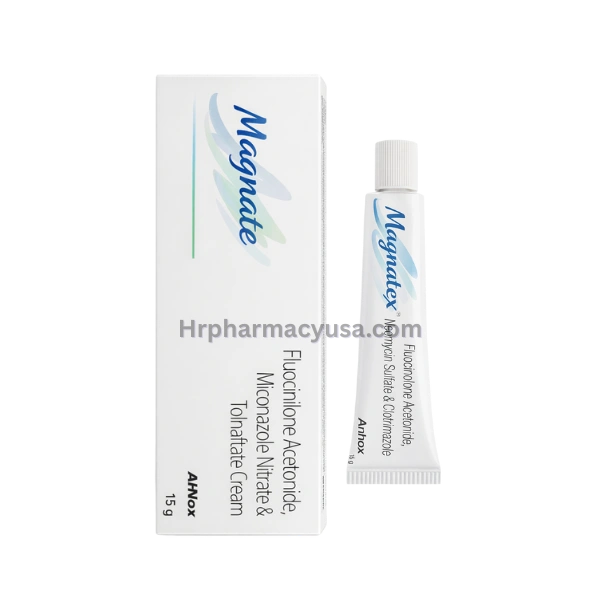
Magnalyte Cream (Flucinolone Acetonide/Hydroquinone/Tretinoin)
Price range: $8.00 through $40.00
Magnalyte Cream (Flucinolone Acetonide/Hydroquinone/Tretinoin) is a prescription triple-combination cream used for stubborn facial hyperpigmentation like melasma and dark spots. It pairs a mild steroid with a pigment reducer and a retinoid to help fade discolouration and smooth tone. Use a thin layer at night exactly as directed by your clinician, plus daily sunscreen. Most people notice a gradual change over several weeks.
| Active Ingredient: | Flucinolone Acetonide/Hydroquinone/Tretinoin |
|---|---|
| Indication: | Melasma |
| Manufacturer: | Anhox Healthcare Pvt Ltd |
| Packaging: | 15 gm in 1 tube |
| Delivery Time: | 6 To 15 days |
In Stock
What is Magnalyte Cream?
Magnalyte Cream (Flucinolone Acetonide/Hydroquinone/Tretinoin) is one of those combo prescription creams that dermatology providers often reach for when dark patches are not responding to basic brightening products. If you are dealing with melasma, uneven tone, sun spots, or post-acne marks that keep coming back, this triple therapy is designed to target discolouration from multiple angles at once. This formula combines three well-known topical ingredients:- Fluocinolone acetonide: a low-strength corticosteroid that helps calm inflammation and irritation. Inflammation can make discolouration look worse and can also be triggered by more potent active ingredients.
- Hydroquinone: a depigmenting agent that helps reduce excess melanin production. It is commonly used under medical supervision for dark spots and melasma.
- Tretinoin: a retinoid that increases skin cell turnover. This can help fade pigmented areas over time and improve the look of texture and uneven tone.
What people typically use it for
Magnalyte Cream is generally used on areas of facial hyperpigmentation, especially melasma patterns on the cheeks, upper lip, forehead, or jawline. Some people also ask about dark spots from acne or sun exposure. Your prescriber is the best person to confirm whether this specific combination is appropriate for your skin concern and skin type.How it is usually applied
Most directions for similar triple-combination creams recommend once-daily evening application. The goal is not to coat the skin. A thin layer on the affected areas is usually enough. Applying more than instructed does not speed results and increases the risk of irritation. A practical approach many clinicians recommend is keeping the rest of your routine simple while using this medication:- Use a gentle cleanser
- Use a plain moisturiser if needed for dryness.
- Avoid stacking multiple potent actives at the same time unless your prescriber specifically told you to (examples include exfoliating acids or benzoyl peroxide)
Sun protection matters
With melasma and dark spots, sun exposure can undo progress quickly. Tretinoin can also make skin more sensitive to sunlight. Daily broad-spectrum sunscreen and limiting direct sun are not "extras" with this kind of treatment. They are part of the plan.What results can look like
Fading hyperpigmentation is usually gradual. Some people see early improvement in a few weeks, while more profound or long-standing patches can take longer. Melasma in particular tends to be chronic, meaning it can flare again, especially with sun exposure, heat, and hormonal triggers. Because of that, many treatment plans focus on both fading current patches and preventing relapse.Side Effects of Magnalyte Cream
Because this cream combines a retinoid, hydroquinone, and a steroid, irritation is possible, especially early on. You may notice redness, dryness, peeling, or stinging. If you develop significant burning, swelling, blistering, or a rash, stop using it and contact your prescriber. Long-term or incorrect use of topical steroids can cause skin thinning and other changes, and hydroquinone is not meant to be used continuously without medical oversight. Follow the exact schedule your clinician gave you, including the duration.Who should be extra cautious?
Tell your prescriber if you have very sensitive skin, eczema, rosacea, frequent sun exposure, or a history of reactions to hydroquinone or retinoids. Also mention any other prescription topicals you are using so your regimen can be planned safely.Available Strengths
Triple-combination creams like this are most commonly found in this strength:- Magnalyte Plus Cream (Flucinolone Acetonide/Hydroquinone/Tretinoin)
- Fluocinolone acetonide 0.01% / Hydroquinone 4% / Tretinoin 0.05%
FAQs About Magnalyte Cream
What should I do if I accidentally apply too much?
Gently wipe off the excess and return to your regular schedule. If you get intense irritation or burning, contact your prescriber.Is Magnalyte Cream safe to use while breastfeeding?
This depends on where it is applied and your individual situation. Discuss it with your prescriber so you get guidance tailored to you.Can I use Magnalyte Cream right after a chemical peel or laser treatment?
It is often not recommended immediately after procedures, as the skin can be extra reactive. Ask the clinician who did the procedure before restarting.Can I store Magnalyte Cream in the refrigerator?
Usually, it is stored at room temperature, away from heat and moisture. If your label says something different, follow that. When in doubt, ask your pharmacist.Can I wear makeup the next morning?
Many people do, as long as the skin is not overly irritated. Use gentle products and remove makeup carefully to avoid extra friction.| size | 1 Cream, 12 Cream/s, 3 Cream/s, 6 Cream/s |
|---|


Reviews
There are no reviews yet.