


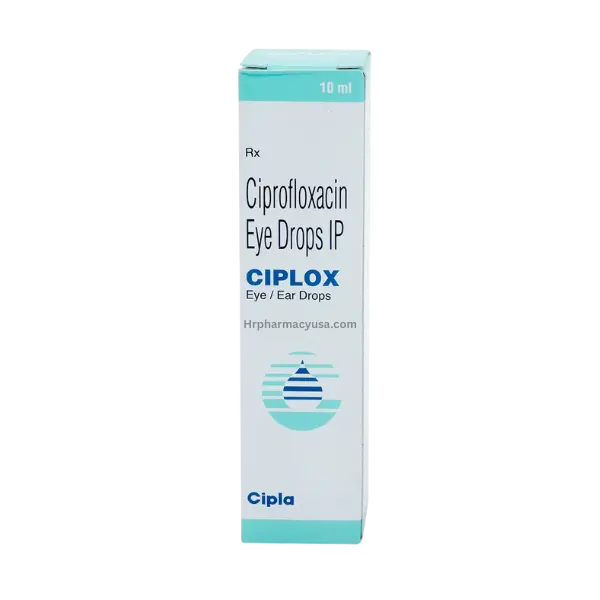
Ciplox Eye Drops (Ciprofloxacin)
Price range: $15.00 through $53.75
Ciplox Eye Drops (Ciprofloxacin) is a prescription antibiotic eye solution used to treat bacterial eye infections like bacterial conjunctivitis and corneal ulcers. The ciprofloxacin formula targets bacteria at the source, helping reduce redness, discharge, and irritation when used as directed. It is not for viral or allergic pink Eye. In the United States, ciprofloxacin eye drops are prescription only. Always follow your eye doctor's instructions for dose and duration.
| Active Ingredient: | Ciprofloxacin |
|---|---|
| Indication: | Bacterial Infections |
| Manufacturer: | Cipla Limited |
| Packaging: | 10 ml in 1 packet |
| Delivery Time: | 6 To 15 days |
In Stock
What is Ciplox Eye Drops (Ciprofloxacin)
Ciplox Eye Drops (Ciprofloxacin) is a fluoroquinolone antibiotic eye drop that helps clear bacterial infections on the surface of the Eye. If you have symptoms like yellow or green discharge, red and gritty eyes, or eyelids stuck together in the morning, your provider may evaluate you for bacterial conjunctivitis. Ciprofloxacin 0.3% is commonly prescribed in the U.S. for this purpose and is also used for corneal ulcers when bacteria have penetrated more deeply into the corneal surface. Ciplox is a brand name used in some countries. In the United States, the active ingredient is available as ciprofloxacin ophthalmic solution 0.3% and has been sold under brand names like Ciloxan, as well as generic versions. The medical information below focuses on the active ingredient ciprofloxacin 0.3%. If you are unsure about brand-to-generic substitutions, check with your prescriber or pharmacist.What Ciprofloxacin Eye Drops Treat
- Bacterial conjunctivitis. Often called bacterial pink Eye. Typical signs include red eyes, thick or crusty discharge, irritation, and sometimes eyelid swelling.
- Susceptible bacteria cause corneal ulcers. This is a more serious infection that requires close follow-up with an eye specialist.
What it does not treat
- Viral conjunctivitis. It is often linked to colds and is very contagious. Antibiotics will not help.
- Allergic conjunctivitis. It is usually itchy and watery, often seasonal, and responds better to anti-allergy drops.
- Fungal or parasitic eye infections.
- Noninfectious irritation from dryness, dust, or chemical exposure.
How Ciprofloxacin Works
Ciprofloxacin stops bacteria from multiplying by blocking key enzymes they need to copy their DNA. That makes it harder for the infection to spread, giving your body the upper hand to clear it. Because the drops go directly into the Eye, you get targeted treatment with minimal systemic absorption.How to Use Ciprofloxacin Eye Drops
Always use exactly as your eye care provider prescribes. Dosing can vary by diagnosis and severity. Common approaches in U.S. practice include:- For bacterial conjunctivitis. Your doctor may advise frequent dosing at first, then less often as symptoms improve over several days.
- For corneal ulcers. Dosing can be intensive at the start, sometimes as often as every 15 to 30 minutes on day one, then gradually reduced. This kind of regimen should be guided closely by an ophthalmologist.
General Tips
- Wash your hands well.
- Tilt your head back and look up.
- Gently pull down the lower eyelid to create a small pocket.
- Hold the dropper above the Eye without touching the tip to your Eye or lashes.
- Squeeze one drop into the pocket, then close your Eye gently for 1 to 2 minutes.
- Use punctal occlusion. Press the inner corner of your Eye near the nose for 1 to 2 minutes to reduce drainage into the nose and throat. This can improve the local effect and minimize aftertaste.
- If you use other eye medications, wait at least 5 to 10 minutes between them. Use drops before ointments when both are prescribed.
- Remove contact lenses before using antibiotic drops. You can usually resume lenses once your provider says the infection has cleared.
How long until you feel better
- Many people with bacterial conjunctivitis notice improvement in redness and discharge within 24 to 48 hours when they use the drops correctly.
- Corneal ulcers take longer and need close monitoring by an ophthalmologist. Expect a more gradual recovery.
Ciplox Eye Drops Side Effects
- Mild burning or stinging for a few seconds after instilling drops
- Temporary blurred vision
- Eye irritation, redness, or itching
- A transient bad taste in the mouth after dosing
- Light sensitivity
- Eyelid crusting
Less common but reported
- White crystalline deposits on the cornea, especially in corneal ulcer treatment with frequent dosing. These usually resolve when treatment is adjusted or completed.
- Allergic reactions to ciprofloxacin or other quinolones. Stop use and seek care if you develop severe redness, swelling, rash, or difficulty breathing.
Who should talk to a clinician before using
- People with a known allergy to ciprofloxacin, other quinolone antibiotics like levofloxacin or moxifloxacin, or any ingredient in the drops
- Those with severe eye pain, sudden vision loss, intense light sensitivity, or an eye injury
- Contact lens wearers with significant redness and pain
- Pregnant or breastfeeding individuals. Topical absorption is low, but it is still smart to ask your provider to weigh the benefits and risks.
- Infants. In U.S. labeling, safety for ciprofloxacin ophthalmic has typically been established for children older than 1 year. For younger infants, a pediatric specialist should guide therapy.
Drug Interactions and Compatibility
Systemic interactions are unlikely because the medicine acts locally in the Eye. If you use multiple eye medications, separate them by at least 5 to 10 minutes, and use drops before ointments. If your regimen includes steroid eye drops, use them only if your eye doctor has prescribed them, since steroids can worsen some infections if misused.Practical Tips for Everyday Use
- Do not touch the dropper tip to your Eye, fingers, or any surface. That prevents contamination.
- If the solution looks cloudy, discolored, or has particles, do not use it.
- Avoid wearing contact lenses during active infection. Many providers recommend waiting at least 24 hours after symptoms resolve and discarding the lenses you wore when symptoms began.
- Use a clean tissue to dab excess fluid after dosing. Do not rub your eyes.
- If you miss a dose, apply it when you remember, unless it is close to the next scheduled time. Do not double the dose.
Storage and Handling
- Store at room temperature unless your product label says otherwise.
- Keep the bottle tightly closed and out of direct light.
- Keep out of reach of children.
- Check the expiration date. Many eye drops are discarded 4 weeks after opening to lower contamination risk, but follow the specific instructions on your bottle or ask a pharmacist, since guidance can vary by manufacturer.
Who typically gets ciprofloxacin eye drops
- Adults and kids with bacterial conjunctivitis verified or strongly suspected by a clinician.
- Contact lens wearers with suspected bacterial infections. These cases often need specific evaluation to rule out more serious diseases.
- Patients with corneal ulcers under the care of an eye specialist
What to expect during treatment
- First 1 to 2 days. Stinging with application is common. Discharge and redness should begin to improve if the infection is bacterial and sensitive to ciprofloxacin.
- Days 3 to 5. Symptoms usually continue to improve. Keep using as directed, even if the Eye looks better.
- Follow-up. Your provider may ask to recheck your eyes, especially if your symptoms are not improving or if a corneal ulcer was diagnosed.
When to call your doctor
- No improvement after 48 hours of correct use for suspected bacterial conjunctivitis
- Worsening redness, pain, or vision changes
- New light sensitivity or severe headache
- Signs of an allergic reaction, such as swelling of the face or throat
- Any concern about a corneal ulcer, or if you wear contact lenses, and your symptoms are severe
Important Safety Reminder
This page shares general information to help you understand how ciprofloxacin eye drops are used. It is not a substitute for professional medical advice. Use only as directed by your healthcare provider.FAQs About Ciplox Eye Drops (Ciprofloxacin)
Can Ciplox Eye Drops treat all types of pink Eye?
No. Pink Eye is a broad term. Ciprofloxacin eye drops are for bacterial pink Eye. They will not help viral or allergic conjunctivitis. A clinician can tell the difference and decide if antibiotics are appropriate.
How fast do Ciplox Eye Drops start working?
For bacterial conjunctivitis, many people notice less discharge and redness in 24 to 48 hours. For corneal ulcers, improvement takes longer and requires close follow-up. If you are not improving after 2 days of proper use, contact your provider.
Can I wear contact lenses while using ciprofloxacin drops?
It is best to avoid contact until your infection is fully cleared and your provider says it is safe. Using contacts during an active infection can slow healing and increase the risk of complications. Disinfect or replace your lenses and case before wearing them again.
What happens if I accidentally taste the drops after use?
That bitter aftertaste can happen if drops drain into the throat. It is not usually harmful. Using punctal occlusion by pressing the inner corner of the Eye for 1 to 2 minutes after each dose can reduce this.
Are there alternatives if ciprofloxacin is not right for me?
Yes. Other antibiotic eye drops are available, such as polymyxin B combinations, tobramycin, or trimethoprim-containing drops. Your doctor will choose based on your history, likely bacteria, local resistance patterns, and any allergies you have.
| size | 12 Eye Drop/s, 3 Eye Drop/s, 6 Eye Drop/s |
|---|





Reviews
There are no reviews yet.